The Nationals want renewables to stay in the cities – but the clean energy grid doesn’t work like that
- Written by: Andrew Gunn, Lecturer, Monash University
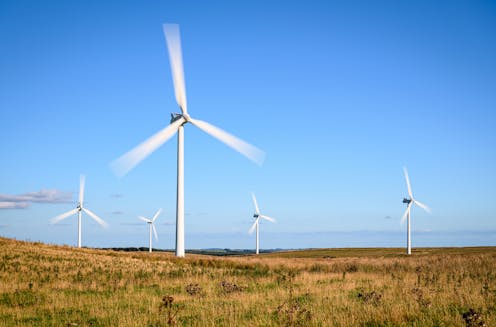
The bush is full up – no room for more renewables, according to[1] Nationals leader David Littleproud. Instead, renewables should be restricted to large solar arrays on commercial buildings in the cities.
The country-focused minor party presumably hopes to capitalise on rural scepticism of large scale renewable projects – especially angst around[2] new transmission lines. On the coast, there have been protests[3] against proposed offshore wind farms.
Unfortunately, fencing off renewables in the cities won’t work. As our recent research[4] on onshore wind shows, intermittent energy sources such as wind can work very well to support a modern grid – as long as we locate wind farms in different places. This ensures we can keep the lights on even if it’s dead calm in some areas.
Of course, rooftop solar may well stack up for households and building owners. But we will need new renewable projects in spread-out locations. Banning renewables from the bush is no solution. What we can do is make sure we’re not duplicating wind farms. Each new wind farm should be in the best possible location.

The best place to build a wind farm
In 2001, renewables supplied[6] 8% of Australia’s energy. In 2023, they supplied almost 40%[7].
The federal government’s ambitious goal is to supercharge this growth and get to 82% by 2030[8]. That’s a meteoric rise, but it has to be. Climate change is accelerating[9]Decisions around where to build large renewable projects cannot be left solely to the market – or derailed by protest.
Renewable energy supply is variable by nature. Solar only works at daytime, hydro can be affected by drought or water shortages, and the wind doesn’t blow consistently.
Read more: Do we want a wind farm outside our window? What Australians think about the net zero transition[10]
That’s not a deal breaker. It just means you have to have a mix of technologies – and place utility-scale farms in different places. This minimises the need for expensive or resource-dependent energy storage such as pumped hydro and batteries.
At present, wind makes up around a third of Australia’s renewable supply[11] – about 11% of total electricity generation in the first quarter of 2023.
But wind blows, then stops. By itself, a wind farm can’t provide power at a consistent rate or in lockstep with demand. The power generated is at the whim of the weather and, in the longer term, climate.
To make wind power consistent, you have to build wind farms in different locations chosen for their unique local wind climate.
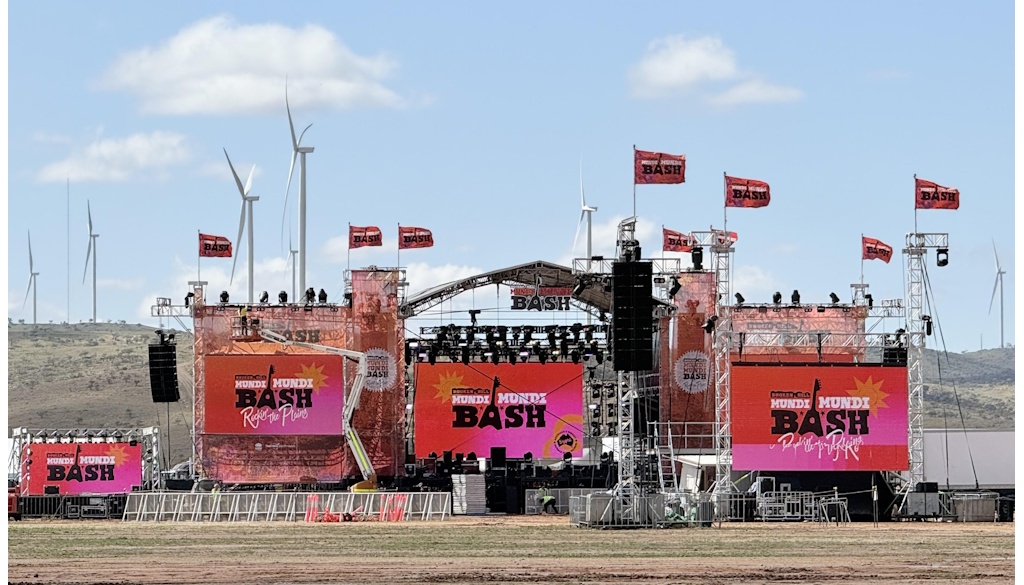
 Each new wind farm should be built in the optimal location to supply power.
Havas PR/AAP[12]
Each new wind farm should be built in the optimal location to supply power.
Havas PR/AAP[12]
At present, Australia’s supply of wind farms is reasonably varied. But it could be better still.
We analysed over 40 years of climate data and found Australia’s currently operating wind farms could be producing around 50% more energy if they had been built in optimised locations.
If we had built this network of farms in an optimal way, we would have slashed how variable wind energy is. At present, the locations of current farms means year-to-year variability is around 40% higher than it could have been.
When we added all wind farms under construction or with planning approval, we found these inefficiencies persist.
We have to get better at placing renewables
Is this bad news? No. It means we can do better. And it means we can reduce the resistance emerging from some rural and regional residents, who feel their landscapes are being taken over to power far off cities.
Building renewable farms in sub-optimal locations is a burden on the environment, since many more farms have to be built to make up the slack, and can lead to increased energy prices for consumers.
Right now, the cost is masked by the fact that wind’s share in the energy market is small. But that will change. The net zero economy we are building will need wind, both onshore and, increasingly, offshore.
Read more: A clean energy grid means 10,000km of new transmission lines. They can only be built with community backing[13]
To build a wind farm, what usually happens is an energy company will find a landowner who agrees to having a farm on their land in exchange for regular rent. The company then seeks government approvals[14].
To approve a site for a wind farm, government agencies have to assess many things. How close is it to wetlands home to rare birds? Is the wind resource good enough? To figure out the quality of the wind, regulators usually take measurements at the site and look at historic data. Usually, this pool of data only goes back a few years.
We could do this much better. First, wind power can vary by up to 16%, year to year. La Niña might bring strong winds to a site, while El Niño might bring the doldrums.
To decide on a site based on a couple of years of data means you don’t know the long term average of wind, which could be better or worse than expected.
Second, approvals are site-specific – we don’t compare how similar this potential wind farm will be to farms already built. That means many wind farms simply don’t meet expectations of how much extra power they can supply to the grid.
Once built, wind farms usually operate for decades[15]. If we choose inefficient locations, we’re locked in.
But there’s good news here for the National Party, rural residents and everyone concerned with the energy transition. We can fix this problem.
All it would take is one extra step for renewable developers: demonstrate how your proposed wind farm would improve electricity supply overall. That’s it.
And for government, make sure our planned new transmission lines increase access to high quality wind resources.
These two actions sound simple, but they would make a real difference. We could avoid building wind farms in sub-optimal locations, build fewer overall, and accelerate the shift to cheap clean energy. That’s something the city and country can agree on.
Read more: How to beat 'rollout rage': the environment-versus-climate battle dividing regional Australia[16]
References
- ^ according to (www.smh.com.au)
- ^ angst around (www.reuters.com)
- ^ have been protests (www.abc.net.au)
- ^ recent research (iopscience.iop.org)
- ^ Dean Lewins/AAP (photos-cdn.aap.com.au)
- ^ renewables supplied (aemo.com.au)
- ^ supplied almost 40% (aemo.com.au)
- ^ 82% by 2030 (www.globalaustralia.gov.au)
- ^ is accelerating (www.noaa.gov)
- ^ Do we want a wind farm outside our window? What Australians think about the net zero transition (theconversation.com)
- ^ Australia’s renewable supply (aemo.com.au)
- ^ Havas PR/AAP (photos-cdn.aap.com.au)
- ^ A clean energy grid means 10,000km of new transmission lines. They can only be built with community backing (theconversation.com)
- ^ seeks government approvals (assets.cleanenergycouncil.org.au)
- ^ for decades (whc.unesco.org)
- ^ How to beat 'rollout rage': the environment-versus-climate battle dividing regional Australia (theconversation.com)