


Attacks on cargo ships in the Red Sea threaten Australia's trade – we need a Plan B
- Written by: Sanjoy Paul, Associate Professor, UTS Business School, University of Technology Sydney
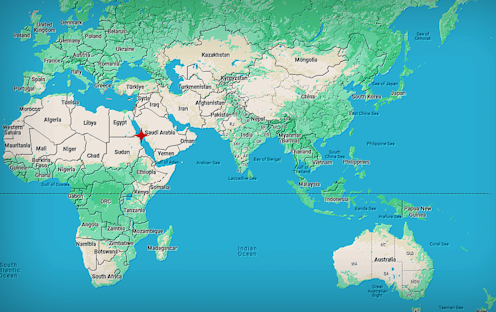
Australia is 11,000 kilometres from the Red Sea but it is not immune from the drone and missile attacks[1] on container ships attempting to move through one of the world’s busiest thoroughfares.
Since November, Iran-backed Houthi rebels in Yemen have launched more than 20 attacks[2] on container ships using drones, ballistic missiles, and in one case, an explosive unoccupied vessel. The attacks have come in response to the war in the Gaza Strip.
This has prompted logistics firms including Maersk, Hapag-Lloyd and Evergreen as well as the oil giant BP, to pause ship movements through a channel that carries 12%[3] of the world’s seaborne cargo, mostly between Europe and Asia and locations further south including Australia and New Zealand.
Read more: Why Yemen's Houthis are getting involved in the Israel-Hamas war and how it could disrupt global shipping[4]
The impact has been significant, particularly for China, India, Vietnam, Thailand and Indonesia as well as European countries including the United Kingdom, Germany, France, Spain and Italy.
Australia impacted
While just 16%[5] of Australia’s container imports come from Europe, the supply chain between Australia and the European Union is critical for many Australians.
In 2022, Australia imported about A$60 billion[6] in products including pharmaceuticals, machinery, road vehicles, electrical and electronic equipment and medical apparatus from Europe. Much of it was shipped through the Red Sea.
Over the same period, Australia exported goods valued at A$23 billion[7] to Europe. The most traded items were mineral fuels, oils and distillation products. Others included wine, fruits, grain, seeds, nickel and aluminium.
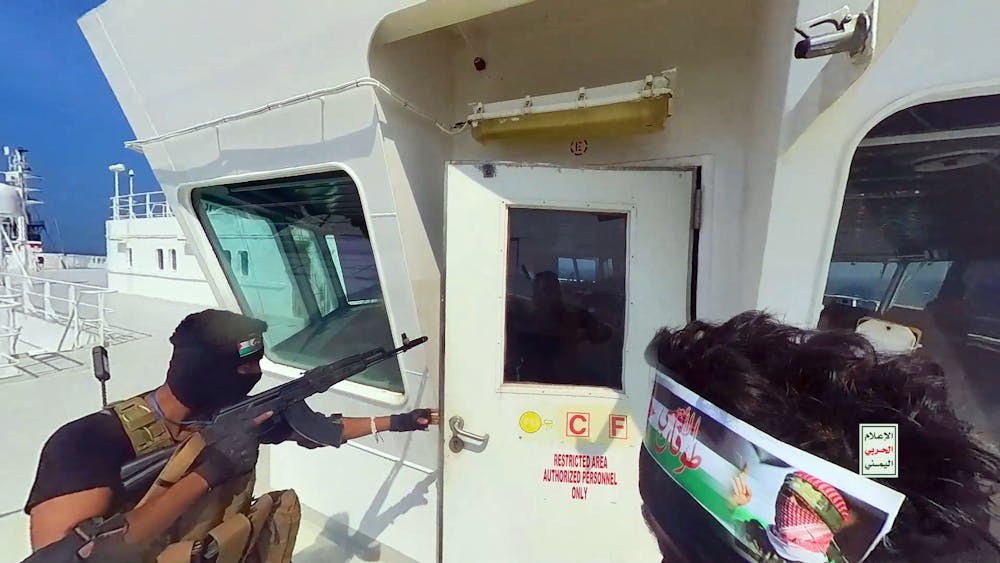
Maersk and other companies have started diverting their containers around South Africa’s Cape of Good Hope, but this much-extended route takes longer and has led to major delays, shortages and additional shipping costs[9].
These extra costs are most likely to be passed on to businesses and consumers[10]. The UK is already experiencing shortages[11] of tea, wine, meat and fish.
International pressure on the rebels
Last week Australia, the US and 11 other countries affected by the disruption issued a statement[12] condemning the attacks as “illegal, unacceptable, and profoundly destabilising”.
“Let our message now be clear. We call for the immediate end of these illegal attacks and release of unlawfully detained vessels and crew,” it said.
It came after Australia last month turned down a request from the US to send a warship to the region, saying it needed to prioritise the Indo-Pacific.
It’s time to develop Plan B
Global disruptions have intensified in the last few years as a result of COVID, cyber-attacks, natural disasters and geopolitical tensions. They are likely to intensify further.
Meanwhile, industrial action at Australian ports is also hurting trade. The dispute between the Maritime Union and the stevedore DP World over a new workplace deal has disrupted[13] container terminal operations in Sydney, Brisbane, Melbourne and Fremantle, slowing imports of furniture, food and clothing[14].
Read more: US-led taskforce deploys in Red Sea as Middle East crisis threatens to escalate beyond Gaza[15]
To minimise the impact of all of these disruptions, businesses need to develop backup plans that can be implemented quickly.
They include diversifying supply sources, being prepared to use alternative shipping routes and onshoring[16] critical manufacturing.
Resources ought to be allocated now and planning done in collaboration with local and international partners.
The businesses that best prepare will be those best able to ride out and gain from the next disruption.
References
- ^ drone and missile attacks (www.washingtonpost.com)
- ^ 20 attacks (www.vox.com)
- ^ 12% (www.afr.com)
- ^ Why Yemen's Houthis are getting involved in the Israel-Hamas war and how it could disrupt global shipping (theconversation.com)
- ^ 16% (www.afr.com)
- ^ A$60 billion (tradingeconomics.com)
- ^ A$23 billion (tradingeconomics.com)
- ^ Houthi media centre/AAP (photos.aap.com.au)
- ^ additional shipping costs (www.afr.com)
- ^ businesses and consumers (thescarbroughgroup.com)
- ^ shortages (inews.co.uk)
- ^ statement (www.afr.com)
- ^ disrupted (www.smh.com.au)
- ^ furniture, food and clothing (www.msn.com)
- ^ US-led taskforce deploys in Red Sea as Middle East crisis threatens to escalate beyond Gaza (theconversation.com)
- ^ onshoring (mhdsupplychain.com.au)










