Extreme weather leaves energy networks vulnerable to 'hostile actors', Climate Statement warns
- Written by: Michelle Grattan, Professorial Fellow, University of Canberra
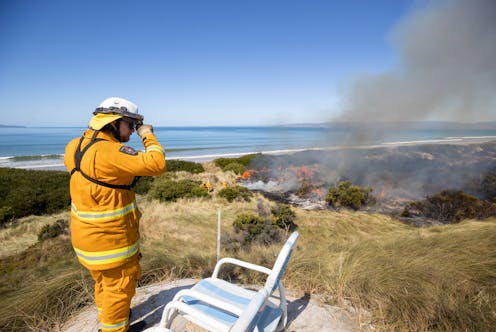
Extreme weather seasons are putting Australia’s energy systems more at risk of sabotage, the government’s annual Climate Change Statement warns.
These events place increased strain on the energy networks, and the resulting fragility could be exploited by “hostile actors”.
“The threshold for damage to Australia’s energy networks from sabotage may be significantly lower during high demand/low supply periods, such as extreme weather seasons,” the national security section of the statement says.
The statement, prepared by departmental officials, will be released by the Minister for Climate and Energy Chris Bowen on Thursday. The updated security warnings are informed by a declassified snapshot of work undertaken into climate change security risks by the Office of National Intelligence.
Labor asked the ONI to prepare a report on the security implications of climate change, following an election promise, but the government declined to release the report.
The Climate Statement forecasts Australia is heading towards meeting its 2030 target for reducing greenhouse gas emissions.
On present indications, emissions are expected to reduce by 42% below 2005 levels by 2030. The Labor target is a 43% reduction. The latest projection is better than last year’s, which was for a 40% reduction.
The Climate Statement highlights the biosecurity problems climate change brings. It will create “unprecedented potential for pests and diseases to spread to Australia, posing risks to the management of our border and supply chains.
"Invasive plants, animals and diseases could reduce forestry and agricultural productivity. Meanwhile, it is anticipated fisheries will become more contested as high ocean temperatures and acidification reduce ocean productivity and alter the range of fish stocks, which could have flow on impacts for Australia’s maritime security.”
Climate extremes are likely to put more stress on national coordination arrangements and domestic crisis management bodies, the statement says. This will stretch Australia’s emergency capabilities.
Rising sea levels are likely to see countries look to Australia and other countries for closer economic integration, through migration and expanded labour schemes, the report says, pointing to the recent agreement with Tuvalu, under which Australia will accept an annual intake of people.
The global transition to clean energy, while having many positives, could also bring problems, affecting Australia’s emergency response and warfighting capabilities.
“Maintaining a secure and affordable supply of legacy fuels during the transition is a priority for the government, as is the resilience of critical infrastructure in the face of extreme weather events or cyber attacks.”
Bowen will tell parliament on Thursday climate change already presents serious national security threats but they will become more severe, compounding as the planet becomes hotter.
“Australia will not sit on its hands, pause the transformation and expect to deploy speculative solutions in 2049 to address a climate emergency that is with us now.”