Big W has withdrawn Welcome to Sex from its stores to protect staff – but teen sex education can keep young people safe
- Written by: Emma Whatman, Subject Coordinator in Gender Studies, The University of Melbourne
Teaching young people about gender, sex and sexuality has long been controversial.
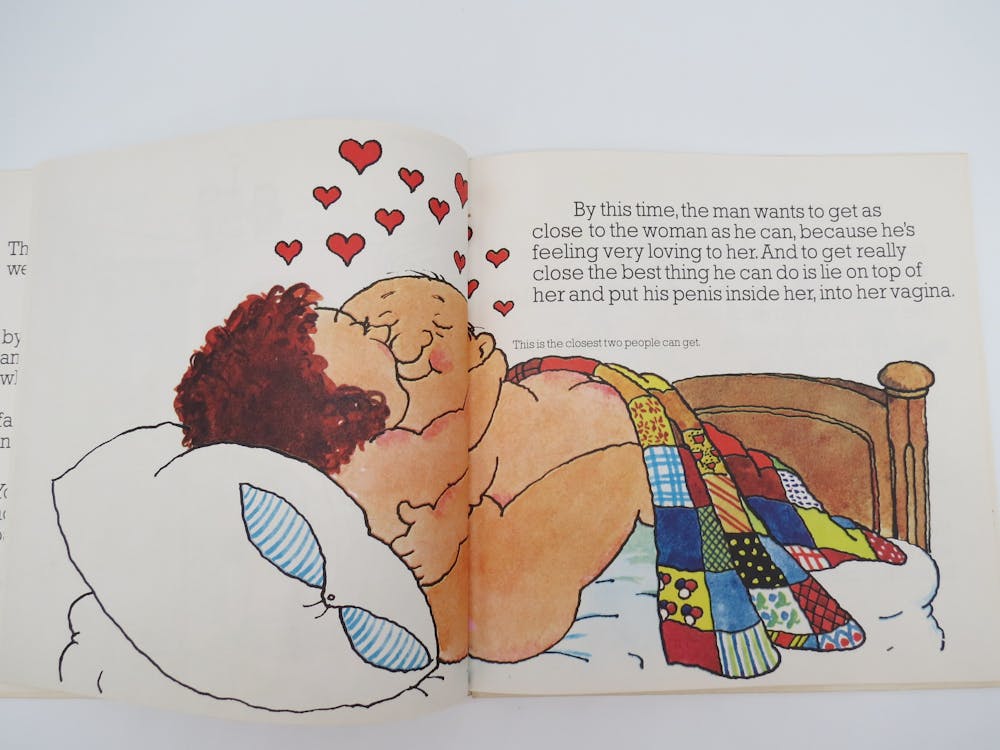 Peter Mayle’s Where Did I Come From? started the trend of child-centred sex education books.
AbeBooks
While books like Where Did I Come From? present sex and gender in binary and heterornomative ways, sex education books have expanded to include diverse sexualities and genders – with a greater focus on race, disability, culture, and religion.
Many books now include discussions of consent and are careful to not only focus on the “risks” of sex, such as pregnancy and sexually transmitted diseases, but also on pleasure, safety and communication.
Read more:
'We haven't been taught about sex': teens talk about how to fix school sex education[11]
Sex education for young people is valuable
Sex education books can be used by parents and caregivers to guide tricky conversations about puberty, sex, gender and sexuality.
At what age should young people learn about sex? It’s difficult to say. Context and nuance is important. It depends on the identity and life experience of the young person, their education and maturity levels, their religious, geographical or cultural background, and the wishes of their parents or caregivers. So we should be careful about making generalisations.
However, the basics of sex education, such as bodily autonomy and consent, can be taught to primary-school aged children – and younger.
Yumi Stynes is quoted saying she’d “be happy with a mature eight-year-old having a flick through”. Many critics are using this to say the book is targeted at readers as young as eight.
But while a parent might make an informed decision about whether to make the book available to their younger child, Welcome to Sex is clearly targeted to a teen audience. This is evident in the length, design, complexity, marketing, language and age of the teen contributors inside the book (the youngest is 17).
Peter Mayle’s Where Did I Come From? started the trend of child-centred sex education books.
AbeBooks
While books like Where Did I Come From? present sex and gender in binary and heterornomative ways, sex education books have expanded to include diverse sexualities and genders – with a greater focus on race, disability, culture, and religion.
Many books now include discussions of consent and are careful to not only focus on the “risks” of sex, such as pregnancy and sexually transmitted diseases, but also on pleasure, safety and communication.
Read more:
'We haven't been taught about sex': teens talk about how to fix school sex education[11]
Sex education for young people is valuable
Sex education books can be used by parents and caregivers to guide tricky conversations about puberty, sex, gender and sexuality.
At what age should young people learn about sex? It’s difficult to say. Context and nuance is important. It depends on the identity and life experience of the young person, their education and maturity levels, their religious, geographical or cultural background, and the wishes of their parents or caregivers. So we should be careful about making generalisations.
However, the basics of sex education, such as bodily autonomy and consent, can be taught to primary-school aged children – and younger.
Yumi Stynes is quoted saying she’d “be happy with a mature eight-year-old having a flick through”. Many critics are using this to say the book is targeted at readers as young as eight.
But while a parent might make an informed decision about whether to make the book available to their younger child, Welcome to Sex is clearly targeted to a teen audience. This is evident in the length, design, complexity, marketing, language and age of the teen contributors inside the book (the youngest is 17).
 Welcome to Sex is clearly targeted to a teen audience.
Karolina Grabowska/Pexels, CC BY[12]
Some critics are arguing the book teaches young people how to perform sex acts. But we know young people are not ignorant about sex. Whether it’s through the internet, media, or friends, young people access sexually explicit material from a young age, with many learning about sex from pornography[13] in harmful ways.
A 2019 research report[14] from the Australian Institute of Family Studies shows that 53% of boys in the study and 14% of girls intentionally viewed pornography before the age of 16. A UK study[15] reported that 53% of 11–16 year olds had watched pornography, most before the age of 14.
Comprehensive and inclusive sex education that begins at a young age[16] can prevent child sex abuse, decrease rates of domestic violence and intimate partner violence, and reduce homophobic bullying.
Sex education texts play a vital role. They can be given to young people to navigate with a parent or caregiver, or as an individual resource.
Read more:
How do you teach a primary school child about consent? You can start with these books[17]
So, what’s in Welcome to Sex?
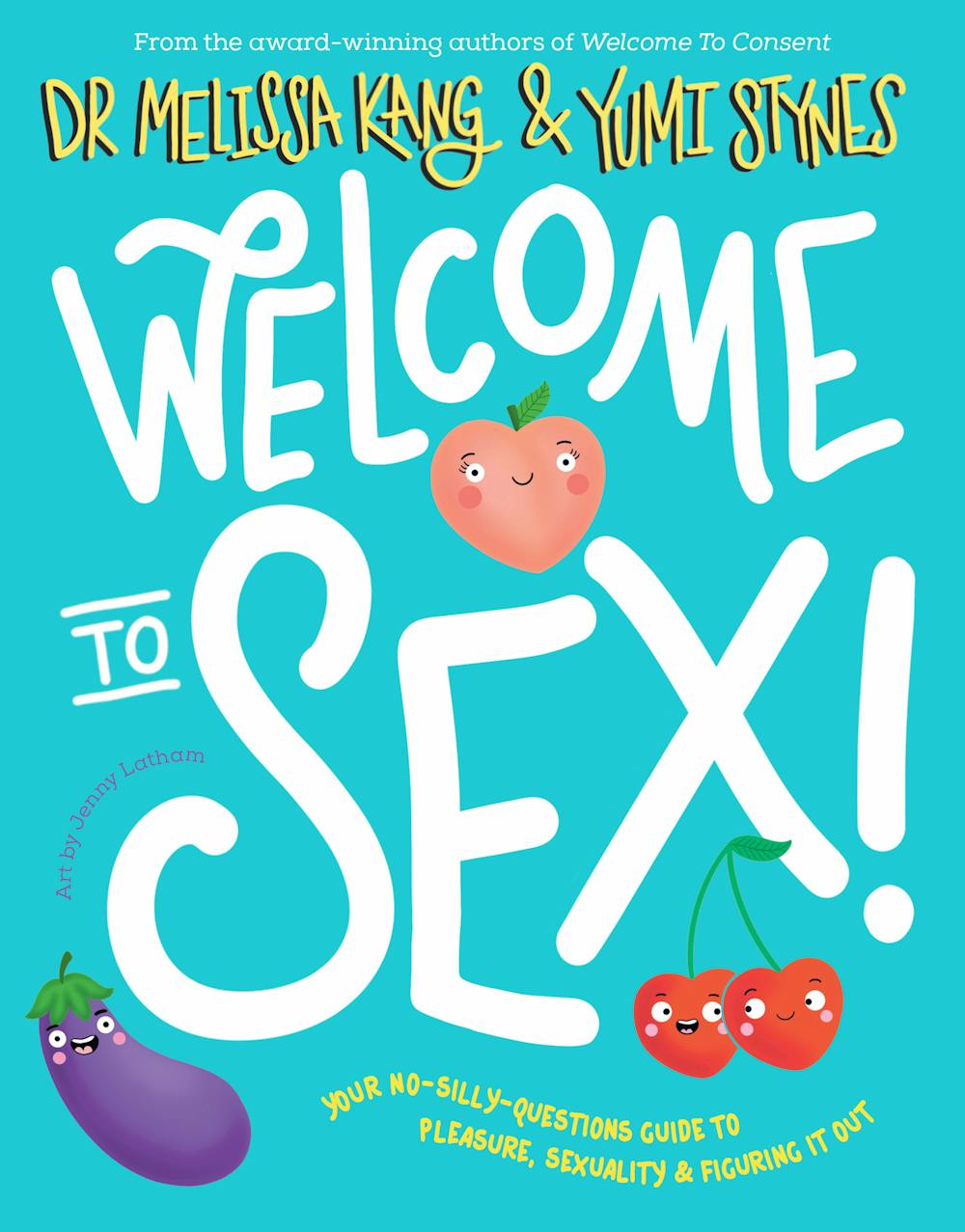
Welcome to Sex is the latest in the “Welcome” series by former Dolly Doctor Melissa Kang and broadcaster and mother Yumi Stynes. The series also includes Welcome to Your Period[18], Welcome to Consent[19] and Welcome to Your Boobs[20].
The book’s introduction states, “Welcome to a book about sex and being a teen!” Its two key sections are teen-centered, leading with questions and reflections from young people. Despite claims the book is a “sex manual”, most of it is centered around the tricky emotions, concerns and questions young people might have about sex.
In the first section, teens are introduced to “safe learning”. Chapters cover definitions (of both sex and body parts), communication, relationships, sexual and gender diversity, myths about sex, and reasons to not have sex.
The second section explores getting intimate with someone. Importantly, though, it tells teens: “It’s totally OK if you’re not ready for any of that.” This section focuses on things like consent, pleasure, intimacy, cheating, safety, and different ways people might have sex.
Welcome to Sex treats teenagers seriously and meets them where they are. It intersperses sex education with young people’s reflections, questions for the “doctor” and facts from experts. It uses clear language and inclusive imagery.
The important thing for concerned parents to remember is that sex is an important topic we can’t ignore. Sex education books combat misinformation – and empower young people with essential information to keep them informed and safe.
References^ Welcome to Sex: Your no-silly-questions guide to sexuality, pleasure and figuring it out (www.hardiegrant.com)^ Big W (www.news.com.au)^ argues (www.skynews.com.au)^ gender ideology (link.springer.com)^ grooming (theconversation.com)^ increasingly misused (www.politifact.com)^ saying (twitter.com)^ Where Did I Come From? (www.dymocks.com.au)^ What’s Happening to Me? (www.dymocks.com.au)^ Paul Venzo’s research (www.taylorfrancis.com)^ 'We haven't been taught about sex': teens talk about how to fix school sex education (theconversation.com)^ CC BY (creativecommons.org)^ with many learning about sex from pornography (link.springer.com)^ 2019 research report (aifs.gov.au)^ A UK study (aifs.gov.au)^ that begins at a young age (www.sciencedirect.com)^ How do you teach a primary school child about consent? You can start with these books (theconversation.com)^ Welcome to Your Period (www.hardiegrant.com)^ Welcome to Consent (www.hardiegrant.com)^ Welcome to Your Boobs (www.hardiegrant.com)
Welcome to Sex is clearly targeted to a teen audience.
Karolina Grabowska/Pexels, CC BY[12]
Some critics are arguing the book teaches young people how to perform sex acts. But we know young people are not ignorant about sex. Whether it’s through the internet, media, or friends, young people access sexually explicit material from a young age, with many learning about sex from pornography[13] in harmful ways.
A 2019 research report[14] from the Australian Institute of Family Studies shows that 53% of boys in the study and 14% of girls intentionally viewed pornography before the age of 16. A UK study[15] reported that 53% of 11–16 year olds had watched pornography, most before the age of 14.
Comprehensive and inclusive sex education that begins at a young age[16] can prevent child sex abuse, decrease rates of domestic violence and intimate partner violence, and reduce homophobic bullying.
Sex education texts play a vital role. They can be given to young people to navigate with a parent or caregiver, or as an individual resource.
Read more:
How do you teach a primary school child about consent? You can start with these books[17]
So, what’s in Welcome to Sex?
Welcome to Sex is the latest in the “Welcome” series by former Dolly Doctor Melissa Kang and broadcaster and mother Yumi Stynes. The series also includes Welcome to Your Period[18], Welcome to Consent[19] and Welcome to Your Boobs[20].
The book’s introduction states, “Welcome to a book about sex and being a teen!” Its two key sections are teen-centered, leading with questions and reflections from young people. Despite claims the book is a “sex manual”, most of it is centered around the tricky emotions, concerns and questions young people might have about sex.
In the first section, teens are introduced to “safe learning”. Chapters cover definitions (of both sex and body parts), communication, relationships, sexual and gender diversity, myths about sex, and reasons to not have sex.
The second section explores getting intimate with someone. Importantly, though, it tells teens: “It’s totally OK if you’re not ready for any of that.” This section focuses on things like consent, pleasure, intimacy, cheating, safety, and different ways people might have sex.
Welcome to Sex treats teenagers seriously and meets them where they are. It intersperses sex education with young people’s reflections, questions for the “doctor” and facts from experts. It uses clear language and inclusive imagery.
The important thing for concerned parents to remember is that sex is an important topic we can’t ignore. Sex education books combat misinformation – and empower young people with essential information to keep them informed and safe.
References^ Welcome to Sex: Your no-silly-questions guide to sexuality, pleasure and figuring it out (www.hardiegrant.com)^ Big W (www.news.com.au)^ argues (www.skynews.com.au)^ gender ideology (link.springer.com)^ grooming (theconversation.com)^ increasingly misused (www.politifact.com)^ saying (twitter.com)^ Where Did I Come From? (www.dymocks.com.au)^ What’s Happening to Me? (www.dymocks.com.au)^ Paul Venzo’s research (www.taylorfrancis.com)^ 'We haven't been taught about sex': teens talk about how to fix school sex education (theconversation.com)^ CC BY (creativecommons.org)^ with many learning about sex from pornography (link.springer.com)^ 2019 research report (aifs.gov.au)^ A UK study (aifs.gov.au)^ that begins at a young age (www.sciencedirect.com)^ How do you teach a primary school child about consent? You can start with these books (theconversation.com)^ Welcome to Your Period (www.hardiegrant.com)^ Welcome to Consent (www.hardiegrant.com)^ Welcome to Your Boobs (www.hardiegrant.com)