Big hair? Bald? How much difference your hair really makes to keep you cool or warm
- Written by: Theresa Larkin, Associate professor of Medical Sciences, University of Wollongong
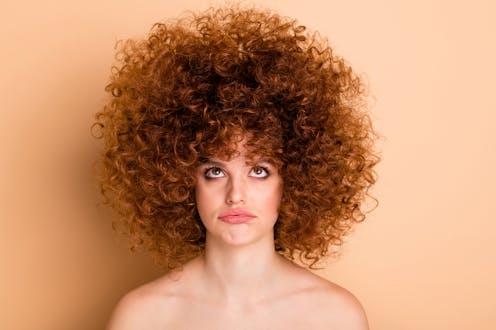
We have millions[1] of hair follicles on our body, including around 100,000 on our scalp.
This might sound like a lot of hair, yet humans are described as “hairless”. We have evolved to be the only mammals with a relatively hairless body, but still with scalp hair.
So how does your hair affect your body temperature when it’s hot or cold?
Compared with other animals, our hair does not have as much influence on keeping us warm or cool as you might think.
Read more: Health Check: why do some people feel the cold more than others?[2]
Essential to our survival
Our brain function and body’s metabolism depend on an optimal temperature of around 37℃. Thermoregulation maintains this body temperature, even when we are exposed to a hotter or colder external temperature.
For non-human mammals, body hair or fur plays a role in protecting against environmental cold or heat.
For instance, a heavy fur coat helps keep a polar bear warm[3] in the cold. But fur also keeps an animal cool in the heat because it can absorb or reflect[4] radiant heat.
Scientists think this is why humans have kept hair on our heads. Our heads are exposed to the most heat from the sun, and scalp hair keeps our heads cool.
Research published just last week suggests[5] curly hair provides the best heat protection. That’s because curly hair’s thicker layer of insulation reduces the amount of sun that reaches the scalp.

Read more: How humid is it? 3 things to keep you cool in a hot and sticky summer (and 3 things that won't)[7]
But hair is not the only factor
When humans moved from living in the jungle to the savannah, they needed to walk and run long distances in the sun. This meant they needed a way to handle the increased body temperature that comes with physical activity in the heat.
Sweating is the best way to lose heat and cool down, but the presence of hair reduces sweating and heat loss from the skin.
So humans evolved to lose body hair[8] to be better adapted to exercising in the heat. Fewer hair follicles in our skin made room for more sweat glands. This made our skin optimal for sweat evaporation – and the heat loss[9] that goes with it – to keep us cool.
Read more: The art of balding: a brief history of hairless men[10]
So what’s best in the heat?
You might think removing body hair or having a bald head is best for sweating and keeping cool when exercising in the heat. However, it’s not that simple.
Removing head hair would increase the amount of sun[11] that reaches your scalp. This means you would need to sweat more[12] during exercise in the sun to reduce an increase in body temperature, but not by much.
In fact, it’s the least hairy[13] areas of our body that have the highest sweat rates during exercise. These are our forehead, neck, feet and hands.
So the best way to keep cool in the heat is to keep these areas uncovered (but still use sunscreen). Removing body hair will not have a large impact on your overall sweat rate.
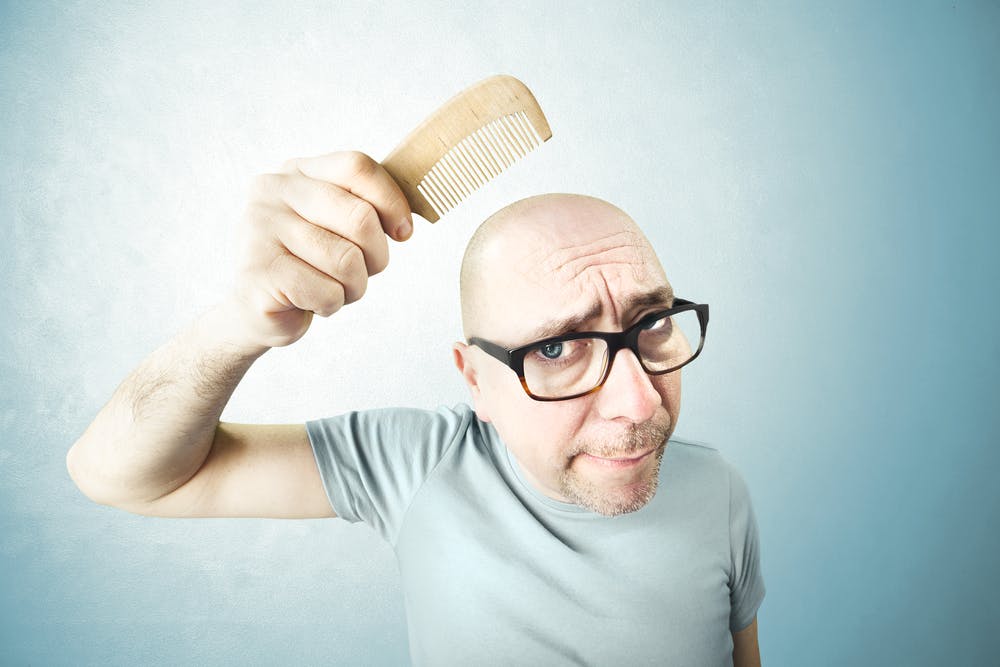 Going bald or thinking of shaving your head? It won’t much affect your overall sweat rate.
Shutterstock[14]
Going bald or thinking of shaving your head? It won’t much affect your overall sweat rate.
Shutterstock[14]
How about when it’s cold?
Our body hair and head hair theoretically have a role in keeping us warm, but the effects are minimal.
When we are cold, the muscles of the hair follicles on the body contract to cause the hairs to stand straight. This is an attempt to trap heat close to the body and we see this as goosebumps. However, because our body hair is so thin, this does not have a big effect in keeping us warm.
Our head hair can prevent some heat loss from the head, but again this is limited.
When it’s cold, heat can still be lost through the skin of the head[15] regardless of your hairstyle.
The scalp also has only a very thin layer of fat compared to the rest of our skin, so our head has less insulation to protect against the cold.
A warm hat or beanie is the only way to prevent too much heat lost from the head.
In a nutshell
Our head and body hair, or lack of it, does have a small role in how you maintain your body temperature.
But overall, your hairstyle does not influence whether you feel warm or cool.
Read more: I've Always Wondered: why did mammals go the fur route, rather than developing feathers?[16]
References
- ^ millions (theconversation.com)
- ^ Health Check: why do some people feel the cold more than others? (theconversation.com)
- ^ warm (polarbearsinternational.org)
- ^ absorb or reflect (www.jstor.org)
- ^ suggests (www.pnas.org)
- ^ Shutterstock (www.shutterstock.com)
- ^ How humid is it? 3 things to keep you cool in a hot and sticky summer (and 3 things that won't) (theconversation.com)
- ^ lose body hair (www.pnas.org)
- ^ heat loss (theconversation.com)
- ^ The art of balding: a brief history of hairless men (theconversation.com)
- ^ amount of sun (www.pnas.org)
- ^ sweat more (pubmed.ncbi.nlm.nih.gov)
- ^ least hairy (www.ncbi.nlm.nih.gov)
- ^ Shutterstock (www.shutterstock.com)
- ^ skin of the head (www.ncbi.nlm.nih.gov)
- ^ I've Always Wondered: why did mammals go the fur route, rather than developing feathers? (theconversation.com)