Over half of eligible aged care residents are yet to receive their COVID booster. And winter is coming
- Written by: Hassan Vally, Associate Professor, Epidemiology, Deakin University

As Australia heads towards the fourth winter of the pandemic, we have once again started seeing an increase in the level of COVID circulating[1]. With this comes an increased risk of infection and serious illness.
Elderly people living in aged care are one of the groups[2] facing the greatest risk.
But the latest figures[3] from the federal health department show that to May 24 just over 40% (42.9%) of aged care residents estimated eligible for a booster vaccination have had their latest shot and are fully vaccinated.
If we also take into account immunity gained through recent infection in the past six months, just over half (50.4%) of aged care residents are estimated to have adequate levels of immunity.
Although numbers have increased considerably in the past few weeks, this is plainly far from ideal.
It’s been heartbreaking
Earlier in the pandemic, I was briefly part of the Victorian Aged Care Response Centre[4], set up to coordinate the response to the COVID surge in residential facilities. I was part of the team that collected, collated and interpreted COVID data used to inform the public health response.
What we witnessed in aged care then, and since, has been nothing short of heartbreaking.
Our inability to adequately protect aged care residents in the early part of the pandemic was undoubtedly one of our biggest pandemic failures[5].
I saw firsthand that this was not due to a lack of effort. The reality was there were just too many factors[6] thwarting our ability to bring outbreaks under control in this uniquely challenging setting[7].
Since then, aged care residents have continued to die from COVID during the Omicron era. Since January 2022 COVID has accounted for about 5%[8] of all deaths in residential aged care.
Read more: 4 in 10 nursing homes have a COVID outbreak and the death rate is high. What's going wrong?[9]
Why booster shots are so critical
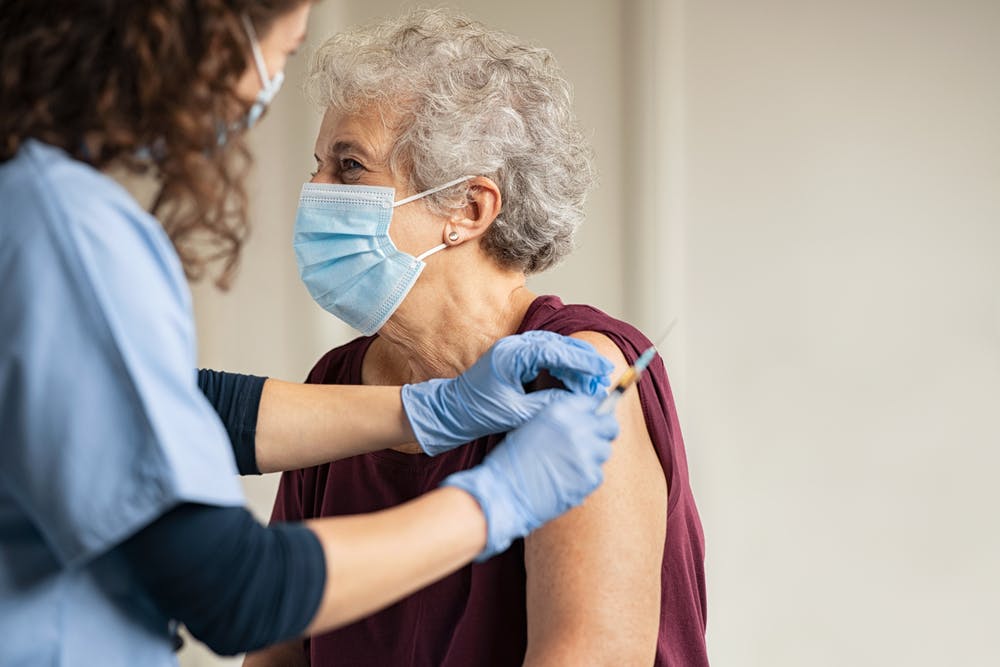
Maintaining high levels of immunity[10] by being up to date with COVID boosters is vital for protecting this vulnerable cohort from serious outcomes this winter.
Age, existing chronic illnesses and weaker immune systems are just some of the reasons why this group is most vulnerable.
Not only do vaccines protect against severe illness, they reduce the likelihood of passing COVID[11] on to others in this high-risk environment.
And with higher rates of COVID transmission in the community, we’ll likely see more active outbreaks in residential aged care facilities. This highlights how important it is to see more residents receive their booster shots.
Read more: Haven't had COVID or a vaccine dose in the past six months? Consider getting a booster[13]
COVID fatigue, vaccine distribution
It’s not entirely clear why COVID booster rates in aged care are so low.
There may be some COVID vaccine fatigue[14]. Residents and their families may have tuned out to public health messages about the importance of vaccination and keeping up to date with booster shots. But how much of an issue this is in aged care is hard to measure.
Changes in the way COVID vaccines are delivered to aged care may have also played a role. Early in the pandemic, vaccine delivery was coordinated federally. However, now aged care centres are responsible[15] for ensuring residents have access to the recommended COVID vaccine, with primary health-care providers, such as GPs and pharmacists, administering the shots.
Read more: COVID vaccine consent for aged-care residents: it's ethically tricky, but there are ways to get it right[16]
We’ve tried incentives
Health departments and health workers are well aware of the need to adequately protect aged care residents as we head towards winter.
In February 2023, incentive payments[17] for eligible health workers to go into residential aged care facilities to administer COVID vaccines were streamlined and increased.
In April 2023, the federal health department’s chief medical officer, and the aged care quality and safety commissioner issued a joint letter[18] to aged care providers with advice on preparing for winter, including a reminder about COVID vaccination.
The federal government has also called on[19] Primary Health Networks[20] – bodies responsible for coordinating delivery of primary health care in their regions – to encourage them to support residential aged care homes across Australia to arrange COVID vaccination clinics.
This is all positive and sensible. Yet, we still haven’t seen a huge spike in COVID booster rates as we reach the end of May. That is concerning.
We mustn’t forget flu vaccines
As we enter the colder months, influenza also poses a significant threat[21] for aged care residents.
So promoting COVID and influenza vaccination in aged care should go hand-in-hand this year, and for the foreseeable future.
Read more: Should I get a flu vaccine this year? Here's what you need to know[22]
References
- ^ COVID circulating (www.health.gov.au)
- ^ one of the groups (www.health.gov.au)
- ^ latest figures (www.health.gov.au)
- ^ Victorian Aged Care Response Centre (www.theguardian.com)
- ^ biggest pandemic failures (www1.racgp.org.au)
- ^ too many factors (www.theguardian.com)
- ^ uniquely challenging setting (theconversation.com)
- ^ about 5% (www.health.gov.au)
- ^ 4 in 10 nursing homes have a COVID outbreak and the death rate is high. What's going wrong? (theconversation.com)
- ^ high levels of immunity (www.health.gov.au)
- ^ passing COVID (www.health.gov.au)
- ^ Shutterstock (www.shutterstock.com)
- ^ Haven't had COVID or a vaccine dose in the past six months? Consider getting a booster (theconversation.com)
- ^ COVID vaccine fatigue (www.smh.com.au)
- ^ are responsible (www.health.gov.au)
- ^ COVID vaccine consent for aged-care residents: it's ethically tricky, but there are ways to get it right (theconversation.com)
- ^ incentive payments (www.mbsonline.gov.au)
- ^ issued a joint letter (www.agedcarequality.gov.au)
- ^ called on (www.health.gov.au)
- ^ Primary Health Networks (www.health.gov.au)
- ^ significant threat (www.vicniss.org.au)
- ^ Should I get a flu vaccine this year? Here's what you need to know (theconversation.com)