Are calls to cancel two Palestinian writers from Adelaide Writers' Week justified?
- Written by: Denis Muller, Senior Research Fellow, Centre for Advancing Journalism, The University of Melbourne
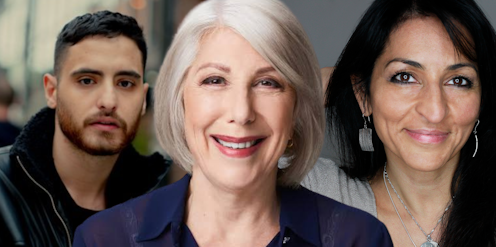
The organisers of the 2023 Adelaide Writers’ Week[1], which starts on March 4, are under pressure to withdraw invitations to two Palestinian writers: one for her views about Ukrainian president Volodymyr Zelenskyy[2], and the other for his views on Israel[3] and Zionism.
South Australian Premier Peter Malinauskas has condemned both authors[4]. “I completely abhor the comments that have been made … they don’t accord with SA’s value system,” he said. “I’ve got to be frank, I’m surprised they are being facilitated at Adelaide Writers’ Week. I won’t be going along to hear them speak.”
Each case raises issues about freedom of speech and the phenomenon of “cancel culture”, but the cases are not identical.
The cases against Susan Abulhawa and Mohammed El-Kurd
The first concerns Susan Abulhawa[5], a Palestinian American writer who has published a series of novels, including a bestseller, Mornings in Jenin[6], based on the hardships of Palestinians in their continuing confrontation with Israel.
The second concerns Mohammed El-Kurd[7], a Palestinian writer and poet who lives in East Jerusalem and whose appearance at Harvard University in October last year generated protests[8] from some pro-Israel students who criticised his rhetoric as antisemitic.
Of the two, Abulhawa’s case is more straightforward. The objections to her, raised principally by Ukrainian voices in Australia, are fundamentally political.
They arise[9] from tweets she has published saying Zelenskyy would rather drag the world into a third world war than give up his ambitions for Ukraine to join NATO, and describing him as far more dangerous than his Russian counterpart Vladimir Putin.
She has also written tweets[10] declaring: “DeNazify Ukraine”.
Extreme views
The president of the Association of Ukrainians in South Australia, Frank Fursenko, describes these views as “extremist” and says they contradict what most people feel about Ukraine’s position.
There is no question they are extreme views: they certainly contradict the Western world’s view of what is happening in Ukraine, and play into Putin’s propaganda[11] about supposedly wanting to rid Ukraine of neo-Nazism.
However, none of that justifies silencing her. Her remarks are reported to be[12] distressing to Ukrainians and doubtless would outrage much popular opinion, both here and in other countries broadly opposed to Putin’s invasion.
But they are essentially political, and in a liberal democracy the bar is set high if silencing political speech is to be justified.
Distress and outrage fall well short. The bar is generally set at the level where the speech does, or is likely to do, objective harm: intimidation, humiliation, vilification, incitement.
It is true the Racial Discrimination Act[13] sets a lower bar by including the more subjective tests of insult and offence, but we are not talking about race speech here.
Read more: 'Today is not my day': how Russia's journalists, writers and artists are turning silence into speech[14]
Grossly offensive, but antisemitic?
El-Kurd’s case is more complex: some of what he has tweeted has been denounced by the Anti-Defamation League as antisemitic.
In particular, the league has objected to his accusing Zionists of eating the organs of Palestinians and of lusting for Palestinian blood, and to his comparison of the State of Israel to the Nazi regime.
By any objective test, these accusations are grossly offensive to a reasonable person of ordinary sensibilities, and civilised societies are rightly vigilant to challenge speech that creates any equivalence with the Holocaust.
However, are they antisemitic? The Anti-Defamation League says they are, and the league’s point of view must be respected.
But a counterview is that El-Kurd’s comments are directed at Zionists and at the State of Israel specifically, rather than at Jews as a people, and that therefore they are political in nature rather than racist.
This is a distinction on which people of goodwill can differ.
Read more: It's not just about the rise in anti-Semitism: why we need real stories for better Holocaust education in Australia[15]
Fact vs opinion
Louise Adler, the director of Adelaide Writers Week, is the daughter of Holocaust survivors[16]. She has drawn a different distinction – between the authors’ tweets and their published works.
This is a distinction based on proportionality. Should what an author says in a tweet be given the same weight as what they say in a substantial work of literature? She argues it should not.
 Louise Adler, director of Adelaide Writers Week, is the daughter of Holocaust survivors.
Shannon Morris/AAP
Louise Adler, director of Adelaide Writers Week, is the daughter of Holocaust survivors.
Shannon Morris/AAP
A further distinction is between fact and opinion. No one is disputing the fact the Holocaust happened: it is a question of whether referencing the Nazis in a critique of Israel or Zionism amounts to antisemitism. No one is disputing the fact that Russia invaded Ukraine; the issue instead hinges on competing opinions about Zelenskyy’s strategy in response.
This distinction between statements of fact and statements of opinion is an important one, and it affects the criticism of both Abulhawa and El-Kurd.
Read more: Explainer: what is free speech?[17]
Calls to cancel ‘unjustified’
The SA opposition leader, John Gardner, has fallen into this trap with his opportunistic call on the festival organisers to cancel both writers. He compared[18] Abulhawa’s tweets to spreading vaccine misinformation.
That is nonsense. Both speakers have engaged in tweets that are clearly polemical. But they are comments, not assertions of fact. Misinformation is a statement of erroneous fact.
Liberal democracies tolerate political opinions – however extreme, distressing or offensive – that fall short of violating the harm principle.
For that reason, as well as for considerations of proportionality, the calls to cancel Abulhawa and El-Kurd are unjustified.
References
- ^ Adelaide Writers’ Week (www.adelaidefestival.com.au)
- ^ Ukrainian president Volodymyr Zelenskyy (theconversation.com)
- ^ Israel (theconversation.com)
- ^ has condemned both authors (www.theaustralian.com.au)
- ^ Susan Abulhawa (www.bloomsbury.com)
- ^ Mornings in Jenin (www.bloomsbury.com)
- ^ Mohammed El-Kurd (www.mohammedelkurd.com)
- ^ generated protests (www.thecrimson.com)
- ^ They arise (www.abc.net.au)
- ^ written tweets (www.theaustralian.com.au)
- ^ Putin’s propaganda (theconversation.com)
- ^ reported to be (www.theaustralian.com.au)
- ^ Racial Discrimination Act (www.legislation.gov.au)
- ^ 'Today is not my day': how Russia's journalists, writers and artists are turning silence into speech (theconversation.com)
- ^ It's not just about the rise in anti-Semitism: why we need real stories for better Holocaust education in Australia (theconversation.com)
- ^ Holocaust survivors (theconversation.com)
- ^ Explainer: what is free speech? (theconversation.com)
- ^ He compared (www.abc.net.au)