Electric utes can now power the weekend – and the work week
- Written by: Hussein Dia, Professor of Future Urban Mobility, Swinburne University of Technology
Four years ago, then-Prime Minister Scott Morrison famously claimed[1] electric vehicles (EVs) would end the weekend. “It’s not going to tow your trailer. It’s not going to tow your boat. It’s not going to get you out to your favourite camping spot,” he said.
His comments drew on the popular misconception[2] EVs are underpowered relative to petrol, gas or diesel cars. Experts refuted[3] the claims, while video[4] of a Tesla towing a 130-tonne Boeing 787 circulated.
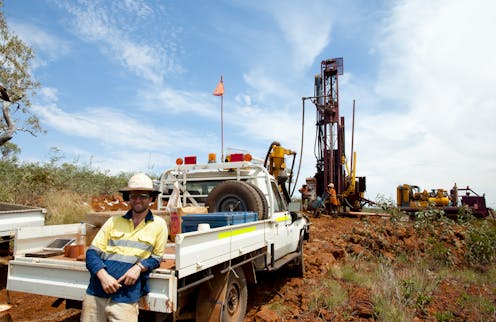
But one part of Morrison’s critique had longer resonance. Could utes ever go electric? These light utility cars are favoured by Australia[5] and New Zealand’s[6] two million strong tradie workforce to take materials and tools to jobs. Ute drivers are more likely to drive longer distances, making range anxiety an obstacle.
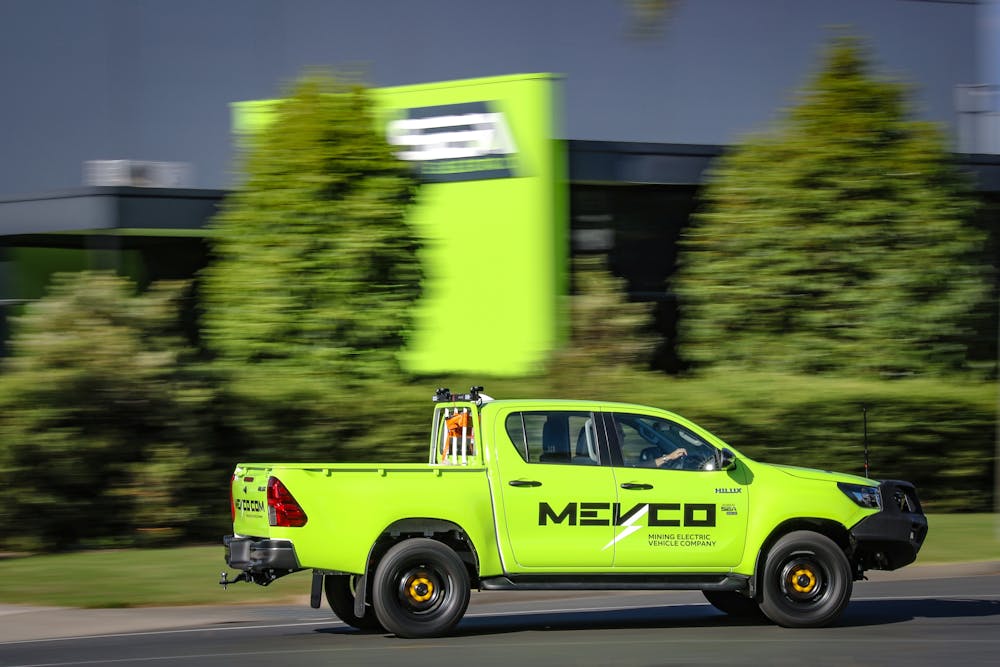
The answer is yes, though it may take longer than for cars. Only last week Melbourne company SEA Group announced[7] a deal to turn thousands of conventional utes electric.
At present, new electric utes are still more expensive. But over time, their advantages will make them an easy choice.
How are electric utes different?
Electric utes will have much lower running costs from fuel to maintenance. Electricity is cheaper than petrol or diesel. And doing away with the internal combustion engine means maintenance is much cheaper and less frequent.
They have improved performance, with instant torque[8] and rapid acceleration. This makes them suited for towing and driving in environments where quick manoeuvring and agility are needed.
Read more: New electric cars for under $45,000? They're finally coming to Australia – but the battle isn't over[9]
They have more storage[10] because there’s no large engine, leaving room for a front trunk. Batteries are typically located under the floor[11].
And for tradies, the large battery means they can charge and run[12] their tools without the need for a generator.
Like other electric vehicles, electric utes have better energy efficiency, converting much, much more of the energy stored in the battery into motion. By contrast, internal combustion engines lose most of the energy[13] in their fuel to heat.
But what about ‘range anxiety’?
The average driver[14] in Australia covers 36 kilometres per day, or around 12,000 kilometres each year.
But averages conceal heavy users. Owners of utes and other light commercial vehicles drive almost 40% more[15] than car drivers.
So, can electric utes handle the extra kilometres? In short – yes. Battery technology improves every year. The average distance an EV can drive on a single charge doubled[16] from 138km to 349km in the decade to 2021, based on US models.
Batteries will get better and cheaper, meaning range will increase. You can charge your electric ute at one of almost 5,000 charging stations[17] around Australia – a number which has almost doubled[18] in just three years. It’s also possible to swap out[19] depleted batteries rather than stopping to recharge.
If there’s power available at a worksite, you can also run a power cable to top up[20] your ute while on the job.
Electric utes will be slower to arrive – but the bigger change is already here
This year, Australia will have[21] 100,000 electric vehicles on its roads for the first time.
After years in the doldrums, electric cars finally arrived in numbers. Last year, almost 40,000 hit the roads for the first time – doubling the total in a single year.
But there’s still a way to go. That’s just 3.8%[22] of all new car sales – well below the global average of 12–14%[23] and far behind world leader Norway, where 87%[24] of vehicles sold are now electric.
Cars are comparatively easy to electrify. Utes and trucks are a harder challenge. Even though they come with major advantages, the higher sticker price will deter buyers.
This matters, because transport is now Australia’s third-largest[25] – and fastest growing – source of emissions, accounting for close to 20%[26] of the nation’s emissions.
Of these emissions, freight trucks are responsible for 23%, and light duty road vehicles – which includes utes – contribute 18%[27].
For years, Australia has been at the back of the pack. Our lack of emission standards for vehicles has made us a dumping ground[28] for high-polluting cars and trucks.
Electrifying our whole fleet of vehicles – coupled with clean energy to power them – is essential if we are to meet our legislated emissions targets.
Which electric utes are available now – or coming soon?
Australia’s first electric ute[29] is the LDV eT60[30]. It’s hugely expensive at around A$93,000, almost twice the cost of its diesel counterpart.
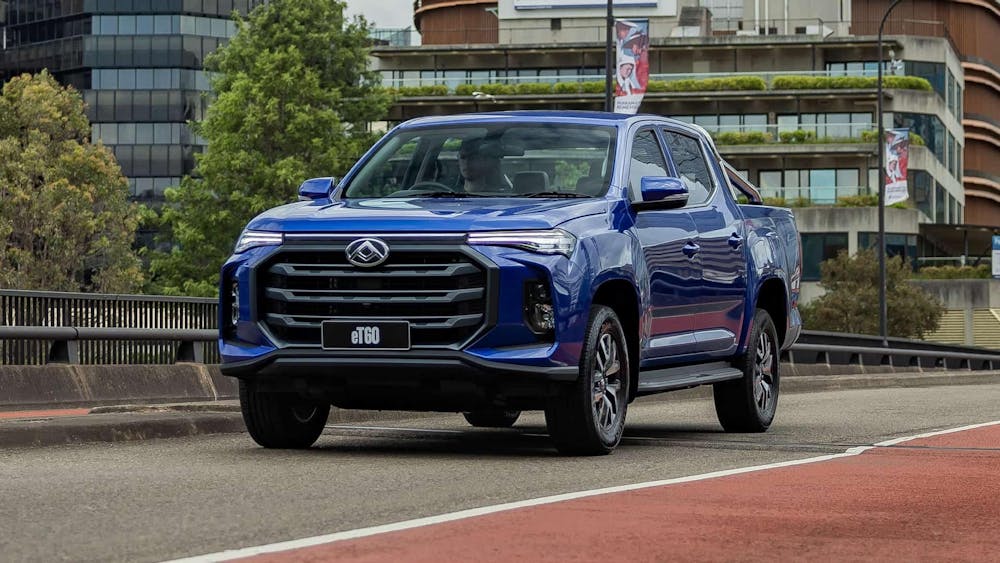 Australia’s first electric ute, LDV eT60.
Zecar
Australia’s first electric ute, LDV eT60.
Zecar
So how can we be confident electric utes will take off[31]? Because the technology isn’t standing still. As EVs get better and as worldwide battery production skyrockets, prices will fall. Many other models will soon be available.
States and territories are also introducing policies to reduce the cost of purchase, such as basing the cost[32] of registering a vehicle on its emissions.
Within seven years, electric vans and utes are predicted[33] to make up over 50% of all light duty commercial vehicles. This could come even sooner with supportive government policies.
There’s also a renewed interest in local manufacturing. Queensland’s Ace EV Group[34] plans to launch a small, cheap electric ute with the ability to charge your tools from its battery, while other outfits offer to convert[35] your existing car to electric.
The route to electric utes
The switch to electric is – at last – beginning in earnest. But time is of the essence. To accelerate, we need more variety and more affordable EVs, including light duty vehicles and utes.
One policy setting still holding us back is the lack of mandatory fuel efficiency standards[36]. If we had these, we would see much faster change[37].
Labor last year promised Australia would at last have ambitious mandatory fuel-efficiency standards[38]. They can’t come soon enough.
Read more: Australia is failing on electric vehicles. California shows it's possible to pick up the pace[39]
References
- ^ famously claimed (www.youtube.com)
- ^ popular misconception (electricvehiclecouncil.com.au)
- ^ refuted (www.abc.net.au)
- ^ video (www.youtube.com)
- ^ Australia (www.ceicdata.com)
- ^ New Zealand’s (www.nzherald.co.nz)
- ^ announced (www.abc.net.au)
- ^ instant torque (www.youtube.com)
- ^ New electric cars for under $45,000? They're finally coming to Australia – but the battle isn't over (theconversation.com)
- ^ more storage (www.lifewire.com)
- ^ under the floor (www.carmagazine.co.uk)
- ^ charge and run (www.whichcar.com.au)
- ^ lose most of the energy (www.energy.gov)
- ^ average driver (www.abs.gov.au)
- ^ almost 40% more (www.abs.gov.au)
- ^ doubled (www.visualcapitalist.com)
- ^ charging stations (www.plugshare.com)
- ^ almost doubled (electricvehiclecouncil.com.au)
- ^ swap out (www.youtube.com)
- ^ top up (www.carsguide.com.au)
- ^ will have (electricvehiclecouncil.com.au)
- ^ 3.8% (electricvehiclecouncil.com.au)
- ^ 12–14% (electricvehiclecouncil.com.au)
- ^ 87% (insideevs.com)
- ^ third-largest (www.pwc.com.au)
- ^ close to 20% (www.dcceew.gov.au)
- ^ contribute 18% (www.dcceew.gov.au)
- ^ dumping ground (thedriven.io)
- ^ electric ute (www.whichcar.com.au)
- ^ LDV eT60 (zecar.com)
- ^ take off (www.abc.net.au)
- ^ basing the cost (theconversation.com)
- ^ are predicted (www.bcg.com)
- ^ Ace EV Group (www.ace-ev.com.au)
- ^ to convert (www.abc.net.au)
- ^ fuel efficiency standards (theconversation.com)
- ^ much faster change (www.reuters.com)
- ^ fuel-efficiency standards (www.trendsmap.com)
- ^ Australia is failing on electric vehicles. California shows it's possible to pick up the pace (theconversation.com)
Read more https://theconversation.com/electric-utes-can-now-power-the-weekend-and-the-work-week-199600