Drip, drip, drip. Why is my leaking tap keeping me awake at night?
- Written by: Leon Lack, Professor of Psychology, Flinders University
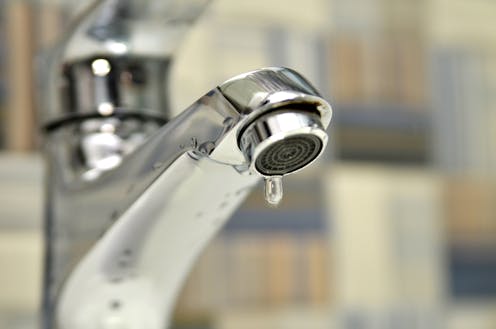
People describe the sound of a dripping tap in the middle of the night as anything from annoying[1] to torture[2]. Others sleep through, seemingly oblivious.
But if this common sound is keeping you awake, you can do something about it.
Here are some tips of how to rethink the sound of your leaking tap, which should help bring you a decent night’s sleep.
Read more: Why do we wake around 3am and dwell on our fears and shortcomings?[3]
Taps, snoring, roosters, traffic
Dripping taps, a partner snoring, the neighbour’s roosters, traffic noise. All can be the nemeses of the land of nod.
Unwanted light can also interrupt our sleep but we can close our eyes to block it out. We cannot close our ears to silence these disruptive noises.
So unless we wear ear plugs or very expensive noise-cancelling headphones, sounds at night will vibrate our ear drums, be converted to nerve impulses and wend their way up to the brain.
So we can hear these sounds if we are awake. If we’re asleep already, they may wake us.
Read more: Clicks, bonks and dripping taps: listen to the calls of 6 frogs out and about this summer[4]
Why are some sounds more likely to wake us?
Sounds that are loud, variable, unpredictable and meaningful are most likely to wake us.
We analyse meaning in the top or “smart” part of the brain, the cerebral cortex. This receives the information from the ears, even when we are asleep, and assesses the importance of the sound.
We are much more likely to awaken to the sound of our own name[5] than another name. A baby’s cry at night can wake us to feed it. Unusual sounds, possibly indicating danger, are more likely to wake us. Loud sounds, usually indicating something is getting very close, will wake us.
It is perhaps a good thing we cannot close our ears when we fall asleep. Having our ears “open” to potential danger while asleep may have been helpful for our ancestors, improving their chances of survival and our own subsequent existence.
How deeply we’re sleeping also affects if sounds wake us. Our sleep pattern is like a roller coaster. We first descend into deep sleep then ascend into light sleep about every 90 minutes[6]. During phases of light sleep, we are much more likely to be awoken by noises, even if they are soft and regular.
These light phases of sleep have probably served as brief “sentry” points across the sleep period. They may have helped our ancestors survive any night-time threats.
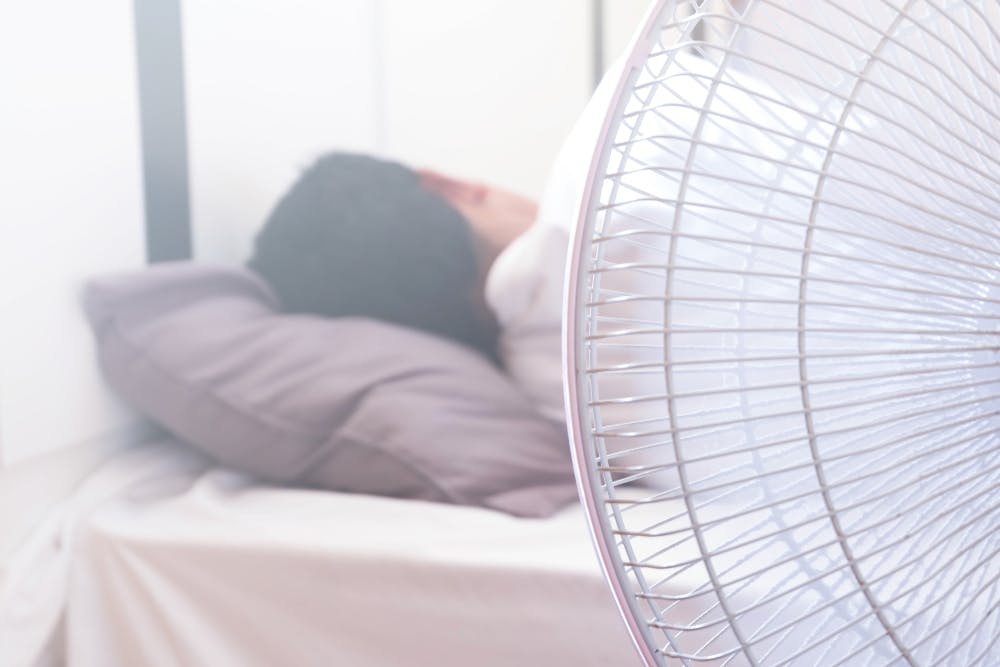
Sounds that are soft, regular, familiar, predictable and unimportant are not likely to awaken us.
We can also become used to regular or predictable sounds, such as a dripping tap, refrigerator or fan. That’s because over time our brain predicts the regular pattern, gets used to it, and doesn’t perceive it as a threat.
But a change in the pattern of the sound, such as when it suddenly stops, can wake us.
We have completed a large sleep study[8] of the effects of wind farm noise. We found no objective disturbance to sleep of typical intensity wind farm noise, which is a soft noise and regular.
To our surprise, even people who reported they found the wind farm noise annoying at home and felt it disturbed their sleep were not, in fact, woken by it. Nor was there any disruption of the objectively measured quality of their sleep.
Read more: What is brown noise? Can this latest TikTok trend really help you sleep?[9]
OK, so how about taps?
Sounds that represent a possible threat or challenge are much more likely to wake us. They are also more likely to stop us from falling asleep even when they are at low intensity and regular, such as a dripping tap.
The tap might be a challenge because it represents a job needing to be done, or a waste of water. But the strongest threat of the dripping tap on our sleep may be the belief that it will keep us awake and therefore affect how we function the next day.
The nightly association of the sound of the dripping tap with worry about our sleep and its “downstream” effects can trigger an anxious “fight or flight” response. This further delays us falling asleep. It can also develop into an “alert” habit, contributing to developing insomnia.
Dripping laundry tap or existential crisis?What can I do about it?
Cognitive/behaviour therapy for insomnia is a very effective treatment[10].
This cognitive approach may involve re-interpreting the meaning or threat the dripping tap poses.
Depending on its rate, you could interpret the dripping noises positively as someone’s heart beating regularly. If it drips at a slower rate, you could synchronise your breathing in a meditative-type practice to relax.
Alternatively, it may be quicker to wear earplugs, or fix the tap.
If you have insomnia, the dripping tap is unlikely to be the only trigger. So behavioural therapies can be used to increase your drive for sleep and ensure sleep, regardless of annoying noises.
A GP is a good place to start discussions about the option of referring you to a sleep psychologist to treat severe, chronic insomnia.
Read more: Explainer: what is insomnia and what can you do about it?[11]
References
- ^ annoying (twitter.com)
- ^ torture (twitter.com)
- ^ Why do we wake around 3am and dwell on our fears and shortcomings? (theconversation.com)
- ^ Clicks, bonks and dripping taps: listen to the calls of 6 frogs out and about this summer (theconversation.com)
- ^ our own name (onlinelibrary.wiley.com)
- ^ about every 90 minutes (www.sleephealthfoundation.org.au)
- ^ Shutterstock (www.shutterstock.com)
- ^ large sleep study (academic.oup.com)
- ^ What is brown noise? Can this latest TikTok trend really help you sleep? (theconversation.com)
- ^ very effective treatment (theconversation.com)
- ^ Explainer: what is insomnia and what can you do about it? (theconversation.com)
Read more https://theconversation.com/drip-drip-drip-why-is-my-leaking-tap-keeping-me-awake-at-night-194733