What risks could pet hamsters and gerbils pose in Australia?
- Written by: Marta Hernandez-Jover, Professor in Veterinary Epidemiology and Public Health, Charles Sturt University
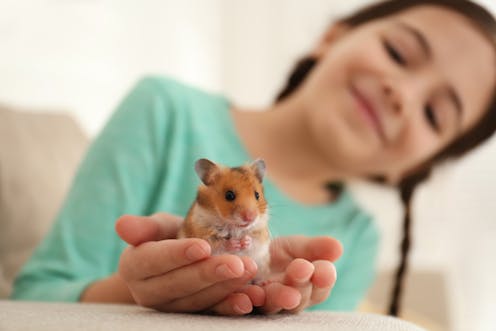
Kids on TV and in movies always seem to be keeping hamsters and gerbils as pets. They’re small, look cute, and don’t need to be taken for a walk. So why don’t we all have hamsters and gerbils as pets in Australia?
The answer: biosecurity and biodiversity.
Gerbils are not allowed[1] to be imported into Australia for any purpose. And while certain hamsters can technically be imported live, this is only strictly for tightly controlled research purposes[2].
Here’s what you need to know about why hamsters and gerbils could pose a biosecurity and biodiversity risk in Australia.
Read more: What is avian flu, the disease afflicting viral TikTok emu Emmanuel?[5]
Ready to reproduce early, multiple litters a year
Hamsters and gerbils threaten not just native Australian animals, but also plants and broader ecosystems.
Hamsters and gerbils originate from arid and semi-arid[6] environments, to which they are well adapted.
Considering roughly 70% of Australia is arid or semi-arid[7] land, hamsters and gerbils could survive and become a pest in the wild.
One study[8] found hamsters can also successfully establish populations in and around cities, adapting quickly to urban environments. Only a few animals need to escape into the wild, survive and breed for a small problem to turn into a very big one.
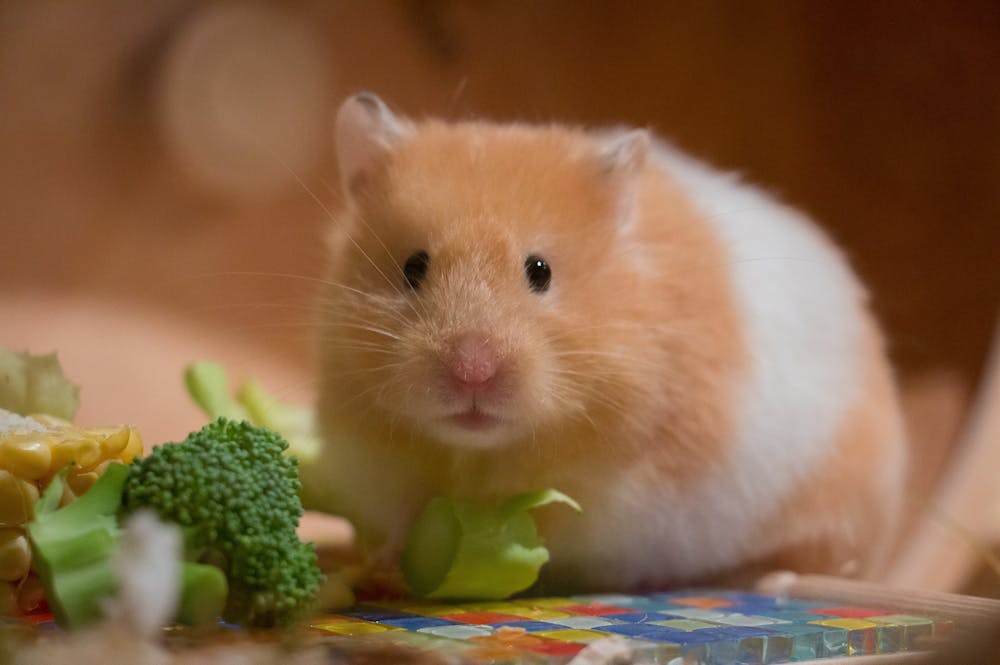
That’s because hamsters can reach reproductive maturity quite early, at about one month old[9]. They can produce up to five litters[10] a year, and each litter can have more than ten[11] pups.
Gerbils reach reproductive maturity at just a few months old[12], can have up to eight pups in a litter and, as one veterinary manual[13] put it, “begin mating again almost immediately after the female gives birth”.
 Gerbils ‘begin mating again almost immediately after the female gives birth’.
Image by Heiko Stein from Pixabay, CC BY[14][15]
Gerbils ‘begin mating again almost immediately after the female gives birth’.
Image by Heiko Stein from Pixabay, CC BY[14][15]
A risk to ecosystems
If they are released or escape into the wild, hamsters and gerbils would compete with our native rodents for the same food resources.
They could also pose a risk of disease[16] introduction, with both being a significant risk to the survival of our native animals.
Australia has many native rodent species that have been here for millions of years. They are diverse and ecologically important, and represent approximately a quarter[17] of all species of Australian mammals.
However, in the past 200 years there has been a significant decline in the number of species, with many becoming extinct[18]. Our native rodents are, in fact, among our most threatened groups[19] of native mammals.
If hamsters and gerbils became established in the wild in Australia, the consequences could be very significant.
So Australia considers the overall risk to be too high, and importation of these animals as pets is not allowed[20].
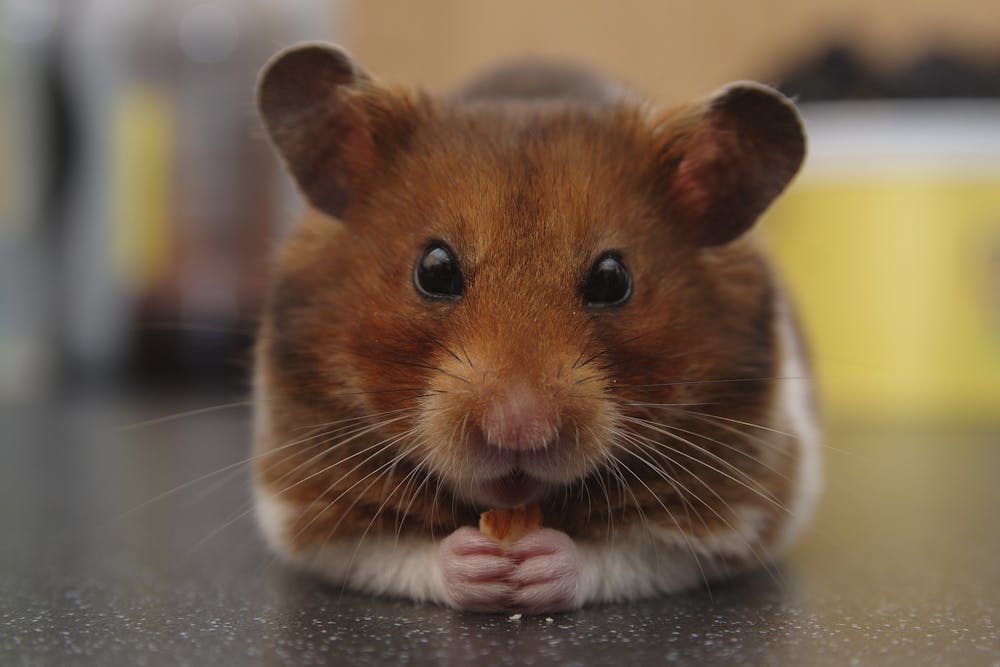 Importation of the Golden or Syrian Hamster for research purposes is allowed, but this requires a permit.
Image by Derek Sewell from Pixabay, CC BY[21][22]
Importation of the Golden or Syrian Hamster for research purposes is allowed, but this requires a permit.
Image by Derek Sewell from Pixabay, CC BY[21][22]
Importation of the Golden or Syrian hamster for research purposes is allowed, but this requires a permit and the animals must be kept in high-security facilities. Gerbils and hamsters have been used in scientific research[23] for a long time (and more recently as animal models[24] to study COVID-19).
The Australian government’s Live Import List[25], which shows the plant and animals allowed to be imported live into Australia, is reviewed regularly, and a lot of work goes into assessing the risks to Australia from exotic species.
These risks are weighed against the potential economic and social benefits of those species and a decision is made to protect Australia’s environment and agriculture, which are unique in the world.
These safeguards are part of Australia’s biosecurity system.
By supporting this system through small actions, like accepting that we can’t always have any pet species we might like, we are each doing our part to protect Australia’s environment, economy and way of life.
Read more: Tiny tracks tell of ancient paths made by gerbils and spiders on South Africa's south coast[26]
References
- ^ not allowed (www.dcceew.gov.au)
- ^ research purposes (www.dcceew.gov.au)
- ^ Image by mordilla-net from Pixabay (pixabay.com)
- ^ CC BY (creativecommons.org)
- ^ What is avian flu, the disease afflicting viral TikTok emu Emmanuel? (theconversation.com)
- ^ arid and semi-arid (www.ncbi.nlm.nih.gov)
- ^ arid or semi-arid (www.dcceew.gov.au)
- ^ study (onlinelibrary.wiley.com)
- ^ one month old (www.research.uky.edu)
- ^ five litters (www.msdvetmanual.com)
- ^ more than ten (www.ncbi.nlm.nih.gov)
- ^ few months old (www.researchgate.net)
- ^ manual (www.msdvetmanual.com)
- ^ Image by Heiko Stein from Pixabay (pixabay.com)
- ^ CC BY (creativecommons.org)
- ^ disease (www.vetexotic.theclinics.com)
- ^ a quarter (australian.museum)
- ^ extinct (journals.plos.org)
- ^ most threatened groups (www.environment.gov.au)
- ^ not allowed (www.dcceew.gov.au)
- ^ Image by Derek Sewell from Pixabay (pixabay.com)
- ^ CC BY (creativecommons.org)
- ^ scientific research (journals.sagepub.com)
- ^ animal models (www.ncbi.nlm.nih.gov)
- ^ Live Import List (www.dcceew.gov.au)
- ^ Tiny tracks tell of ancient paths made by gerbils and spiders on South Africa's south coast (theconversation.com)
Read more https://theconversation.com/what-risks-could-pet-hamsters-and-gerbils-pose-in-australia-192718