The Times Australia
Google AI
The Times World News

.

why this controversial book (sold here in shrink wrap) still matters

  • Written by Alexander Howard, Senior Lecturer, Discipline of English, University of Sydney
why this controversial book (sold here in shrink wrap) still matters

“I wanted to rub the human face in its own vomit, and force it to look in the mirror.” That’s the novelist J.G. Ballard, explaining why he wrote what is arguably the most important novel of the 1970s, the scandalous Crash[1].
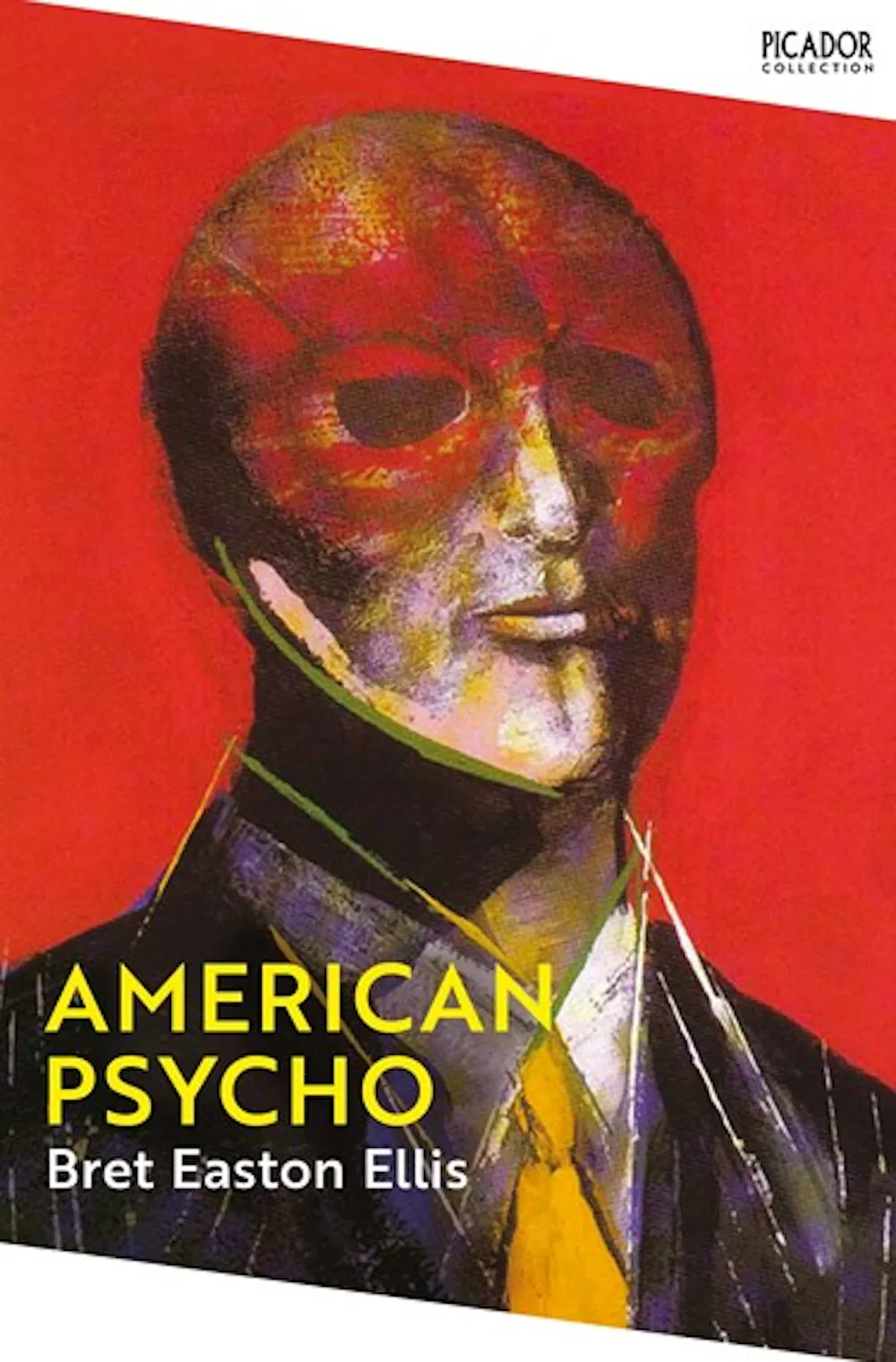
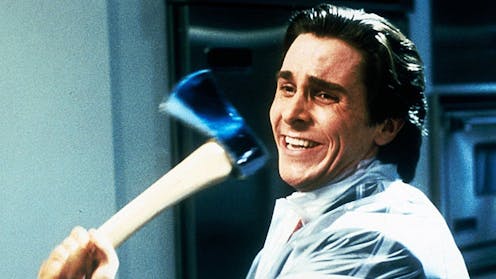
My hunch has always been that – if pressed properly – Bret Easton Ellis might offer an equivalent rationale for his exceedingly controversial satire, American Psycho. Irresponsible, indefensible, irredeemable. A book so depraved it still has to be sold in shrink-wrapped packaging[2] in Australia. You name it, Ellis’s most notorious work of fiction probably wallows in it. Abject misogyny[3], white supremacism[4], rampant homophobia[5] – that’s in just the first chapter. Yet the fact is that the book matters. Indeed, I believe American Psycho is the most important novel of the 1990s. Read more: Friday essay: scary tales for scary times[6] Mergers and murders on Wall Street “Abandon all hope ye who enter here.” The book’s first words get straight to the heart of it. Mergers and acquisitions, murders and executions. These concerns animate what passes for plot in American Psycho. The first-person narrative, which takes place in late-1980s New York City, centres on 27-year-old Harvard graduate and Wall Street[7] finance specialist, Patrick Bateman. A platinum Amex card, good looks, and a David Onica hung upside-down above the fireplace in his exclusive Upper West Side apartment. This white cis Young Republican – completely obsessed with Donald Trump[8] – enjoys the finer things in life. Patrick Bateman is obsessed with 1980s Donald Trump.We know because he tells us this repeatedly – in excruciatingly detailed, tonally flat prose. The Art of the Deal[9], Huey Lewis and the News, the original British cast recording of Les Misérables: these are a few of Patrick Bateman’s favourite things. So, too, are unspeakable acts of torture, sexual assault and homicidal violence. Again, we know because Bateman tells us – in graphic and nauseating detail. It soon becomes apparent that Bateman simply cannot help himself. Nor does he care to. Read more: Psychopaths versus sociopaths: what is the difference?[10] Things only get worse As Bateman himself acknowledges about two-thirds of the way through, his “rages at Harvard were less violent than the ones now and it’s useless to hope that my disgust will vanish – there is just no way.” In fact, things are only going to get worse: My conscience, my pity, my hopes disappeared a long time ago (probably at Harvard) if they ever did exist. There are no more barriers to cross. All I have in common with the uncontrollable and the insane, the vicious and the evil, all the mayhem I have caused and my utter indifference toward it, I have now surpassed. I still, though, hold on to one single bleak truth: no one is safe, nothing is redeemed. […] My pain is constant and sharp and I do not hope for a better world for anyone. In fact I want my pain to be inflicted on others. I want no one to escape. This memorable monologue – portions of which feature in the closing moments[11] of feminist filmmaker Mary Harron’s subsequent adaptation of the novel – is delivered in a chapter near the end of American Psycho. The title of the chapter in question – “End of the 1980s” – is significant. By this point, Bateman, whose grip on reality was tenuous at best to begin with, has spiralled completely out of control. He admits to this in the final chapter: I’m having a sort of hard time paying attention because my automated teller has started speaking to me, sometimes actually leaving weird messages on the screen, in green lettering, like “Cause a Terrible Scene at Sotheby’s” or “Kill the President” or “Feed Me a Stray Cat,” and I was freaked out by the park bench that followed me for six blocks last Monday evening and it too spoke to me. Disintegration – I’m taking it in stride. Yet the only question I can muster up at first and add to the conversation is a worried “I’m not going anywhere if we don’t have a reservation someplace, so do we have a reservation someplace or not?” I notice that we’re all drinking dry beers. Am I the only one who notices this? Bateman is the only character to notice this. The other yuppies in the bar have other things on their minds. Some are fretting about the amount of fibre in their diets. Others are fixated on figuring out who’s handling the Fisher account. Read more: Bret Easton Ellis: countercultural bad boy to grumpy Gen-Xer in eight essays[12] Reagan’s America and looking ‘undangerous’ One – Timothy Price – doesn’t notice because he is transfixed by something else entirely. “I don’t believe it. He looks so … normal. He seems so … out of it. So … undangerous.” However, Price isn’t describing the homicidal co-worker – whose crimes remain unpunished at the novel’s close – sitting next to him. Rather, he is talking about Ronald Reagan[13], whose image is being beamed into the bar via a TV screen. “How can he lie like that? How can he pull that shit?” These are the questions that a strangely incandescent Price puts to the rest of the group, Bateman included. Patrick Bateman and friends watch Reagan in a restaurant, in a scene from the film adaptation of American Psycho.This is the second and final time Reagan appears on a TV screen in the book. Though Ellis doesn’t specify, it seems probable that Price is reacting to a rerun of the former President’s infamous national address about his involvement in the Iran-Contra scandal[14]. Reagan, referred to by name on three fleeting occasions in this sprawling, near 400-page novel, is the key to understanding American Psycho, and why it matters. I mentioned before that Ellis’s grotesquely violent novel is irreducibly misogynist, racist and homophobic. It is all these things precisely because Reagan’s America was exactly that. The America of the 1980s was, lest anyone forget, the America of Reagan’s coded racist statements and social policies. Like the myth of the “welfare queen[15]”, a derogatory term designed to erode public sympathy for impoverished women of colour. The way the political right continued to draw inspiration from the so-called “Southern strategy” (an underhand and noxious electoral strategy first developed in the Nixon-era that sought to appeal to bigoted voters). And White House press conferences that offhandedly and laughingly dismissed the unfurling HIV/AIDS[16] epidemic as a “gay plague”. In this sense, then, American Psycho is less darkly comic satire than deadly serious and invaluable social diagnostic. As with Ballard’s Crash, Ellis’s novel – obsessed as it is with surfaces, appearances and reflections – holds up a mirror up to the reader, daring them (us) to look squarely at the horrific lived reality of late capitalist America. References^ Crash (www.harpercollins.com.au)^ sold in shrink-wrapped packaging (www.classification.gov.au)^ misogyny (theconversation.com)^ white supremacism (theconversation.com)^ homophobia (theconversation.com)^ Friday essay: scary tales for scary times (theconversation.com)^ Wall Street (theconversation.com)^ Donald Trump (theconversation.com)^ The Art of the Deal (www.newyorker.com)^ Psychopaths versus sociopaths: what is the difference? (theconversation.com)^ the closing moments (www.youtube.com)^ Bret Easton Ellis: countercultural bad boy to grumpy Gen-Xer in eight essays (theconversation.com)^ Ronald Reagan (theconversation.com)^ Iran-Contra scandal (www.youtube.com)^ welfare queen (www.pbs.org)^ HIV/AIDS (theconversation.com)

Read more https://theconversation.com/the-case-for-american-psycho-why-this-controversial-book-sold-here-in-shrink-wrap-still-matters-188463

Times Magazine

With Nvidia’s second-best AI chips headed for China, the US shifts priorities from security to trade

This week, US President Donald Trump approved previously banned exports[1] of Nvidia’s powerful ...

Navman MiVue™ True 4K PRO Surround honest review

If you drive a car, you should have a dashcam. Need convincing? All I ask that you do is search fo...

Australia’s supercomputers are falling behind – and it’s hurting our ability to adapt to climate change

As Earth continues to warm, Australia faces some important decisions. For example, where shou...

Australia’s electric vehicle surge — EVs and hybrids hit record levels

Australians are increasingly embracing electric and hybrid cars, with 2025 shaping up as the str...

Tim Ayres on the AI rollout’s looming ‘bumps and glitches’

The federal government released its National AI Strategy[1] this week, confirming it has dropped...

Seven in Ten Australian Workers Say Employers Are Failing to Prepare Them for AI Future

As artificial intelligence (AI) accelerates across industries, a growing number of Australian work...

The Times Features

I’m heading overseas. Do I really need travel vaccines?

Australia is in its busiest month[1] for short-term overseas travel. And there are so many thi...

Mint Payments partners with Zip Co to add flexible payment options for travel merchants

Mint Payments, Australia's leading travel payments specialist, today announced a partnership with ...

When Holiday Small Talk Hurts Inclusion at Work

Dr. Tatiana Andreeva, Associate Professor in Management and Organisational Behaviour, Maynooth U...

Human Rights Day: The Right to Shelter Isn’t Optional

It is World Human Rights Day this week. Across Australia, politicians read declarations and clai...

In awkward timing, government ends energy rebate as it defends Wells’ spendathon

There are two glaring lessons for politicians from the Anika Wells’ entitlements affair. First...

Australia’s Coffee Culture Faces an Afternoon Rethink as New Research Reveals a Surprising Blind Spot

Australia’s celebrated coffee culture may be world‑class in the morning, but new research* sugge...

Reflections invests almost $1 million in Tumut River park to boost regional tourism

Reflections Holidays, the largest adventure holiday park group in New South Wales, has launched ...

Groundbreaking Trial: Fish Oil Slashes Heart Complications in Dialysis Patients

A significant development for patients undergoing dialysis for kidney failure—a group with an except...

Worried after sunscreen recalls? Here’s how to choose a safe one

Most of us know sunscreen is a key way[1] to protect areas of our skin not easily covered by c...