Feeling bloated, hungry or bored after salad? These tips might help
- Written by: Lauren Ball, Professor of Community Health and Wellbeing, The University of Queensland
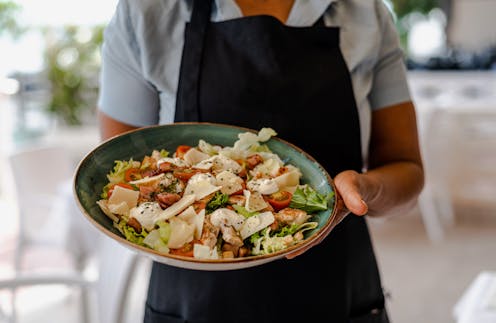
Salads are great for our health.
They are nutritious, packed full of gut-loving fibre, micronutrients, vitamins, minerals and antioxidants.
However, some people can experience certain downsides to eating salad after salad, including feeling bored, bloated or even still hungry.
Here are some tips to help you make the most of your salad-eating habits as the weather warms up.
Read more: Are home-brand foods healthy? If you read the label, you may be pleasantly surprised[1]
Keep yourself fuller for longer
Salads are naturally low in calories or kilojoules. This is because salads mostly contain vegetables, which have a high water content.
This may mean you don’t feel very satisfied after eating your salad – making it hard to stay full until your next meal.
Instead of eating a salad and then later reaching for something less healthy to fill up on, you can stay fuller for longer by including all three macronutrients in your salad:
a healthy carbohydrate source (pumpkin, sweet potato, parsnips, taro, brown rice, quinoa, barley or brown pasta)
a healthy fat source (avocado, olive oil, toasted seeds or nuts)
a lean protein source (eggs, fish, chicken, tofu, tempeh, lentils or legumes).
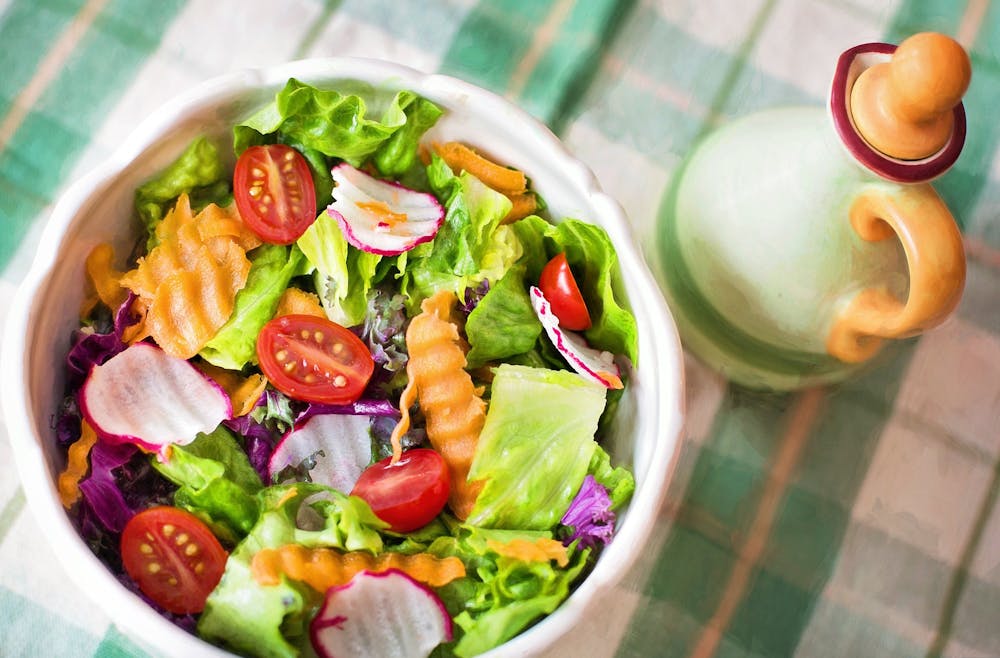
 You can stay fuller for longer by including all three macronutrients in your salad.
Photo by Dana Tentis/Pexels, CC BY[3][4]
You can stay fuller for longer by including all three macronutrients in your salad.
Photo by Dana Tentis/Pexels, CC BY[3][4]
Reduce bloating
Many people experience bloating and/or gut upset when they eat a lot of salad.
This commonly occurs if someone is going quickly from a less healthy, low-fibre diet to a healthier, high-fibre diet.
It happens because your gut microbes are multiplying and producing lots of plant-digesting enzymes (which is great for your gut health!).
However, your gut needs some time to adapt and adjust over time. You can help alleviate any discomfort by:
taking a short walk[5] or doing some stretching after eating your salad. This has been shown to reduce bloating as it loosens up the gut muscles and helps release any trapped gas
being mindful[6] of how you are preparing lentils and legumes. Ensure they are thoroughly rinsed and only include ¼ cup of them (soaked) to begin with if they are something new in your diet
eating your salad mindfully. A non-relaxed, uptight gut or a gut that has recently been irritated by an illness can mean your gut is not as efficient in absorbing gas. This can trigger bloating as the gas gets “trapped”
cooking some of the vegetables in your salad. Applying temperature or heat to your vegetables can help break them down and make them easier to digest
considering your symptoms. If you experience extreme abdominal pain, irregular bowel habits (including chronic diarrhoea or constipation, or alternating diarrhoea and constipation) and a bloated stomach after eating salad it may indicate you are suffering from irritable bowel syndrome (IBS). Please see an accredited practising dietitian who can make an assessment and diagnose IBS, help you identify your triggers and manage your symptoms
being mindful of your current health conditions or treatments. For example, if you are undergoing chemotherapy treatment, some drugs can slow down your digestion. This may mean some vegetables and other high-fibre foods in your salad upset your gut. Again, speaking with an accredited practising dietitian is the best way to receive evidence-based advice on how to manage this.
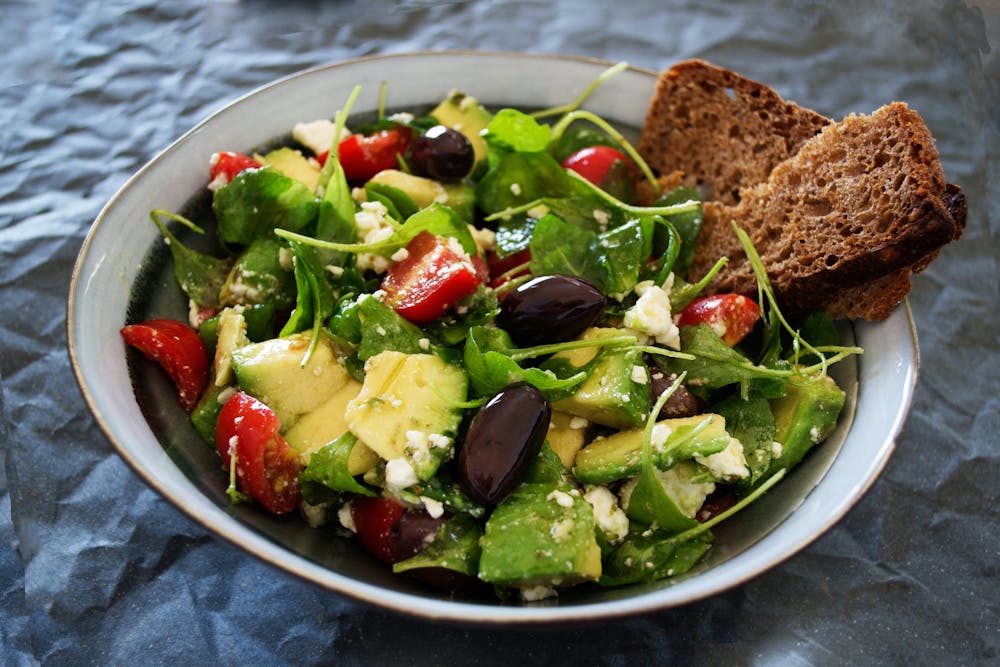
 Consider cooking some of the ingredients in your salad.
Photo by Max Delsid on Unsplash, CC BY[7][8]
Consider cooking some of the ingredients in your salad.
Photo by Max Delsid on Unsplash, CC BY[7][8]
Keep salad boredom at bay
Stuck on what makes a good salad? Here’s Lauren’s tried and tested formula, based on six categories of ingredients:
leaves, such as lettuce, rocket or spinach
something sweet and juicy, such as tomato, pear, mango, peach or whatever is in season
something with crunch, such as carrot, capsicum or broccolini
a type of nut, such as cashew or macadamia
a cheese, such as feta, bocconcini, mature cheddar, parmesan, edam
something fragrant, such as mint, parsley, basil or coriander.
To make the salad into a complete meal, add a healthy carbohydrate, fat and protein source (the three macronutrients we mentioned earlier).
The bottom line? Eating salads is a great way to have a healthy, diverse diet. With these tweaks, you can make the most of the summer weather ahead!
Read more: Curious Kids: are sugar rushes real?[9]
References
- ^ Are home-brand foods healthy? If you read the label, you may be pleasantly surprised (theconversation.com)
- ^ CC BY (creativecommons.org)
- ^ Photo by Dana Tentis/Pexels (www.pexels.com)
- ^ CC BY (creativecommons.org)
- ^ short walk (link.springer.com)
- ^ mindful (www.ncbi.nlm.nih.gov)
- ^ Photo by Max Delsid on Unsplash (unsplash.com)
- ^ CC BY (creativecommons.org)
- ^ Curious Kids: are sugar rushes real? (theconversation.com)
Read more https://theconversation.com/feeling-bloated-hungry-or-bored-after-salad-these-tips-might-help-190843