A global recession looks increasingly likely – but here's how Australia could escape it
- Written by: Peter Martin, Visiting Fellow, Crawford School of Public Policy, Australian National University
Global stock markets are tanking[1] on fears of recessions in the US, the UK and Europe, and the OECD is actually forecasting[2] recessions in Europe.
So is recession now inevitable in Australia? Not at all.
The good news is there are several reasons to think Australia might be able to escape a global slide into recession – though it will need careful management.
What could push Australia into recession?
Here’s the worst case scenario. The United States keeps pushing up interest rates until it brings on a recession, and Australia gets pressured to do the same.
Here’s how it’s playing out at the moment. The US Federal Reserve has lifted rates at each of its past five meetings. The past three hikes have been massive by Australian and US standards – 0.75 percentage points each, enough to slow already-forecast[3] US economic growth to a trickle, which is what the Fed wants to fight inflation.
But the Fed is planning to go further. Its chair, Jerome Powell says he expects ongoing increases[4], and last week countenanced the possibility they would throw the country into recession[5]:
We don’t know, no one knows, whether this process will lead to a recession or if so, how significant that recession would be. That’s going to depend on how quickly wage and price inflation pressures come down, whether expectations remain anchored, and whether also we get more labour supply.
Powell is saying he is prepared to risk a recession to get inflation down.
The UK’s top banker already expects a recession
Powell’s not alone. His UK equivalent, Bank of England governor Andrew Bailey, has lifted rates seven times since December. Bailey says he is prepared to do more to fight inflation – “forcefully, as necessary[6]” – and is actually forecasting a recession, which he says has probably started[7].
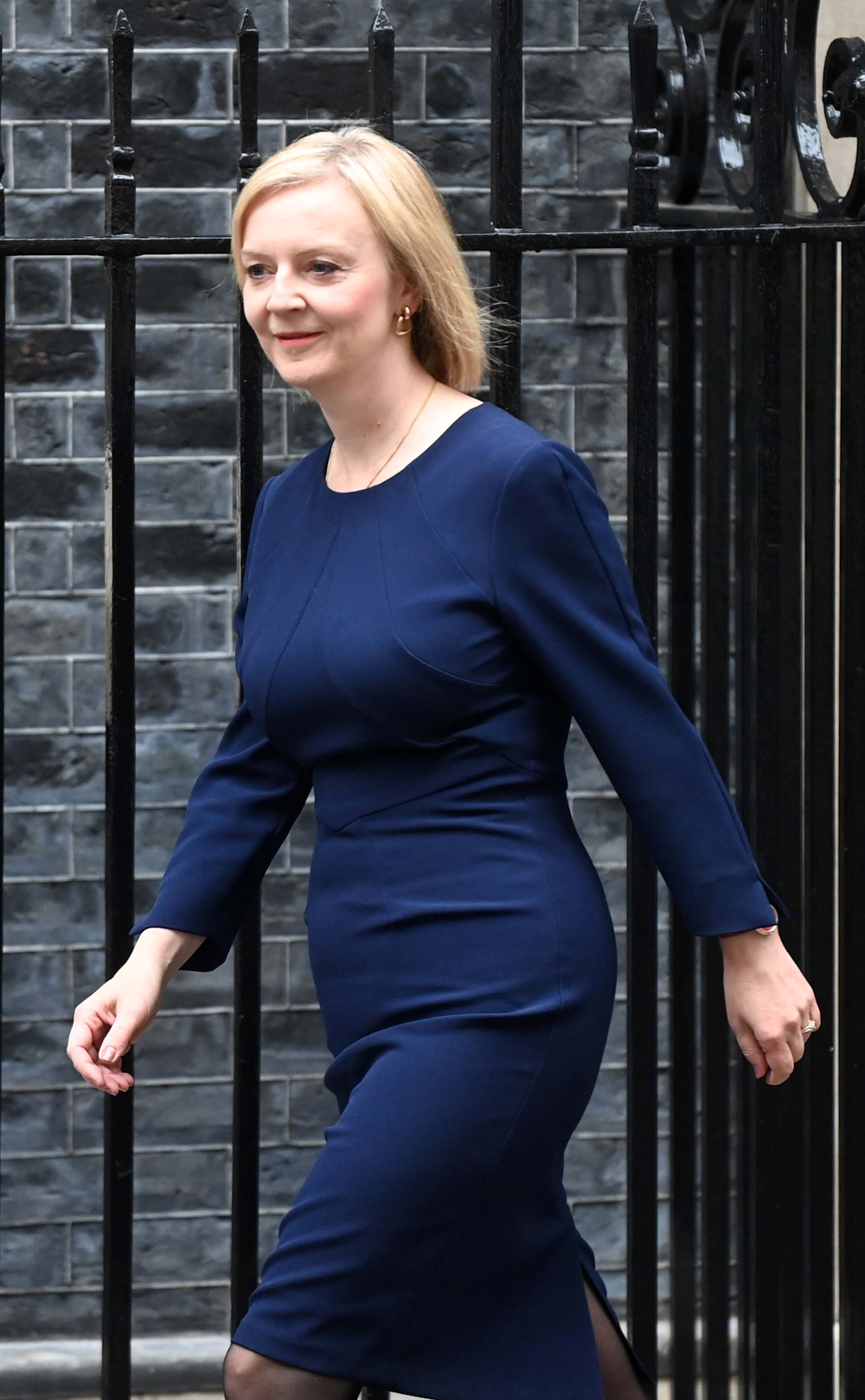
So alarmed is the new UK government headed by Liz Truss that on Friday it unveiled a £45 billion (A$75 billion) “growth plan[8]” made up of tax cuts and infrastructure spending, on top of spending of £60 billion (A$100 billion) to cap household and business energy bills[9].
Given what’s now happening overseas, you might expect Australia’s Reserve Bank to take note and behave differently to central banks overseas.
Except that it’s not that quite easy.
Pressure to follow the US
Whenever the US hikes interest rates (it’s hiked them seven times since March), investors buy US dollars to take advantage of the higher rates. This forces up the price of the US dollar in relation to currencies of countries that didn’t hike.
This means unless countries such as Australia hike in line with the US, the values of their currencies are likely to fall in relation to the US dollar – meaning their values are likely to fall in relation to the currency in which most trade takes place.
This means more expensive imports, which means more inflation.
And Australia’s Reserve Bank is trying to contain inflation.
The upshot is whenever the US pushes up rates (no matter how recklessly) there’s pressure on Australia to do the same, simply to stop inflation getting worse.
The risk of ‘a gratuitously severe recession’
Since March, when the US began pushing up interest rates more aggressively than Australia, the value of the Australian dollar has slid from US0.73 to less than $US0.65, putting upward pressure on goods traded in US dollars of about 11%.
With Australian inflation already forecast to hit 7.75%[10] this year, way above the Reserve Bank’s 2-3%[11] target, still more inflation is what the bank doesn’t want.
This locks countries such as Britain (whose currency has fallen to an all-time low[12] against the US in the wake of the tax cuts) and Japan (whose government has intervened[13] to try to stop its currency falling) into a semi-dependent relationship with the US.
Failing to follow its lead makes inflation worse.
It is why US economist Paul Krugman says there is serious risk the Fed’s actions “will push America and the world[14] into a gratuitously severe recession”.
Going your own way can hurt your dollar
The risk isn’t merely that the US will go too far. The risk is that other countries, including ours, will ape the US in pushing up rates to maintain the value of their currencies, amplifying the effect of a US recession and making it global.
It’s often said that central banks hunt in packs[15]. What’s less often noted is the pressure they are under to follow each other.
In Australia, AMP chief economist Shane Oliver puts it starkly: if the Reserve Bank doesn’t follow the US Fed, the Australian dollar might crash[16].
But here’s the good news. We know Australia can avoid the worst of global economic downturns, because we’ve done it before.
How Australia has avoided past recessions – and can again
Australia avoided recession during the 1997 Asian financial crisis[17], we escaped the 2001 US “tech-wreck[18]”, and we avoided the “great recession[19]” during the global financial crisis.
In part, this has been due to excellent judgement. Our Reserve Bank was able to take clear-eyed decisions about when to follow the US on rates and when not to.
At times it was helped by high commodity prices, which are high again following Russia’s invasion of Ukraine and which are supporting our currency, even though we are increasing rates less aggressively than the United States.
Read more: Fed keeps focus on US economy as the world tilts toward a recession that it may be contributing to[20]
At the right moment, Australia’s Reserve Bank would be wise to decouple from the US. If the Fed pushes up rates to the point where it is about to bring on a US recession, Australia would be well advised to stand back and not lift rates, letting the collapse of the US economy bring down inflation by itself.
If Australia’s Reserve Bank thinks that moment is approaching, it should consider shrinking the size of its rate rises (the last four have been 0.5 percentage points).
Read more: 'It's important not to overreact': top economists on how to fix inflation[21]
Its next meeting is next Tuesday[22]. Because of its importance, the Bureau of Statistics is bringing forward the publication of its new monthly measure[23] of inflation to this Thursday[24], publishing the results for both July and August at once.
But the bank will need more than information. It’ll need the intuition and common sense that has kept us out of trouble in the past.
References
- ^ tanking (www.thenationalnews.com)
- ^ forecasting (fortune.com)
- ^ already-forecast (www.federalreserve.gov)
- ^ ongoing increases (www.federalreserve.gov)
- ^ into recession (www.federalreserve.gov)
- ^ forcefully, as necessary (www.bankofengland.co.uk)
- ^ probably started (www.bbc.com)
- ^ growth plan (assets.publishing.service.gov.uk)
- ^ energy bills (www.reuters.com)
- ^ 7.75% (www.rba.gov.au)
- ^ 2-3% (www.rba.gov.au)
- ^ all-time low (www.theguardian.com)
- ^ intervened (www.smh.com.au)
- ^ and the world (www.nytimes.com)
- ^ hunt in packs (theconversation.com)
- ^ might crash (www.adviservoice.com.au)
- ^ Asian financial crisis (corporatefinanceinstitute.com)
- ^ tech-wreck (www.afr.com)
- ^ great recession (www.investopedia.com)
- ^ Fed keeps focus on US economy as the world tilts toward a recession that it may be contributing to (theconversation.com)
- ^ 'It's important not to overreact': top economists on how to fix inflation (theconversation.com)
- ^ Tuesday (www.rba.gov.au)
- ^ monthly measure (theconversation.com)
- ^ Thursday (www.abs.gov.au)