What the Queen's death means for an Australian republic
- Written by: John Warhurst, Emeritus Professor of Political Science, Australian National University
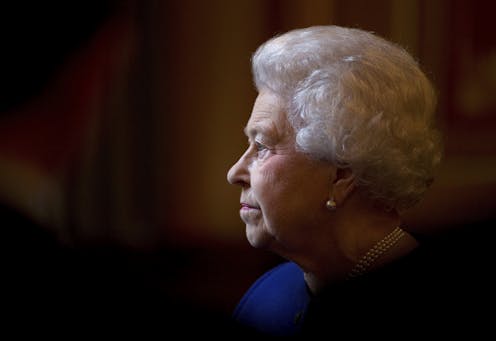
The passing of Queen Elizabeth II has the potential to transform Australia’s republic debate.
While the debate should not be about personalities, the monarch’s identity clearly makes a difference. Former prime minister and republican Malcolm Turnbull once famously said many Australians were “Elizabethans[1]” rather than monarchists.
However, as we mark the transition from one monarch to another, republic supporters still need to be patient, for a number of reasons.
Speaking on talk radio on Friday[2], Prime Minister Anthony Albanese declined to address the republic question, saying: “Today is a day for one issue, and one issue only, which is to pay tribute to Queen Elizabeth II and to give our thanks for her service to our country.”
But what can we expect in the longer term?
The Charles factor
With the death of Queen Elizabeth II, Prince Charles has become King Charles III, not just of the United Kingdom, but of Australia and other dominions too. Camilla has become Queen Consort with Elizabeth’s blessing[3].
Read more: There's a strong case to be made for constitutional monarchies. But there's no case for one in Australia[4]
Opinion surveys[5] have regularly shown the idea of Charles becoming king raises support for a republic. I believed in 1999, at the time of the constitutional referendum, the figure was about 5%. It was widely recognised Charles was not as popular among Australians as his mother. That is still the case.
After the first, failed referendum, influential republicans, like Turnbull, believed Australia should not consider a second referendum until the queen had passed away. The Australian Republic Movement disagreed – but that view became widespread.
This has prevented any official preparatory initiatives prior to the end of her time on the throne.
Back to the start
Much has changed over the past 23 years since we last seriously considered a republic. This means the public discussion must begin again almost from scratch and under new circumstances. For one thing, any Australian currently under 40 years of age did not vote in 1999.
Some lessons[6] have also been learned from 1999, including problems with divisions between republicans about what model to adopt, but many issues remain unresolved. The central arguments for a republic have not changed markedly, but the situation is different.
One important development has been the increased urgency for constitution recognition of Indigenous rights. The republic movement and most republicans recognise the latter now has precedence over a second republic referendum.
Preferred models and public support
Experience and common sense dictate the move towards a republican constitution should not be rushed anyway. There needs to be time put aside for considered community discussion. While the initial discussion can be led by civil society groups, like the republic movement, ultimately the discussion must be led by the federal parliament and government if we are going to make genuine progress.
Read more: The republic debate is back (again) but we need more than a model to capture Australians' imagination[7]
The republic movement has recently launched its preferred model for a republic[8], which is a starting point for public discussion. This follows years of stating the model should be decided by the community at a plebiscite prior to a referendum.
The new model proposes Australian parliaments nominate candidates for president before a popular vote to decide between them. It has been derided in some quarters[9] for its complexity, but it is a creative attempt to resolve differences between direct election and parliamentary republicans. The model also reflects the realities of a federal system.
What are the mechanics?
The method of constitutional reform remains unchanged from 1999 (there has not been a referendum question put since then and the last successful referendum occurred in 1977). This recent history of our failure[10] weighs heavily on any new referendum proposal.
Such proposals must effectively first win the support of the both houses of federal parliament. Then the specific proposal must be put to a yes/no referendum.
There is no other legitimate constitutional way, even though some people would prefer an “in principle” referendum to test the waters first. Realistically, the support of the federal government and opposition is also a necessary condition for a successful referendum.
Another decade away?
At any rate, any radical transformation of the republic/monarchy debate will not happen straight away. There needs to be time for the public to mourn the loss of Elizabeth.
That means a timetable for a second republican referendum, given King Charles has come to the throne in 2022, is at best five to ten years away (after the 2025 federal election at the earliest). By that stage Charles himself will be close to 80 years of age or even older.
References
- ^ Elizabethans (www.abc.net.au)
- ^ talk radio on Friday (www.3aw.com.au)
- ^ Elizabeth’s blessing (www.usatoday.com)
- ^ There's a strong case to be made for constitutional monarchies. But there's no case for one in Australia (theconversation.com)
- ^ surveys (www.smh.com.au)
- ^ lessons (www.aph.gov.au)
- ^ The republic debate is back (again) but we need more than a model to capture Australians' imagination (theconversation.com)
- ^ preferred model for a republic (theconversation.com)
- ^ derided in some quarters (www.abc.net.au)
- ^ history of our failure (humanrights.gov.au)
Read more https://theconversation.com/what-the-queens-death-means-for-an-australian-republic-181610