Chile’s proposed constitution and its lessons for Australia
- Written by: Ana Estefanía Carballo, Honorary Research Fellow in Mining and Society, School of Geography, Earth and Atmospheric Sciences, The University of Melbourne
Chile may soon be the second country in the world to grant constitutional rights to nature, under astoundingly progressive reforms proposed by the government. If approved in the national referendum on 4 September, the new constitution[1] would deliver profound changes to the country.
It’s no surprise that 50 of the 387 constitutional provisions concern the environment. Like Australia, Chile is facing mounting environmental pressures. This includes an escalating water crisis made significantly more challenging by the mining industry, long seen as a key pillar of the economy.
The proposed constitution seeks to rapidly pivot Chile toward ecological democracy, one that can transition an economy long dependent on mineral extraction toward cleaner, less resource-intensive, and more socially just forms of living – _buen vivir[2]_.
While the votes aren’t yet in, there are valuable lessons in this process for Australia and other countries grappling with similar concerns.
An era of change
This era of constitutional change began in 2019, when over one million Chileans took to the streets[3] to voice their discontent over economic and social conditions in the country.
Initially unstructured and spontaneous, the protests were sparked by an increase in public transport costs, but quickly coalesced[4] into a widespread constitutional crisis.
This crisis was an outcry against the deeply entrenched socio-economic inequalities seen as rooted in and perpetuated by the country’s legal framework. This is a legacy of the Pinochet dictatorship (1973-1990), which saw soaring wealth inequalities[5] and power concentrated in the hands of business elites and private corporations.
Read more: Chile's political crisis is another brutal legacy of long-dead dictator Pinochet[6]
In the face of both social and ecological breakdown, further intensified by the arrival of COVID-19, over 80% of Chileans voted in favour of re-writing the constitution in 2020.
In May 2021, a constitutional convention was elected, formed by 155 representatives from across the country. Notably, 50% of them were women, and it was led by Mapuche linguist and Indigenous rights activist Elisa Loncón[7].
In July 2022, the convention delivered the much-anticipated draft constitution, which was immediately heralded by supporters as[8] an “ecological constitution”.
 Mass demonstrations across Chile began in October 2019.
AP Photo/Esteban Felix
Mass demonstrations across Chile began in October 2019.
AP Photo/Esteban Felix
What are the reforms?
Over the last decade, both Ecuador and Bolivia have been at the global forefront of advocating for the “rights of nature” or “the rights of Mother Earth”. These rights have made it possible to bring cases on behalf of ecosystems into courts[9], and to challenge the extractive imperatives of state ministries.
The proposed changes to Chile’s constitution build on these experiments, but take them considerably further.
Not only would Chile become the second nation after Ecuador to grant nature constitutional rights, they would also create an “ombudsman for nature” tasked with monitoring and enforcing them. According to the draft text, it would be the duty of the “state and society to protect and respect these rights”.
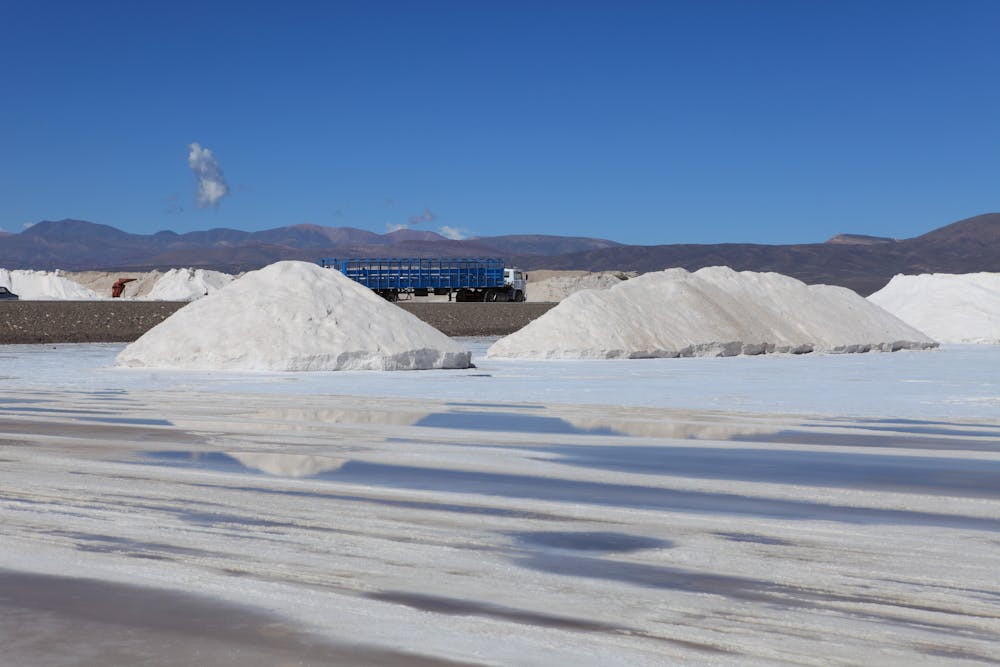 Chile has vast reserves of lithium deposits.
Shutterstock
Chile has vast reserves of lithium deposits.
Shutterstock
Citizens would also be empowered to bring environmental lawsuits, even before an environmental impact assessment has been approved. The monitoring of these rights would extend all the way down to the local level, decentralising environmental regulatory authority that has historically been concentrated in the capital of Santiago.
But perhaps even more significant are the proposals aiming to reverse another legacy of the Pinochet dictatorship: Chile’s decades-long privatisation of water.
Chile is in an unprecedented water crisis[10], with over half of its 19 million people living in areas of severe water scarcity. Communities have fought numerous legal battles against extractive companies over a water allocation system that’s strongly biased toward industry[11].
Read more: Chile: election of progressive indigenous academic to oversee constitutional reform is a blow to right-wing establishment[12]
Articles in the proposed constitution concerning water rights, the human rights of water, and the protection of glaciers and wetlands significantly roll back these trends. They declare that water is not a commodity but, instead, incomerciable or “unsellable”.
Overturning this decades-long controversial market mechanism[13] is the direct result of involving social and Indigenous movements in the constitutional process. It reflects and affirms their often-repeated recognition that Agua es vida, or “water is life”.
 People hold Chilean flags as they demonstrate against the new draft of the proposed constitution in Santiago, Chile, August 2022.
AP Photo/Matias Basualdo
People hold Chilean flags as they demonstrate against the new draft of the proposed constitution in Santiago, Chile, August 2022.
AP Photo/Matias Basualdo
Beyond enshrining water protection measures, the draft constitution represents a renewed effort to bolster Chile’s natural resources governance, a move with significant impacts on the mining industry. It specifies that exploration and exploitation of mineral resources should ensure environmental protection and the interest of future generations.
There are also requirements to ensure sustainable management of land sites after a mine has closed, and for the promotion of value chain linkages (where mineral processing occurs in the country and benefits its people).
Read more: We need lithium for clean energy, but Rio Tinto's planned Serbian mine reminds us it shouldn't come at any cost[14]
Such considerations are particularly crucial for the global transition towards renewable energy, which poses high demands[15] on Chile’s copper and lithium industry, minerals used for energy storage.
The global rush for these minerals is increasing governance challenges and putting pressure[16] on communities already under environmental and water stress. Strong legal support for a more equitable, fair and sustainable governance framework is imperative.
Lessons for the world
Many questions remain about how these reforms would be put into practice. Nevertheless, they represent the culmination of dialogue between sectors that have historically been excluded from political power.
Australia has much to learn from this process. Most important, perhaps, is that despite the resistance of pro-market sectors, including the mining industry, sweeping and rapid transformations are indeed imaginable in the climate crisis. Other worlds are possible. Other forms[17] of democratic practices are possible.
Addressing climate change while ensuring a sustainable energy transition with inter-generational and inter-cultural equity means prioritising the voices of those who have been systematically excluded – particularly Indigenous communities. Australia would do well to heed this lesson.
 The constitution prioritises the voice of Indigenous communities.
AP Photo/Esteban Felix
The constitution prioritises the voice of Indigenous communities.
AP Photo/Esteban Felix
And the lessons aren’t just for Australia. While many countries have reluctantly acknowledged the climate emergency that continues to engulf us, Chile is nearly alone globally in acting with the sense of urgency required. What it has already achieved is historic.
From an outcry in the streets to the election of an outstandingly diverse constitutional convention, Chile has crafted one of the most progressive and environmentally conscious legal texts on the planet. Chile’s experience demonstrates that bold, just, and democratic action is not only possible, but necessary.
Read more: Chile abolishes its dictatorship-era constitution in groundbreaking vote for a more inclusive democracy[18]
References
- ^ the new constitution (www.chileconvencion.cl)
- ^ _buen vivir (journals.sagepub.com)
- ^ when over one million Chileans took to the streets (www.nature.com)
- ^ quickly coalesced (theconversation.com)
- ^ soaring wealth inequalities (theconversation.com)
- ^ Chile's political crisis is another brutal legacy of long-dead dictator Pinochet (theconversation.com)
- ^ Elisa Loncón (theconversation.com)
- ^ supporters as (www.nature.com)
- ^ on behalf of ecosystems into courts (www.theguardian.com)
- ^ Chile is in an unprecedented water crisis (www.theguardian.com)
- ^ strongly biased toward industry (www.water-alternatives.org)
- ^ Chile: election of progressive indigenous academic to oversee constitutional reform is a blow to right-wing establishment (theconversation.com)
- ^ market mechanism (www.sciencedirect.com)
- ^ We need lithium for clean energy, but Rio Tinto's planned Serbian mine reminds us it shouldn't come at any cost (theconversation.com)
- ^ which poses high demands (www.bloomberg.com)
- ^ increasing governance challenges and putting pressure (transparency.org.au)
- ^ Other forms (www.dukeupress.edu)
- ^ Chile abolishes its dictatorship-era constitution in groundbreaking vote for a more inclusive democracy (theconversation.com)