The US has finally passed a huge climate bill. Australia needs to keep up
- Written by: Christian Downie, Associate Professor, Australian National University
If politics moves slowly, climate politics often feels like it doesn’t move at all.
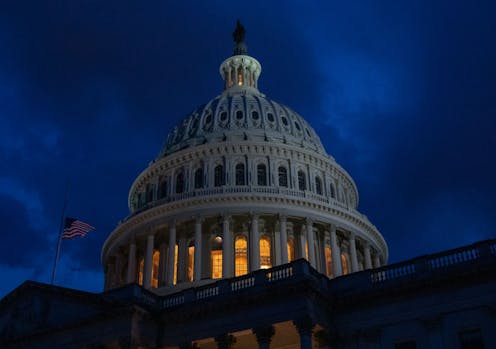
Yet at the weekend, US senators worked through the night to accomplish something they have failed to do since NASA scientist James Hansen first warned them[1] about the dangers of climate change almost 35 years ago. They passed a major climate bill[2].
And not just any bill. The A$530 billion of clean energy initiatives in the larger Inflation Reduction Act represent the largest single investment to slow global heating in US history. It means the world’s second-largest emitter of greenhouse gases will become a global leader on climate change.
Initial modelling[3] suggests the bill could be enough to cut US emissions by around 40% by 2030, relative to a 2005 baseline. That won’t meet President Joe Biden’s goal of halving emissions by 2030, but it gives America a fighting chance.
What does it mean for Australia? After the go-slow years of Coalition government and Trump’s fossil-fuel-friendly presidency, the times finally favour action. There is a clean energy race on, and Australia needs to keep up.
It’s been a hard road
When the bill passed, senators broke down in tears. Senate majority leader Chuck Schumer spoke of “a long, tough and winding road. But at last, at last we have arrived.”
The bill looked dead in the water as recently as July, when controversial Democratic senator Joe Manchin of West Virginia pulled his crucial vote[4] for climate legislation.
That led many to despair, believing the window for climate action had shut again given Republican disinterest in climate action. But then Manchin cut a deal. It was the last chance to act before November’s midterm elections, which Republicans are expected to win – although the Supreme Court’s seismic decision on abortion may change[5] this.
I remember being in Washington DC, studying climate policy, the last time the US got this close. In the summer of 2009, the US House of Representatives passed a bill designed to institute a nationwide carbon price. With chants of “yes we can” still ringing in many ears after President Barack Obama’s arrival in the White House, it seemed climate politics was moving. But the Senate killed that bill, and with it any hope for legislative action on climate change.
Read more: Government set to legislate its 43% emissions reduction target after Greens announce support[7]
America had to wait more than a decade for the next opportunity. The weekend’s vote was close, with Vice President Kamala Harris casting the decider.
What was lost in the intervening years was more than time. In the past decade, climate impacts have become more frequent and deadly. Just ask the flood victims of Lismore in New South Wales, or the citizens of Mallacoota in Victoria after the bushfires.
Most of Europe is now in drought[8]. Stories of unprecedented heatwaves and flooding come in weekly from China, India, the Middle East and South America. The western US is in megadrought[9], the worst in at least 1,200 years, with reservoirs at dangerous lows.
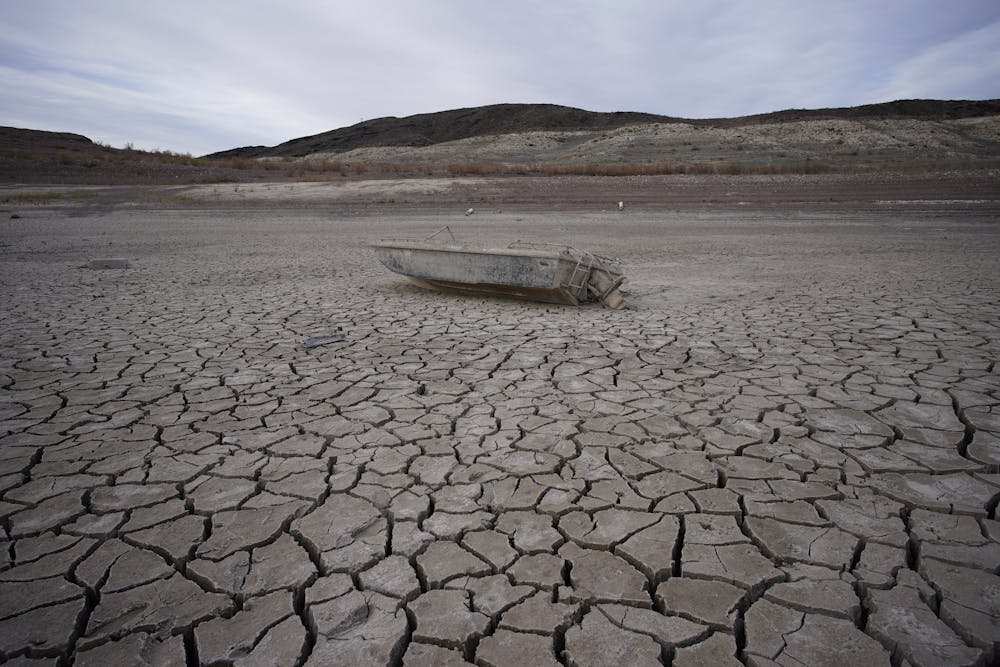 America’s largest water reservoir, Lake Mead, is now at its lowest level since being filled in 1937.
John Locher/AP
America’s largest water reservoir, Lake Mead, is now at its lowest level since being filled in 1937.
John Locher/AP
What does the bill actually contain?
When climate action is deliberately stalled by political parties, the price is paid by communities, families and the natural world.
That’s why the US bill is momentous. Senate approval of the A$530 billion in spending will directly advance clean energy. This includes billions of dollars in tax credits for solar panels, wind turbines, batteries and geothermal plants, among other technologies.
Read more: Albanese just laid out a radical new vision for Australia in the region: clean energy exporter and green manufacturer[10]
This comes through around A$13 billion in rebates for Americans to electrify their homes, tax credits of almost A$11,000 to electrify their cars, and billions more to establish a “green bank”, target agricultural emissions and help disadvantaged communities.
Even better, these billions in public money will crowd in private investment, accelerating the speed at which the US economy can decarbonise.
What should Australia take from this?
There are several lessons for Australia.
The first is legislating a target as Labor has done is a start, but only a start. The world is set for a clean energy race, given China is also investing huge amounts[11] in clean energy while European nations are trying to wean themselves off Russian gas.
The Albanese government should follow the US with historic investments in clean energy, using renewable jobs as an incentive. Key features of the US bill aim to turbocharge local clean energy manufacturing, such as requiring battery components be made in the US. As it stands, America’s geopolitical rival China has cornered the market in many areas of clean tech, such as solar panels[12].
Second, fossil fuel industries will fight tooth and nail against change. Manchin has received more money[13] from the oil and gas industry than any other member of Congress – and has personal interests[14] in coal. His interventions mean the bill has rewards for the oil and gas industries, such as requiring the federal government to auction new offshore oil and gas leases. There is likely more devil in the detail.
For decades, fossil fuel industries have had an outsized influence[15] on climate policy in Australia. It’s folly to think they’ll just give up. This week we found out the car industry has already launched a secret PR campaign[16] to slow electric vehicle uptake.
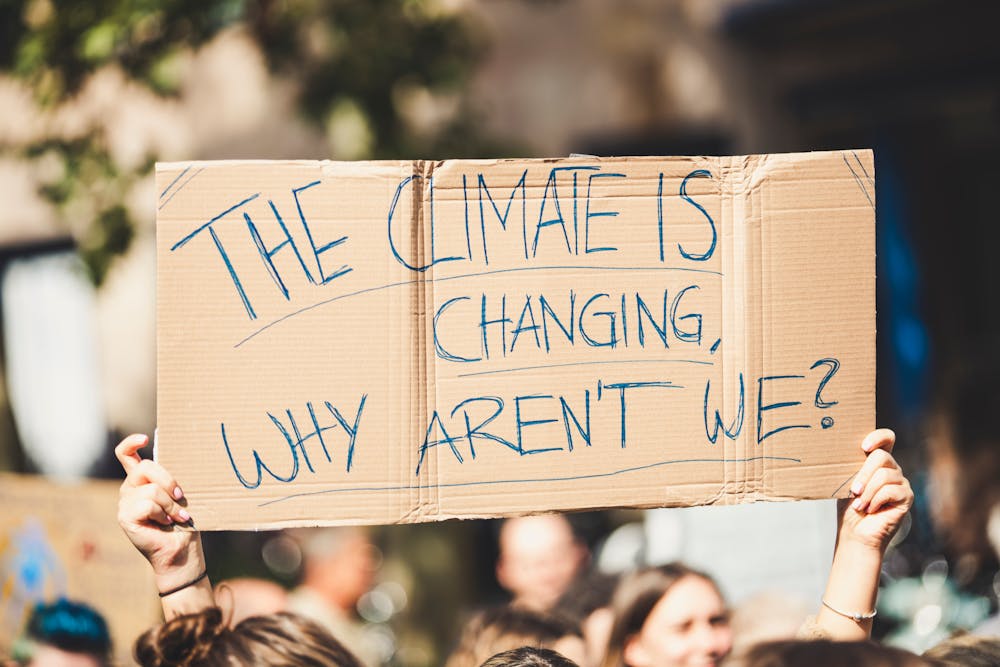 Protestors and people involved in climate movements have kept the pressure up during periods of political inaction.
Markus Spiske/Unsplash, CC BY[17]
Protestors and people involved in climate movements have kept the pressure up during periods of political inaction.
Markus Spiske/Unsplash, CC BY[17]
Against these entrenched interests stand the growing throngs of people involved in climate movements. This is what has kept climate politics moving. Countless Americans, from political activists to schoolkids, mobilised to pressure Congress to act.
The same has happened here. Arid and sparsely populated Australia is already being hit by intensifying natural disasters. As the May election result showed, people have had enough of political delays and inaction.
We must keep moving. Climate science does not stand still, and neither should the politics.
Read more: The Greens have backed Labor's 43% target - but don't think Australia's climate wars are over [18]
References
- ^ warned them (www.nytimes.com)
- ^ major climate bill (www.reuters.com)
- ^ Initial modelling (www.science.org)
- ^ pulled his crucial vote (www.nytimes.com)
- ^ may change (www.ft.com)
- ^ CC BY (creativecommons.org)
- ^ Government set to legislate its 43% emissions reduction target after Greens announce support (theconversation.com)
- ^ now in drought (edition.cnn.com)
- ^ in megadrought (www.scientificamerican.com)
- ^ Albanese just laid out a radical new vision for Australia in the region: clean energy exporter and green manufacturer (theconversation.com)
- ^ huge amounts (www.bloomberg.com)
- ^ solar panels (asia.nikkei.com)
- ^ more money (www.opensecrets.org)
- ^ personal interests (edition.cnn.com)
- ^ outsized influence (www.themonthly.com.au)
- ^ secret PR campaign (www.smh.com.au)
- ^ CC BY (creativecommons.org)
- ^ The Greens have backed Labor's 43% target - but don't think Australia's climate wars are over (theconversation.com)