


What did COVID do to my feet? How to fit back into shoes after wearing ugg boots at home and piling on the kilos
- Written by: Caroline Robinson, Associate Professor Podiatry, Charles Sturt University
If you’ve been spending a lot of time at home in ugg boots, not doing so much exercise and stacking on the coronakilos over the past two years or so, you may have noticed something strange going on with your feet.
They may not fit back into leather shoes. Or if you do manage to squeeze them in, your shoes feel really stiff and look set to give you blisters.
What’s going on? Have your feet expanded? Is this permanent? Do you need to buy new shoes?
Read more: What is toe jam? From harmless gunk to a feast for bugs[1]
Can your feet really widen?
Our feet are flexible structures and adapt over time to our footwear – or lack of shoes.
That’s what happened during COVID lockdowns and long periods of being at home, when many people swapped regular shoes for comfortable options such as thongs, slides and ugg boots. Our feet responded by spreading out and becoming wider.

That wasn’t a big surprise for podiatrists like us, health professionals who specialise in looking after people’s feet.
We’ve long known that people who walk barefoot – or wear wide shoes that give the foot plenty of room to spread out – have a much wider[3] front of the foot (forefoot) than people who wear narrow shoes.
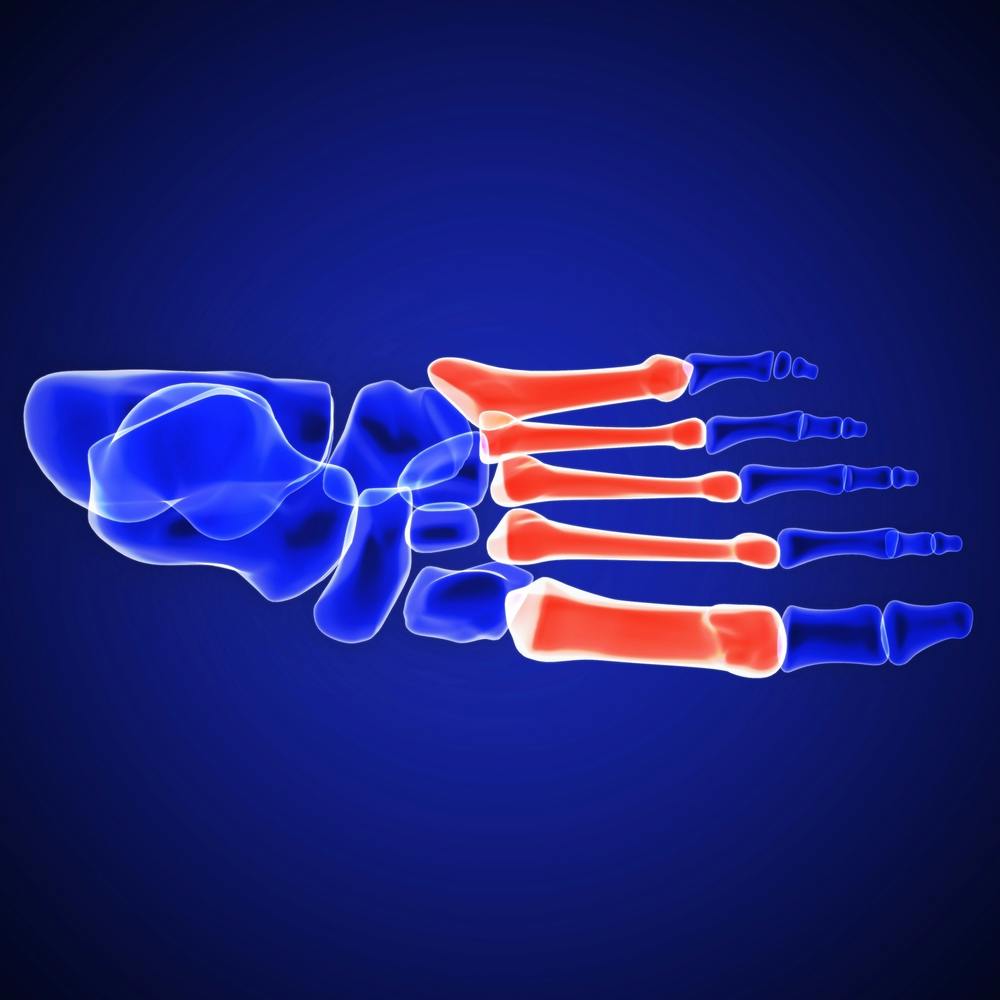 Your metatarsals (in red) have freedom to align normally when you go barefoot or wear ugg boots.
Shutterstock[4]
Your metatarsals (in red) have freedom to align normally when you go barefoot or wear ugg boots.
Shutterstock[4]
That’s because the lack of pressure from shoes allows the five, long metatarsal bones[5] in each of your feet to align normally; each metatarsal head (end of the metatarsal bone) takes the load as you walk.
Once your forefoot becomes wider, it stays like this unless you force it to adapt[6] by wearing narrow shoes.
How much wider a foot becomes, if given the space, depends on how elastic your ligaments are. Some people are “hypermobile[7]” and have very “loose” joints because their ligaments are more stretchy.
Some people have described this as “Flintstone feet[8]” or “ugg boot foot[9]”.
What else is going on?
Being less physically active and leading a more sedentary lifestyle while at home for long periods may have also led to weaker core muscles.
Core muscles[10] are the ones around our buttocks, hips, abdomen and lower back. They are particularly important in controlling the position and function of our legs and feet.
If you lose core fitness, your legs can rotate internally (your knees face each other), causing your feet to roll in (or pronate).
As this happens, your feet can become flatter[11], changing their shape to become longer and wider.
Read more: Core strength: why is it important and how do you maintain it?[12]
How about the coronakilos?
Many of us have also put on coronakilos (also known as COVID kilos or quarantine kilos) during the pandemic. In fact, one in three Australians gained weight[13] during this time.
An increase in body weight creates more force on the feet. If your feet have a normal or low arch, your feet will become flatter (will pronate more), creating increased pressure[14], particularly under the mid-foot.
So if you put on weight, your feet can become longer and wider.
Read more: COVID kilos: why now is the best time to shed them[15]
Why won’t my work shoes or boots fit?
We’ve seen how, over time, our feet adapt to our shoes (or lack of shoes). But shoes can also adapt to our feet. This depends on what the shoes are made of.
Leather shoes are flexible and gradually mould to the shape of your feet. That’s because they absorb sweat from our feet and soften. But when we take a break from wearing them, the leather gradually dries and they harden.
So if you haven’t worn leather shoes or boots for a while, you need to “wear them in” again to soften them and avoid blisters.
If you’ve been storing your shoes in a hot, dry environment, the leather will also gradually dry out and your shoes will feel much tighter when you next wear them.
Shoes made from synthetic materials and textiles[16] or vegan leather[17] made from polyurethane, recycled plastic, cactus or mushrooms[18] tend to keep their shape, even when you don’t wearing them for some time.
Read more: Vegan leather made from mushrooms could mould the future of sustainable fashion[19]
Any tips for my feet?
Getting back into your work shoes might take a bit of time, particularly if your feet have changed shape during the past two years.
It’s unlikely you’ll need new shoes unless they are damaged from drying out, you have put on a significant amount of weight, or your shoes were very narrow or a size too small pre-pandemic.
Here are some suggestions to build foot strength and ensure your shoes don’t damage your feet:
make time to exercise your feet and ankles. You can try this conditioning program[20] or watch these videos[21] of foot strengthening exercises
focus on your core strength to improve your posture when sitting, standing and walking. Here’s a ten-minute workout[22] for beginners
visit a shoe store to measure your feet accurately. Some 63-72%[23] of the population are wearing shoes the wrong length or width
invest in a pair of good quality shoes, runners or work boots and look after them well, rather than buying lots of cheap footwear that might cause[24] foot deformity and a lifetime of pain[25].
References
- ^ What is toe jam? From harmless gunk to a feast for bugs (theconversation.com)
- ^ Shutterstock (www.shutterstock.com)
- ^ much wider (jfootankleres.biomedcentral.com)
- ^ Shutterstock (www.shutterstock.com)
- ^ metatarsal bones (www.kenhub.com)
- ^ to adapt (www.ncbi.nlm.nih.gov)
- ^ hypermobile (www.hypermobilityconnect.com)
- ^ Flintstone feet (www.urbandictionary.com)
- ^ ugg boot foot (www.abc.net.au)
- ^ Core muscles (www.ncbi.nlm.nih.gov)
- ^ flatter (www.youtube.com)
- ^ Core strength: why is it important and how do you maintain it? (theconversation.com)
- ^ gained weight (www1.racgp.org.au)
- ^ increased pressure (jfootankleres.biomedcentral.com)
- ^ COVID kilos: why now is the best time to shed them (theconversation.com)
- ^ synthetic materials and textiles (www.comunitymade.com)
- ^ vegan leather (www.peta.org)
- ^ mushrooms (www.theguardian.com)
- ^ Vegan leather made from mushrooms could mould the future of sustainable fashion (theconversation.com)
- ^ conditioning program (orthoinfo.aaos.org)
- ^ videos (freedompah.com.au)
- ^ workout (www.youtube.com)
- ^ 63-72% (jfootankleres.biomedcentral.com)
- ^ might cause (www.podiatry.org.au)
- ^ pain (jfootankleres.biomedcentral.com)










