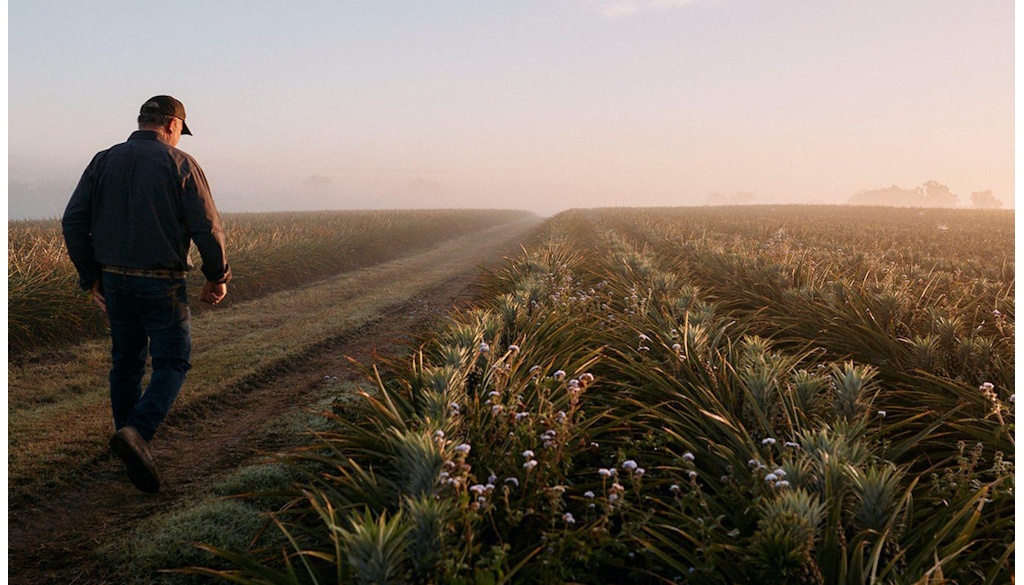
Nationals vote holds steady. Will the Coalition become a party of the regions and outer suburbs?
- Written by: Gregory Melleuish, Professor, School of Humanities and Social Inquiry, University of Wollongong
The most amazing thing about the election was the very low primary vote[1] for the ALP and the Liberal Party.
The Liberal Party has lost seats to both Labor and the “teal” independents.
But the National Party has lost no seats (although Flynn is still very close) and its vote has declined only marginally. The problem with calculating swings for or against the Nationals is that candidates in Queensland stand for the Liberal National Party and then choose membership of either the Liberal or Nationals party room.
So the result for the Nationals has been very much steady state with essentially no real change since the previous election. This isn’t necessarily surprising as the ALP struggles to achieve 20% of the vote in many rural electorates.
If there’s to be a significant challenge to a National incumbent then it needs to come from either a minor party, as has happened in two seats in the New South Wales parliament with the Shooters, Fishers and Farmers (SFF), or from a high profile independent.
At the 2022 election there were a number of independents in National seats, but none had sufficient votes to make a significant challenge. This is not surprising as most National electorates are geographically very large and independents invariably have a power base in only part of the electorate.
Minor parties flop
As for the various minor parties – SFF, Pauline Hanson’s One Nation (PHON) and the United Australia Party (UAP) – none have performed very well at this election.
The PHON vote went up overall as the party ran candidates in more electorates than 2019. However, in those electorates where PHON had run previously its vote tended to decline, especially in Queensland.
Despite its massive campaigning the UAP vote stayed under 5%. It made no real impact.
Coalition holds onto regional and rural seats
One thing worth noting is the Nationals performed well in Victoria, with a slight increase in its primary vote. There was a swing to the Nationals in both Gippsland and Mallee.
When one looks at the rest of Australia, the Liberals successfully held onto their rural seats in both South Australia (Barker and Grey) and Western Australia (O’Connor, Forrest and Durack). If one then looks at Tasmania, which is largely regional in nature, there has been a swing of around 2% to the Liberals.
There are some interesting implications in these election results. The first is that the balance between the Nationals and the Liberals in the Coalition has changed, so that in any future arrangement, the Nationals will have a more prominent voice. This assumes, of course, that the coalition continues now that both parties are in opposition.
The second is the Liberals have been far more successful in rural and regional Australia than in the cities. This will also shift the balance for the Liberals between city and country, in favour of the country.
At the same time, the largest contingent of Coalition members in the parliament will come from Queensland and the Liberal Party may well be led by a Queenslander.
The Liberals now largely represent outer suburban and regional Australia. This is where its strength lies. It will need to decide on its future strategy. Does it seek to rebuild the Howard “broad church” by attempting to win back the seats lost to the teal independents, or does it attempt to remake itself more explicitly as a regional/outer suburban party?
City and bush divide
This election seems to indicate a major division opening up between the city and the bush. This coincides with a siloing of the population, such that the affluent increasingly do not rub shoulders with the less well off.
Labor will not make any inroads into the bush in the foreseeable future, beyond the regional seats it already holds such as Bendigo and Ballarat.
The Liberals may have to look at waving goodbye to what it once considered to be its “blue ribbon” seats. This election may indicate Australians are not moving closer together but further part.
Perhaps Australia is approaching a crossroads.
References
- ^ very low primary vote (theconversation.com)