

With a new Australian government and foreign minister comes fresh hope for Australia-China relations
- Written by: James Laurenceson, Director and Professor, Australia-China Relations Institute (ACRI), University of Technology Sydney
An Albanese government in Canberra means an improved trajectory in Australia-China relations is a real possibility.
Sure, there will be no “re-set” like we saw in the heady days of 2015. The world has changed; Australia and China certainly have.
And, of course, Beijing will need to be ready to chart a different course, not just Canberra.
After all, in 2020 it was Beijing’s decision and Beijing’s decision alone to respond to political disagreements by cutting off senior level dialogue and hitting Australia’s exports.
Further tempering the outlook is that the architect of China’s assertive foreign policy turn, President Xi Jinping, is expected to be re-instated for a third term when the Communist Party of China meets for its 20th National Congress later this year.
But the Morrison government’s actions and reactions were not irrelevant. The current dire state of bilateral relations between Canberra and Beijing was not inevitable.
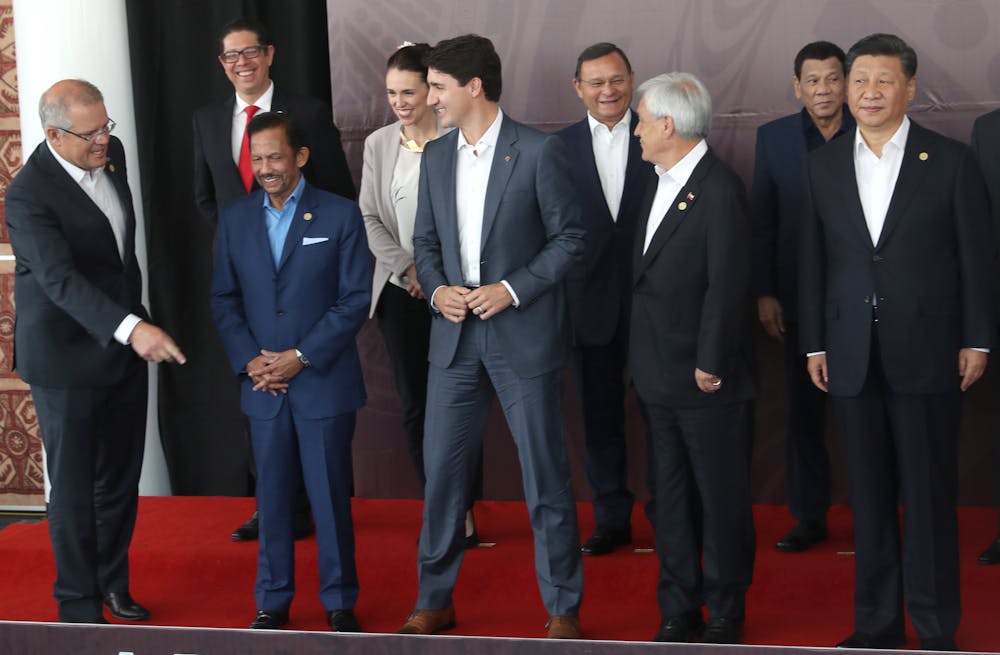
Missed opportunities
It is an observable fact, for example, that the Morrison government abandoned the more diplomatic approach[1] it had pursued in 2019.
Rock bottom in Australian diplomacy came in March this year, when an airliner crashed[2] in southern China, killing 132 people.
Yet in contrast to the leaders of the UK, Canada, India and others – all countries that have had their own acute challenges with Beijing – neither the prime minister nor his foreign minister, Marise Payne, saw any reason to issue even a short statement of condolences.
Imagining Canberra has no agency to promote a relationship recovery also misses the fact every other capital in the Asia-Pacific region has managed to maintain relations with Beijing in a more constructive state.
The role and value of diplomacy
A recent poll[3] by the Australia-China Relations Institute shows the Australian public recognise the current situation is not as one-sided as Canberra or Beijing like to suggest.
A clear majority of respondents, 78%, agreed that, “The responsibility for improving the relationship between Australia and China lies with both countries”.
Some commentators[4] insist there is no prospect of an improvement. They typically point to there being bipartisan agreement “China has changed” and to overwhelming agreement[5] between the major parties on the suite of policies justified in response.
But this assessment dismisses the role and value of diplomacy.
As Allan Gyngell, former head of the Office of National Assessments said[6]:
It is not beyond the capacity of effective diplomacy to return the situation between Australia and China to something more closely approximating that of other US allies.
Penny Wong as foreign minister
The Chinese embassy in Canberra will have cabled back to Beijing the conciliatory diplomatic touches incoming foreign minister, Senator Penny Wong, has pursued from opposition.
Australia has done nothing to injure [the] partnership [with China], nothing at all.
But in May last year, Wong insisted[8] the differences between Australia’s interests and China’s interests,
do not mean that there’s nothing we can do. They don’t mean that there’s no room for improvement in our own actions.
And unlike the Morrison government, Wong took time to express[9] her condolences after the China plane crash tragedy in March.
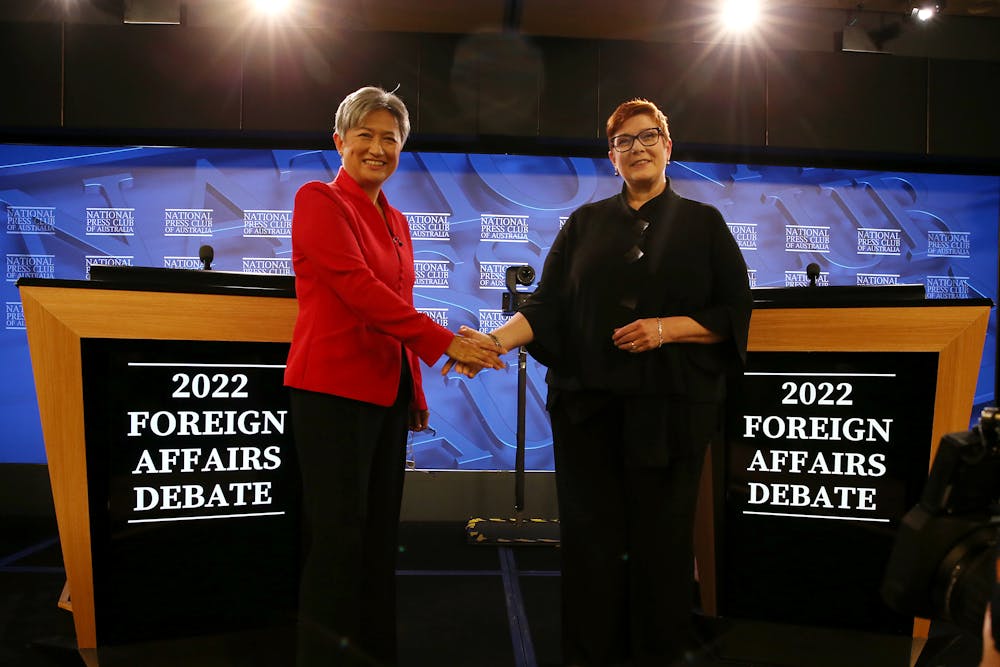 Unlike the Morrison government, Wong took time to express her condolences after the China plane crash tragedy.
AAP Image/Jane Dempster
Unlike the Morrison government, Wong took time to express her condolences after the China plane crash tragedy.
AAP Image/Jane Dempster
Another difference is Wong looks beyond just Washington and London for insight into Australia’s challenges.
In November last year, she singled out[10] Singapore, saying:
Their insight into China, their insight into the region, are second to none […] [Singaporean] Prime Minister Lee [Hsien Loong] is a thinker and a leader whose writing and speeches on these issues, I think, are second to none.
It was Singaporean Prime Minister Lee who stood next to Morrison last June and offered[11] the following advice
There will be rough spots [with China] […] you have to deal with them. But deal with them as issues in a partnership which you want to keep going and not issues which add up to an adversary, which you are trying to suppress.
A new opportunity
There’s one other factor pointing to a more positive future. Beijing has form in using the arrival of a new government as an opportunity to undertake a face-saving adjustment.
The Australia-China relationship began to sour during the government of Malcolm Turnbull (between September 2015 and August 2018). Turnbull’s foreign minister, Julie Bishop, did not visit China in the final two and a half years of her tenure.
Morrison was the Turnbull government minister responsible for signing off[12] on the ban of Chinese technology company, Huawei, from Australia’s 5G rollout.
Yet when Morrison subsequently emerged as prime minister, Beijing took the opportunity to invite[13] his new foreign minister for a formal visit less than three months later. A month after Morrison won another term in May 2019, he secured[14] a meeting with China’s president Xi Jinping.
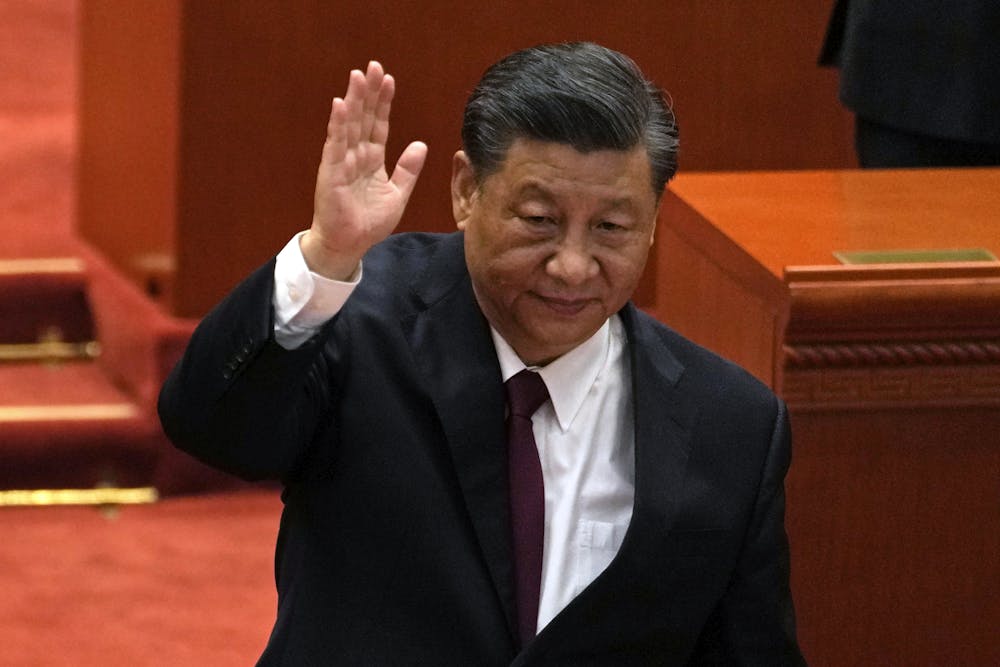 A month after Morrison won another term in May 2019, he secured a meeting with China’s president Xi Jinping.
AP Photo/Ng Han Guan, File
A month after Morrison won another term in May 2019, he secured a meeting with China’s president Xi Jinping.
AP Photo/Ng Han Guan, File
Beijing would now also recognise that any plan it once had to change Canberra’s political decision-making by disrupting Australia’s trade has been a dismal failure.
It not only cratered Australian elite and public opinion, but damaged China’s reputation as a responsible great power and reliable trade partner elsewhere (notably in North America and Europe).
All this raises the prospect that when the 50th anniversary of the establishment of diplomatic ties between Australia and the People’s Republic rolls around in December, the occasion might now be marked with some celebration – not just awkward silence.
References
- ^ more diplomatic approach (theconversation.com)
- ^ crashed (www.theguardian.com)
- ^ poll (www.australiachinarelations.org)
- ^ commentators (www.smh.com.au)
- ^ overwhelming agreement (www.australiachinarelations.org)
- ^ said (www.afr.com)
- ^ claimed (www.pm.gov.au)
- ^ insisted (www.pennywong.com.au)
- ^ express (twitter.com)
- ^ singled out (www.lowyinstitute.org)
- ^ offered (www.pmo.gov.sg)
- ^ signing off (parlinfo.aph.gov.au)
- ^ invite (au.china-embassy.gov.cn)
- ^ secured (www.pm.gov.au)










