Are you one of the many Australians who never learned to swim? Here's how to get started
- Written by: Chris Zehntner, Lecturer in Health and Physical Education, Southern Cross University
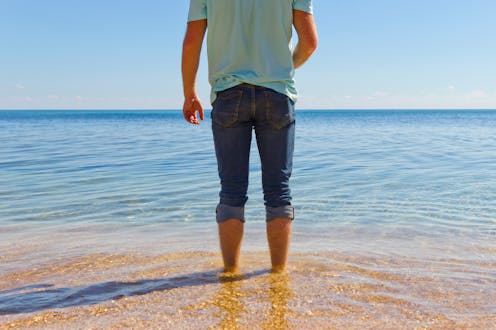
As a kid growing up in one of the hottest parts of Australia, I was always in the water – pond, pool or creek. It was the only way to get cool. I was lucky enough to pick up swimming as I went along – but plenty don’t. As a coach and teacher of swimming for over 30 years I regularly meet adults who can’t swim.
Swimming is one of the most popular physical activities[1] undertaken by Australians, but a large number of Australians are poor swimmers[2] or cannot swim at all. Recent research[3] for for Royal Life Saving Australia found one in four adults are either weak swimmers or can’t swim.
If you’re an adult non-swimmer, you’re not alone. Many new Australians[4] and Australians from non-swimming families don’t have a connection with the water. Some had a fright when learning to swim and avoid the water out of fear, some just never got the opportunity to learn as many Aussie school kids do today.
The good news is people of any age can learn to swim. With patience, perseverance and some expert help, it can be fun too. Just as when kids learn to swim, adults must first get familiar with the different sensations in and underwater.
Read more: Why should my child take swimming lessons? And what do they need to know?[5]
Start small
It is natural to feel anxious with your face in the water; after all, life is no fun without air. But with practice, the fear will diminish and having your face in the water will feel more natural.
Start with something simple like putting your face in the full flow of the shower. With your eyes open, put your face in the water stream and gently blow air out your nose while your mouth stays shut. Don’t forget to pop your face out for your next breath in (using the mouth).
Once you have developed confidence with fast-flowing water around your mouth and nose, you might try experimenting with how you can balance your body in the water.
Try a shallow pool at your local aquatic centre with a rail along the edge. Holding on to the rail, let your body relax into and be supported by the water.
For most people, the big parts of our body will want to float and our legs will probably sink. Finding your “balance” in the water and relaxing while you put your face under is a big hurdle for many non-swimmers. But try to take your time, have fun, and blow bubbles with your nose while your face is under. That keeps the water out of your nose.
Once you’re confident with your face in the water and want to get better at moving forward, it’s time for the next step. Use a floating aid like a pool noodle to help you balance, and experiment with using your arms and legs to push and pull your body through the water. Flippers can help with propulsion if you feel confident with them.
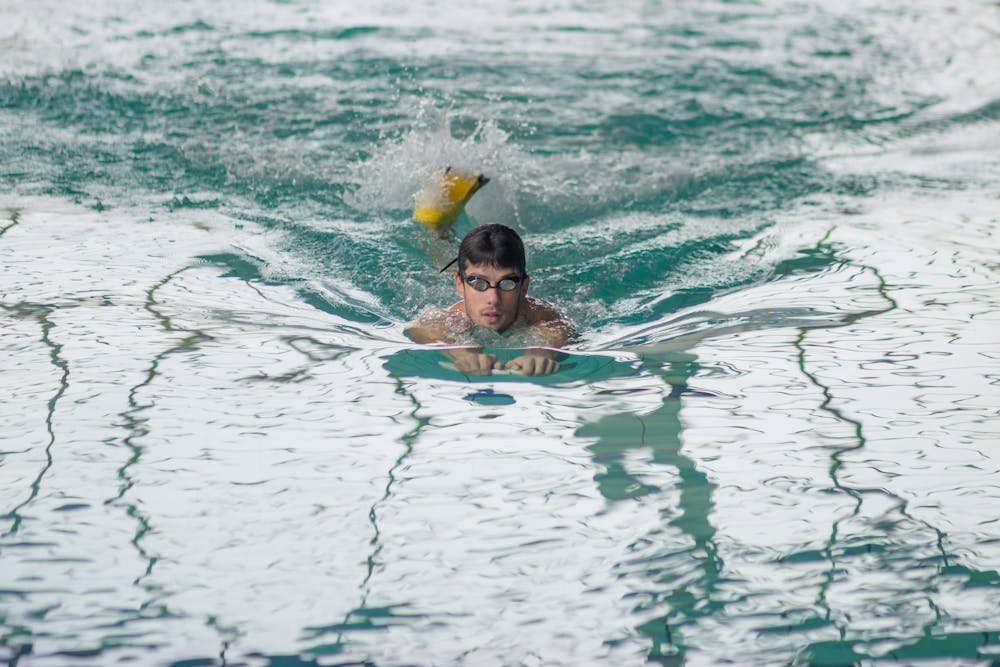 Flippers can help with propulsion if you feel confident with them.
Shutterstock
Flippers can help with propulsion if you feel confident with them.
Shutterstock
Getting expert help and setting a goal
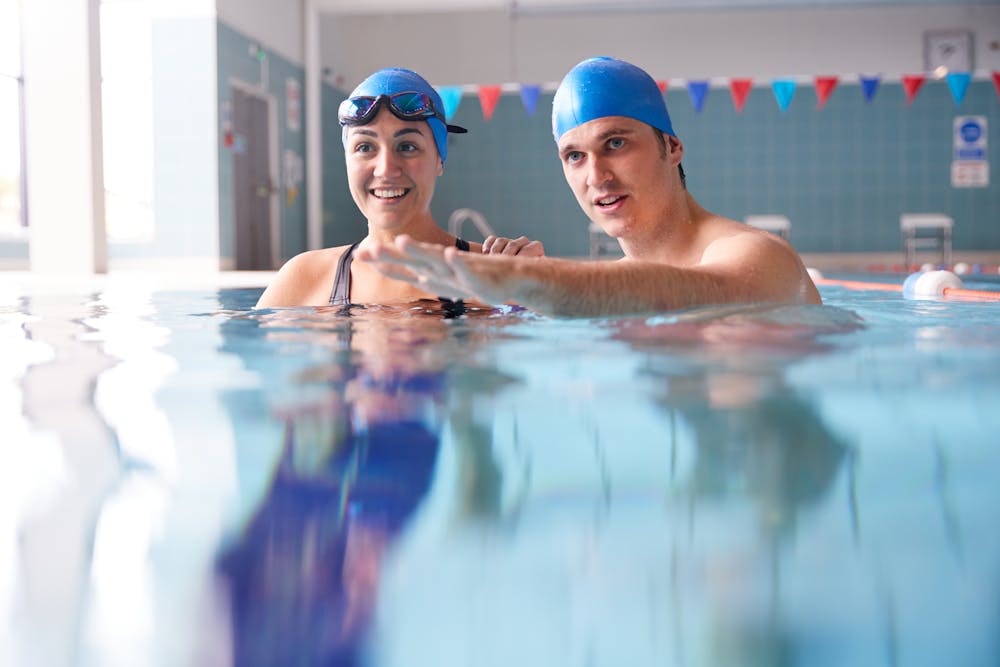
At this stage it is a great idea to get some expert help[6]. Most learn to swim schools will run classes for adults.
These classes will accelerate your learning so your strokes develop effectively. A few classes will get you started and then it will just be a matter of practice. The more you practice, the better you will get.
Having a goal is a good idea. You might start by trying to get to 10 good strokes in freestyle. Then 20, then 30 and so on.
Next, try to do one lap of the pool. It’s okay if you don’t make it at first, or if your technique isn’t perfect. Once you’ve made it to one lap, try again and see if you can make your technique a little better.
When you feel ready, you might try for multiple laps. See if you can set a goal to go swimming once a week – even better if you can team up with a friend and go together.
Being a swimmer provides huge physical fitness[7] benefits and reduces your drowning risk – but it’s also just a lot of fun.
Don’t spend another summer sitting high and dry on the poolside while others have all the fun in the water. Make 2022 the year you learn to swim!
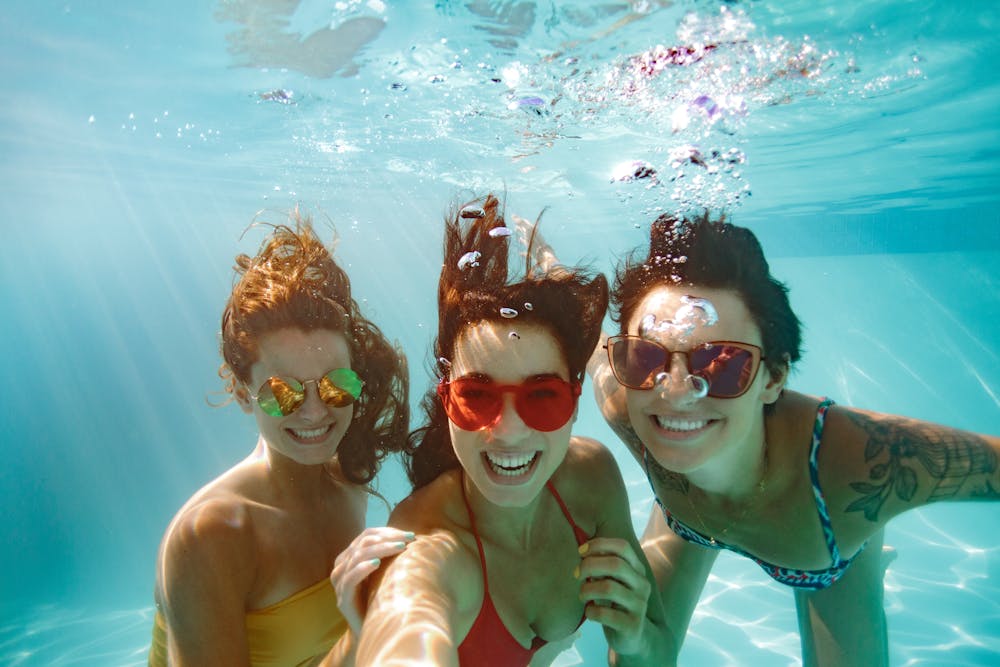 Don’t let others have all the fun at the pool this summer.
Shutterstock
Don’t let others have all the fun at the pool this summer.
Shutterstock
Read more: Health Check: why swimming in the sea is good for you[8]
References
- ^ most popular physical activities (www.abs.gov.au)
- ^ Australians are poor swimmers (www.royallifesaving.com.au)
- ^ research (www.theage.com.au)
- ^ new Australians (www.royallifesaving.com.au)
- ^ Why should my child take swimming lessons? And what do they need to know? (theconversation.com)
- ^ get some expert help (www.royallifesaving.com.au)
- ^ physical fitness (www.clearinghouseforsport.gov.au)
- ^ Health Check: why swimming in the sea is good for you (theconversation.com)