SepPure Cuts Emissions and Costs with Solvent Recovery Technology
NEW YORK, US - Media OutReach Newswire - 26 November 2024 - From pharmaceutical manufacturing to petrochemical refinement, many industries utilize solvents for various processes, such as synthesis, extraction, purification, and more.
Nevertheless, the conventional method across industries involves extensive solvent use followed by their disposal, often through incineration. This creates a never-ending cycle of vast chemical consumption that leads to significant waste streams, contributing to environmental pollution and high operational costs. According to Nature, the environmental impacts of these processes are often overlooked but significant. They contribute to 10% of the global CO2 emissions, millions of liters of wastewater, and consume 10% of the world’s total energy and 40% of industrial energy. SepPure Technologies, a Cleantech startup pioneering innovative nanofiltration membrane technology, offers a sustainable solvent recovery solution that revolutionizes industrial practices.
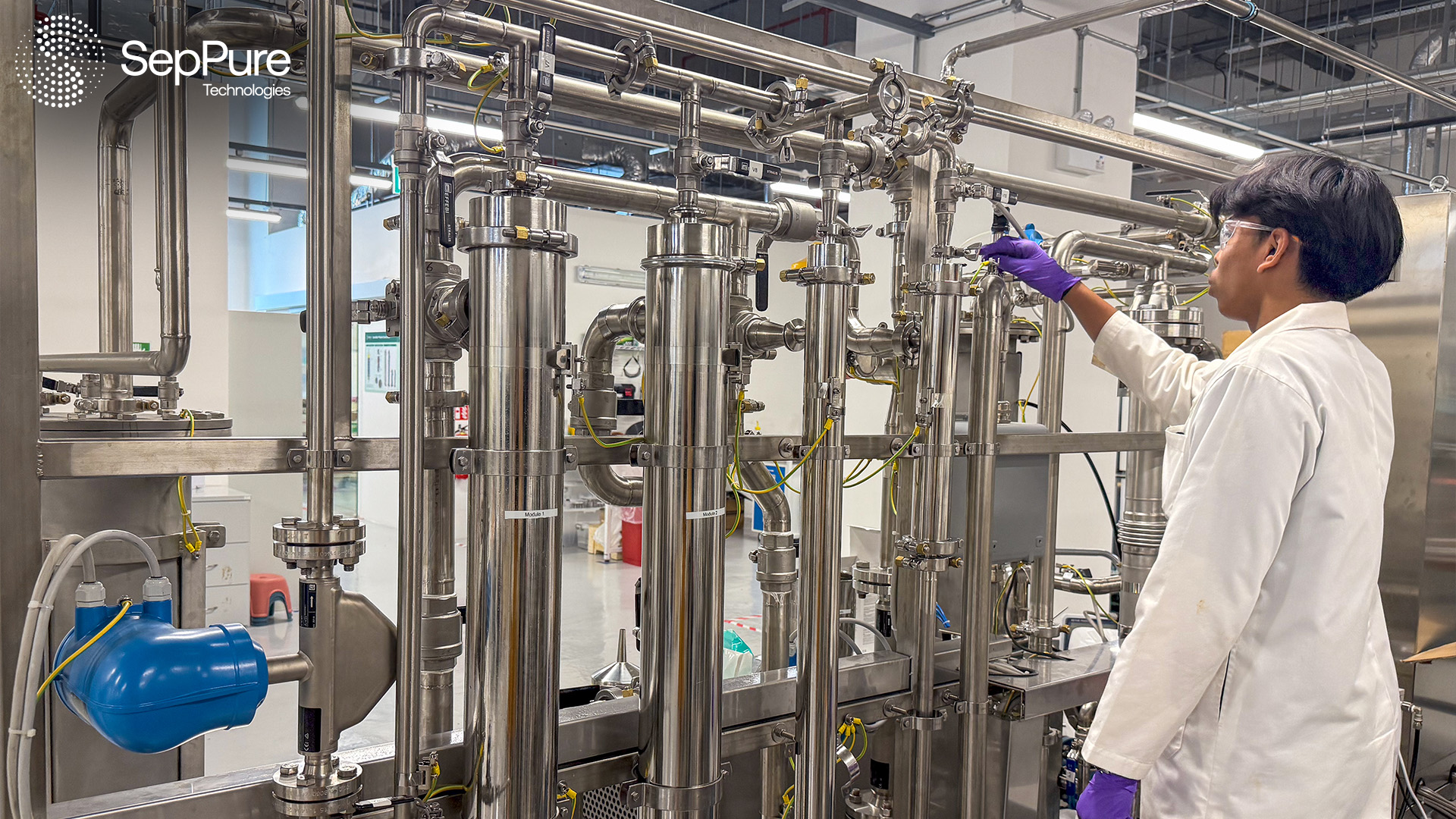
The world’s biggest industries, including pharmaceutical, petrochemical, semiconductor, performance materials, specialty chemicals, and many more, continue to rely heavily on the resource-intensive process of utilizing solvents for industrial processes. These industries tend to offload their spent solvents after a single use through toxic industrial waste collectors. According to the United States Environmental Protection Agency (EPA), at least half of this solvent waste is incinerated, contributing to significant Greenhouse Gas (GHG) emissions and resource depletion.
The industrial sector is the third largest producer of direct Greenhouse Gas (GHG) emissions in the United States. In 2022, global CO2 emissions related to energy and industrial processes rose to an all-time high of 36.8 gigatons. To address this urgent problem, the EPA urges industries to explore more resource-efficient processes and recommend the application of nanofiltration membrane technology as a potential solution.
SepPure’s solvent recovery system, RE(SOLV)®, leverages the cutting-edge GreenMem® Organic Solvent Nanofiltration (OSN) membrane technology, which can recover as much as 90% of spent solvents. This makes the process 90% more energy-efficient and 50% more economical compared to conventional solvent recovery methods that use distillation. This system substantially reduces waste and the endless need for fresh solvents for industrial use and applications. Dr. Mohammad Farahani, Founder and CEO of SepPure Technologies says, “RE(SOLV)® offers a sustainable solution for industrial processes. By using advanced nanofiltration technology, this system can recover solvents efficiently to produce high-quality reclaimed solvents that can be reused repeatedly.”
The United States Department of Energy highlights that alternative, more energy-efficient methods for the separation of chemicals in the United States alone could save 100 million tonnes of CO2 emissions and US$4 billion in energy costs annually. SepPure’s RE(SOLV)® technology is highly adaptable for various types of solvents, making it applicable across a wide range of sectors. Dr. Hafiiz Osman, COO at SepPure Technologies, further notes, “RE(SOLV)® presents significant cost reduction for a lot of companies, especially industries that rely on solvents in their day-to-day operations. Recycling and reusing solvents cut the expenses on raw materials and waste disposal, which lead to an overall reduction in the cost of operations.”
Recognizing the substantial environmental impact of such industrial processes, Dr. Mohammad Farahani perfected the technology during his PhD at the National University of Singapore (NUS). Determined to leverage his 10 years of industrial experience, Dr. Farahani later established SepPure Technologies. “The energy savings and reduction in environmental emissions will enable major players in oil manufacturing, pharmaceuticals, and chemicals to become more sustainable while simultaneously lowering their operational costs,” says Dr. Farahani.
The world will reach a turning point for global sustainability commitments in a few short years. To meet net-zero carbon emission goals by 2050, quick but effective action must be taken to mitigate environmental pollution. The United Nations notes that carbon emissions must be reduced by 45% by 2030 to stay in line with the 1.5C global warming target set in the Paris Agreement. SepPure Technologies and other disruptive pioneers are offering environmentally sound and economically viable solutions with substantial potential worth exploring. As the company continues enhancing its solvent recovery technology, the team remains committed to its mission of environmental stewardship, reducing waste, and empowering a circular economy.Hashtag: #SepPureTechnologies
https://www.seppure.com/
https://sg.linkedin.com/company/seppure
The issuer is solely responsible for the content of this announcement.
SepPure Technologies
unded in 2018 by Dr. Mohammad Farahani, SepPure Technologies is a cleantech company based in Singapore and Canada. Specializing in engineering chemical-resistant hollow fiber membranes for Organic Solvent Nanofiltration (OSN), its mission is to facilitate the separation of chemical mixtures at the molecular level with minimal energy use. The company’s technology, thus, addresses the significant energy expenditure associated with industrial-scale chemical separation processes across diverse sectors, including oil, pharmaceutical, petrochemical, semiconductor, performance materials, and more.