Think the RBA will lift rates on Melbourne Cup day? Don't bet your house on it
- Written by: Peter Martin, Visiting Fellow, Crawford School of Public Policy, Australian National University
Each of Australia’s big four banks is now predicting a rate rise in six days’ time on Melbourne Cup Tuesday. It would add another A$77 to the monthly cost of servicing a $500,000 mortgage and be enough to take the total extra monthly impost since rates began climbing to more than $1,000.
Why on earth would they be expecting the Reserve Bank to lift rates at a time when Australians are buying less[1] than they were a year ago and the most trusted measure of annual inflation, the comprehensive quarterly[2] one, is heading down?
It isn’t because the newer and more jumpy monthly[3] measure of inflation is heading up. The Reserve Bank doesn’t yet take it particularly seriously and doesn’t include it in its forecasts.
It’s largely because of something the new governor Michele Bullock said about the bank’s forecasts that appeared to back her board into a corner.
In a speech[4] delivered last Tuesday, just one day before the inflation figures that showed the annual rate continuing to fall, she said
the board will not hesitate to raise the cash rate further if there is a material upward revision to the outlook for inflation.
And, even though inflation was falling, Wednesday’s figures showed an upward revision in the outlook.
Inflation had fallen, but not as far as the bank expected it to.
At the end of last year, the inflation rate was 7.8% – the highest in three decades. But by the June quarter this year it had slid to 6%. And on Wednesday we learnt that in the September quarter it slipped to 5.4%, which looks good, except the bank had been expecting more.
The bank’s forecasts[5] had it hitting 4.1% by December. To get to there from 5.4% in one quarter now looks all but impossible.
On my calculations prices would need to barely climb at all in the December quarter, increasing by an usually low 0.6%. More likely is an annual increase of 1% in the quarter, taking the inflation rate to 4.5%, which would be a continued improvement but not the improvement to 4.1% the bank had forecast.
Here’s why that matters now, for the Reserve Bank’s board meeting on Melbourne Cup day.
Not all board meetings are equal. Every third month the meeting is special. In the special months of February, May, August and November the board receives a quarterly update of staff forecasts along with commentary about why previous forecasts have been missed.
The board gets that update next Tuesday.
November is always an important meeting
By saying the board “will not hesitate to raise the cash rate further” if there is a material upward revision to the outlook for inflation, Bullock appears to have committed her board to raising interest rates further.
There will be an upward revision, no doubt about it. Instead of forecasting an inflation rate of 4.1% for the year to December, the staff will forecast an inflation rate closer to 4.5%.
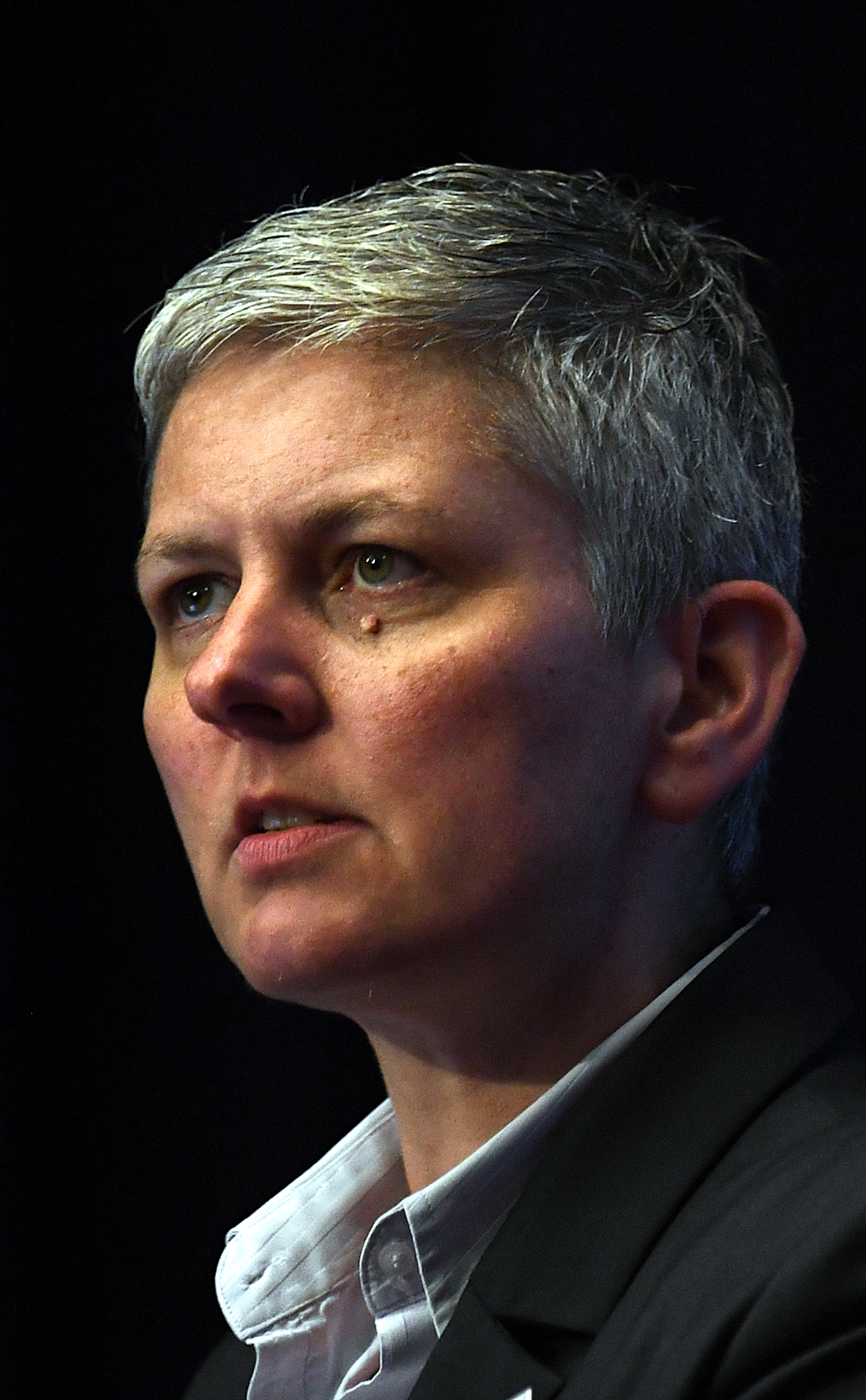
Luci Ellis, the new chief economist at Westpac is one of the big bank economists using precisely this logic[7]. But she has added a big “but”.
Until October, Ellis had worked for the Reserve Bank for 32 years, for the past seven years as assistant governor, economic. She used to brief the board.
She says it is entirely possible for the bank to upgrade its inflation forecast for December, but not its forecasts for 2024 and beyond.
That way, staff could argue “there had been no material upward revision to the outlook for inflation, only to the history”.
Much of the surprise in the September quarter inflation result was due to one price – the price for “automotive fuel”.
Had that one price not jumped an astonishing 7.2% in just three months in line with a global increase in the price of oil, Bureau of Statistics calculations suggest Australia’s annual inflation rate would have been 5.1%[8] rather than the 5.4% recorded, sliding in line with the Reserve Bank’s forecasts.
The board might put the price of oil to one side
Ellis says bank staff could argue that the jump in the price of petrol and diesel was a one-off, that “bygones are bygones”, and the jump hasn’t materially affected the bank’s long-term forecasts.
Those forecasts are for inflation to fall to 3.3%[9] by the end of 2024 and back to 2.9% – within the bank’s 2-3% target band – by the end of 2025.
In little-reported remarks, the governor herself has lent support to the idea.
After saying last week the board would not hesitate to raise rates further if there was a material upward revision to the outlook for inflation in the formal[10] part of her speech Governor Bullock, elaborated on what she meant by “outlook” in an answer[11] to a question.
She said the bank’s current forecasts had inflation coming back in to the top of its target band in 2025.
So, yes, it is a reasonable tolerance, but we don’t have a lot of tolerance for it to shift out – that’s sort of at the end of our tolerance, I think.
She was referring to the forecast for 2025. It was a shift-out in that forecast that she had little tolerance for, rather than a shift out in the forecast for 2023.
Which makes the decision to be made on Melbourne Cup Day less clear-cut than at first sight. Yes, inflation will be higher in December than the bank had forecast. But if the bank’s revised forecasts have it no higher in December 2025 than they do at the moment, there might not be any particular reason to push up rates.
Financial markets bet real money on the outcome of decisions like next Tuesday’s, unlike bank economists (and people such as myself) who merely opine.
At the start of this week the prices quoted on the Australian Securities Exchange implied a 52%[12] probability of an increase in the Reserve Bank cash rate next Tuesday and a 48% probability of no change. That’s anything but a sure thing.
Read more: Petrol is holding up inflation – the 7 graphs that show what's happening to prices and what it will mean for interest rates[13]
References
- ^ buying less (www.abs.gov.au)
- ^ quarterly (www.abs.gov.au)
- ^ monthly (www.abs.gov.au)
- ^ speech (www.rba.gov.au)
- ^ forecasts (www.rba.gov.au)
- ^ Sam Mooy/AAP (photos.aap.com.au)
- ^ precisely this logic (library.westpaciq.com.au)
- ^ 5.1% (www.abs.gov.au)
- ^ 3.3% (www.rba.gov.au)
- ^ formal (www.rba.gov.au)
- ^ answer (www.rba.gov.au)
- ^ 52% (www.asx.com.au)
- ^ Petrol is holding up inflation – the 7 graphs that show what's happening to prices and what it will mean for interest rates (theconversation.com)
Authors: Peter Martin, Visiting Fellow, Crawford School of Public Policy, Australian National University