It's time to end Western Australia's $4 billion-per-year GST bonus
- Written by: Robert Breunig, Professor of Economics and Director, Tax and Transfer Policy Institute, Crawford School of Public Policy, Australian National University
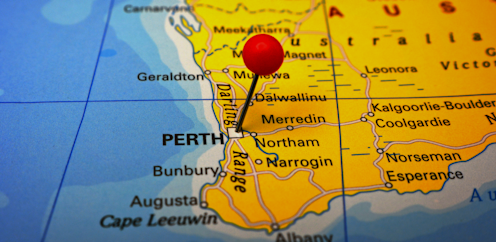
The Morrison government’s decision to give a special deal to Western Australia for the distribution of the income from the goods and service tax is one of the worst public policy decisions made in Australia in the past two decades.
The departure of the WA premier and treasurer, Mark McGowan, this week gives us an opportunity to fix the mistake.
Under a deal struck by McGowan and then-federal Treasurer Scott Morrison in 2018, WA gets a much greater share of the centrally collected goods and services tax (GST) than it is entitled to under the formula administered by the Commonwealth Grants Commission.
At the time, the formula awarded the state only 45% of what it would have gotten if it had received all of the GST collected from its citizens, in recognition of its lesser need for support because of its high iron ore royalties.
Morrison and McGowan’s deal placed a floor on how much of the GST each state could get. This climbed to 70%[1] of what was collected from its citizens in 2022-23, and will climb further to 75% from 2024-25.
The other states that miss out because WA gets more than it should receive a top-up from the Commonwealth government, originally costed at $293 million[2] in 2021-22, but now estimated to be $4.1 billion[3]. But this is not “free”. The extra billions have to be paid for by Australian taxpayers.
Who collects, who spends?
All federal systems have to decide who should collect each tax – the states or the government at the centre.
In Australia, we mostly let the federal government raise taxes, and this has several virtues. One is that it provides consistent rules for all Australians no matter where they live. Another is that it keeps down administrative costs – it gives us one personal income tax system instead of six.
Strong arguments can be made that we should move closer towards such a system, allowing the federal government to collect all of the tax[4] and the states to provide most of the services.
The arrangement generates two problems.
The first is called vertical fiscal imbalance[5], which is the imbalance between the federal government’s extensive ability to raise revenue and the responsibility of the states to provide services. In Australia, we address it by transferring funds (including all of the GST revenue) from the federal government to the states and territories.
Read more: Chalmers has a $70 billion a year budget hole: here are 13 ways to fill it[6]
The second is horizontal fiscal imbalance[7]. Different states have different needs and different capacities to meet those needs. NSW has a greater landmass than Victoria, for example, and requires more roads per resident.
In Australia, we deal with both of these problems through the Commonwealth Grants Commission[8], which distributes the money from the federal government to the states through a formula that determines what’s “fair”.
Commonwealth Grants Commission.Here’s how it works. If one state is poorer and has less ability to raise revenue, it receives more money. If another state is richer and needs less, it gets less.
The commission also looks at how expensive it is to deliver services to its population. Health, education and infrastructure are much easier and cheaper to deliver in densely populated areas and temperate climates.
Australia has long been a shining example to the rest of the world in how to make this work. The grants commission is seen as an efficient organisation not subject to political influence. As a result, Australians have good access to opportunities and services irrespective of where they live.
Morrison’s decision, backed by the then Labor opposition[9], ruined this and injected politics into what had been a world-leading system for making federal revenue distributions fair and efficient.
Sharing Western Australia’s wealth
Western Australia got rich during the mining boom. The grants commission process implicitly takes the extra income it gets from mining royalties and shares it with the others.
The state hasn’t liked it. It felt it was sacrificing more than its “fair share”. What is particularly funny is that throughout most of its history, WA received more from the rest of Australia than the rest of Australia has received from it.
Western Australia received special grants from the Commonwealth continuously from 1933 through 1968, and from 1981 to 2000. Victoria and NSW never got more than their citizens put in.
Read more: What Australia's new gas tax will mean for new projects, the economy and the climate[10]
The 2000s mining boom changed that. Suddenly WA was paying money to the other states rather than getting it from them. And it wanted none of it.
It developed the mentality of a job seeker who was happy to get benefits when times were tough and expected them in retirement, but didn’t want to pay income tax while working. It was as ridiculous as that.
In defence of WA, it must be acknowledged the state takes the view that its mineral resources belong to it and not to other Australians, so at least it is consistent.
Sharing Australia’s mineral wealth
But in my view, this isn’t defensible. Why have a horizontal equalisation scheme if what each state has belongs only to it? Our system has always, at least implicitly, treated Australian resources as belonging to the entire country.
This is as true of the wealth generated through human capital in the form of education as it is for resources.
If we don’t want this to be the case, we should move to a system where each state raises as little or as much as it wants and spends it and no more, regardless of need. It would give the grants commission less to do.
And it would be a bad idea. It would be better to seize the moment created by McGowan’s departure and undo a bad decision that never seemed to be about anything other than politics.
And even on that level, it didn’t work. The Coalition won just five of the 15 federal seats in WA in the last election – a record low.
Last year, Morrison described his arrangement with McGowan as a “forever deal”. It should not last as long as that.
References
- ^ 70% (ministers.treasury.gov.au)
- ^ $293 million (ministers.treasury.gov.au)
- ^ $4.1 billion (www.smh.com.au)
- ^ all of the tax (www.afr.com)
- ^ vertical fiscal imbalance (www.investopedia.com)
- ^ Chalmers has a $70 billion a year budget hole: here are 13 ways to fill it (theconversation.com)
- ^ horizontal fiscal imbalance (www.investopedia.com)
- ^ Commonwealth Grants Commission (www.cgc.gov.au)
- ^ backed by the then Labor opposition (cdn.theconversation.com)
- ^ What Australia's new gas tax will mean for new projects, the economy and the climate (theconversation.com)
Authors: Robert Breunig, Professor of Economics and Director, Tax and Transfer Policy Institute, Crawford School of Public Policy, Australian National University
Read more https://theconversation.com/its-time-to-end-western-australias-4-billion-per-year-gst-bonus-206663