what Chalmers got wrong on 'values-based capitalism' and fixing our economic woes
- Written by: John Quiggin, Professor, School of Economics, The University of Queensland

Federal Treasurer Jim Chalmers’ recent essay in The Monthly, “Capitalism after the crises[1]”, tells us a lot about economic predicament faced by the Albanese government and governments around the world.
Arguably, the reaction to the essay tells us even more.
The essay reflects two unpalatable facts. The first is that the model of capitalism that became dominant in the late 20th century – variously referred to as “neoliberalism”, “the Washington Consensus”, or in Australia as “economic rationalism” – has failed to meet the challenges of the 21st century, beginning with the global financial crisis of 2008.
The second is that no one, including our federal government, has a clear idea of what to do about it.
Rather than spelling out the economic failures in detail, Chalmers spends a fair bit of his essay talking about the “polycrisis[2]”: the overlapping onset of climate disaster, symbolised by the bushfires of 2019 and early 2020, with the COVID pandemic, energy shocks and the assault on global democracy.
However we decide to deal with these problems, Chalmers correctly observes that most of us don’t want to go back to pre-crisis “normal”.
No mention of falling real wages
For the average Australian, the most tangible manifestation of the failure of neoliberalism has been the stagnation of real wages.
In 2021, then Opposition Leader Anthony Albanese pointed out real wages had “flatlined[3]” in the eight years of Coalition government.
Chalmers mentions that the current government inherited “stagnant” real wages, but does not develop this point; indeed, “wages” are mentioned only four times in the essay. There’s no mention at all of the falling buying power of wages.
The reason, it may be assumed, is that real wages are now falling under Labor and are expected to keep falling until 2024 at the earliest[4].
The failure of wages to keep pace with inflation will more than wipe out the minimal gains in buying power achieved under the Coalition government, and also reverse some of those achieved under the previous Labor government. This failure isn’t confined to Australia. It is as bad or worse in the UK and the US.
The problem isn’t whether or not to recognise that wage stagnation is a problem. The problem is what to do about it.
Silent on unions and bargaining power
The furious reactions[5] to Labor’s modest steps towards multi-employer bargaining[6] are an indication of what would happen if the government tried to reverse the decades of anti-worker legislation, beginning in the late 1970s, which have driven wages down.
In his 6,000 words, Chalmers finds no room to mention “unions”. He refers once to “employers”, in the context of COVID jobs subsidies, while “workers” are mentioned only twice in passing.
The same is true of chronic problems of underfunding in education, health and aged care. Not only has Labor offered little or nothing in the way of increased funding, it has actually let programs inherited from the previous government – such as increased access to mental health consultations – expire when temporary funding ran out.
Read more: Stand by for the oddly designed Stage 3 tax cut that will send middle earners backwards and give high earners thousands[7]
The reason is straightforward. Labor went to the election promising to keep in place the lavish tax cuts for high-income Australians, due to hit wallets next year, as part of “Stage 3[8]” of the tax cuts leglislated by the Morrison and Turnbull governments.
In the lead-up to the Coalition’s October 2022 budget, Chalmers floated the idea of scrapping or modifying the cuts[9], and gathered considerable support. But the idea was slapped down[10] by his leader Anthony Albanese.
Solely because of those tax cuts, Australia’s public-debt-to-GDP ratio is projected to climb. And, despite his denunciations of neoliberalism, Chalmers is fully committed to the neoliberal dogma that public debt is an unsustainable burden[11], even when interest rates are below the rate of inflation.
Chalmers offers ‘values-based capitalism’
Having ruled out both increased tax revenue and government debt as sources of finance, the government can do little to address Australia’s economic problems. And this brings us to the second part of Chalmers’ essay, on “values based capitalism”, which embodies the hope that we can pursue social goals with a combination of public initiative and private investment.
The explanation starts off reasonably well, with a focus on clean energy.
Given the reality of Australia’s largely privatised energy system, it is obvious that getting the right kinds of private investments is crucial. And with the most effective policy tool – a carbon price – ruled out, this necessarily entails a big role for bodies like the Clean Energy Finance Corporation[12] and programs like Rewiring the Nation[13], which provide public finance for transmission projects.
But things go downhill when Chalmers turns to “impact investing”. He says:
across the social purpose economy, in areas such as aged care, education and disability, effective organisations with high-quality talent can offer decent returns and demonstrate a social dividend.
Surely he is aware that aged care is a disaster area, the subject of a Royal Commission[14], even before its failings were brutally exposed by COVID.
As for education, the disaster of VET-FEE Help[15], in which private providers offered students inducements including free laptops to sign up for programs that loaded them with debt and provided little education, shows what can happen when investors want dividends, and aren’t too choosy about how they get them.
The market-based design of the National Disability Insurance Scheme[16] has also proved problematic[17], even if the NDIS is a big improvement on what went before.
‘Place-based solutions’
Then there’s the suggestion of “place-based” solutions. Chalmers says he can see in his own community in Logan, Queensland, that people who live on the outskirts of cities and in regional areas experience more inequality than others.
In the injustice he sees an opportunity:
to focus our attention on place-based initiatives where communities have the genuine input, local leadership, resources and authority to define a new and better future, especially for kids.
But this is getting things back to front. People who experience inequality live in the outskirts of cities because they can’t afford to live closer in. The median house price in Logan is about A$480,000. Go a few kilometres closer to the city, in suburbs like Underwood or Sunnybank, and it’s twice as much.
For all practical purposes, Brisbane is a single labour market. If people in Logan don’t have good jobs or good educational opportunities, it’s not because they live too far away; it’s because of structural inequalities in Australian society.
The way to help low-income families who live in Logan isn’t to fix Logan, it’s to increase their incomes.
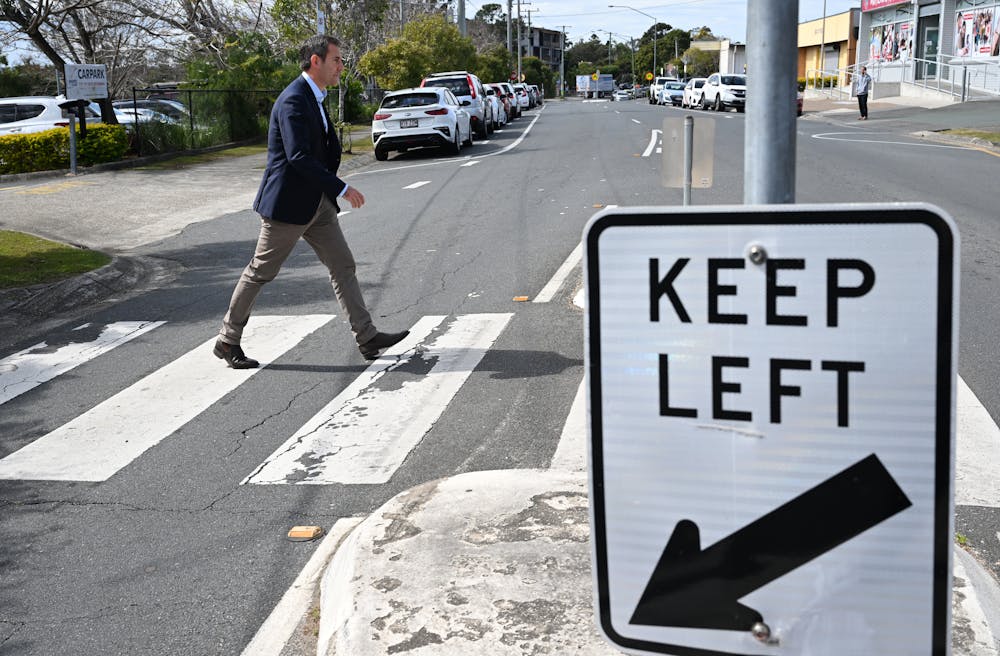
Boosting incomes means boosting wages (that again), strengthening workers’ bargaining power, and making the tax-welfare system more progressive.
That’s not to say that there aren’t ways to improve life in low-income communities. Among the most cost-effective, if not the most glamorous, is improved bus services.
And there are doubtless a variety of initiatives that can benefit from local leadership. But most are best left to local and state governments.
The tools available to the national government are better suited to helping people than improving places.
What we really need is more tax
Overall, “values-based capitalism” can’t make more than a marginal contribution to fixing the problems left behind by the failure of neoliberalism.
The real solution is simple but politically unpalatable. We need governments to do more, commanding more resources, which necessarily entails the private sector commanding fewer.
This can only be achieved by increasing tax revenue, starting with measures[19] like those put forward by Labor (unsuccessfully) in the 2019 election.
Unfortunately, the massive high-income tax cuts on their way with the support of Labor will make this difficult.
Read more: Humanising capitalism: Chalmers new version of an old Labor project[20]
References
- ^ Capitalism after the crises (www.themonthly.com.au)
- ^ polycrisis (theconversation.com)
- ^ flatlined (www.abc.net.au)
- ^ 2024 at the earliest (theconversation.com)
- ^ furious reactions (www.bca.com.au)
- ^ multi-employer bargaining (theconversation.com)
- ^ Stand by for the oddly designed Stage 3 tax cut that will send middle earners backwards and give high earners thousands (theconversation.com)
- ^ Stage 3 (theconversation.com)
- ^ scrapping or modifying the cuts (www.afr.com)
- ^ slapped down (www.afr.com)
- ^ unsustainable burden (ministers.treasury.gov.au)
- ^ Clean Energy Finance Corporation (www.cefc.com.au)
- ^ Rewiring the Nation (www.energy.gov.au)
- ^ Royal Commission (agedcare.royalcommission.gov.au)
- ^ VET-FEE Help (www.themandarin.com.au)
- ^ National Disability Insurance Scheme (www.ndis.gov.au)
- ^ proved problematic (www.abc.net.au)
- ^ Glenn Campbell/AAP (photos.aap.com.au)
- ^ measures (www.stptax.com)
- ^ Humanising capitalism: Chalmers new version of an old Labor project (theconversation.com)
Authors: John Quiggin, Professor, School of Economics, The University of Queensland