Stamp duty isn’t going anywhere until we can agree on the tax to replace it
- Written by: Joey Moloney, Senior Associate, Grattan Institute

Nearly all economists and most politicians seem to agree stamp duty is a bad tax. But nearly all state and territory governments rely on it to keep the lights on.
It’s a bad tax because it taxes homeowners every time they move, merely because they have moved. At A$40,000 per move on a median-priced home in Sydney or Melbourne, it’s enough to dissuade people from moving for a better job or to a bigger or smaller home when they have children or their children move out.
It’s even a de facto tax on divorce. When a family home is sold to allow assets to be split, each member of the separating couple needs to pay stamp duty to purchase again. It’s a big reason more than half of divorced women[1] who lose their homes don’t buy again within a decade.
Read more: Axing stamp duty is a great idea, but NSW is doing it wrong[2]
And it’s unfair. Stamp duty hits most the younger households that move around the most. It leaves alone the older residents who stay put.
New modelling by the Centre for Policy Studies at Victoria University finds abolishing stamp duty and replacing the revenue lost with land tax would put downward pressure on the price paid by buyers of about 4.7%[3], and downward pressure on the price received by sellers of about 0.1%.
In 2018 the Grattan Institute found a national shift from stamp duties to land tax would add up to $17 billion per year[4] to gross domestic product.
Most states aren’t really removing stamp duty
So far only one state or territory – the Australian Capital Territory[5] – has really taken the plunge. Others are merely tinkering with stamp duty in order to create what amounts to a de-facto first home-buyer grant.
The ACT is halfway through a genuine switchover designed to take 20 years.
In Victoria, the Andrews government is merely expanding a system of exemptions for eligible first home-buyers already available. NSW, Queensland, Western Australia and Tasmania also offer such exemptions.
Now in the lead-up to the March election, the NSW government and opposition are one-upping[6] each other with competing policies to offer even more first home-buyers a way to avoid paying stamp duty.
Read more: Stamp duty is an economic drag. Here's how to move to a better system[7]
The NSW Labor opposition pledged to abolish stamp duty altogether for first home buyers purchasing properties worth up to $800,000[8] — expanding the current exemption which is for homes worth up to $650,000. First home buyers purchasing more expensive homes worth up to $1 million will be offered a discount.
The Coalition government has already legislated to offer first home buyers the option of paying an annual land tax rather than stamp duty if they buy a property worth up to $1.5 million[9].
By targeting these exemptions to first home-buyers, both sides of NSW politics and other state governments are undercutting the key benefit of removing stamp duty: removing the tax on moving.
Most of these policies – including the two offered in NSW – amount to little more than first home buyers’ grants. History shows such grants tend to push up prices[10].
Actually axing stamp duty means replacing it with something
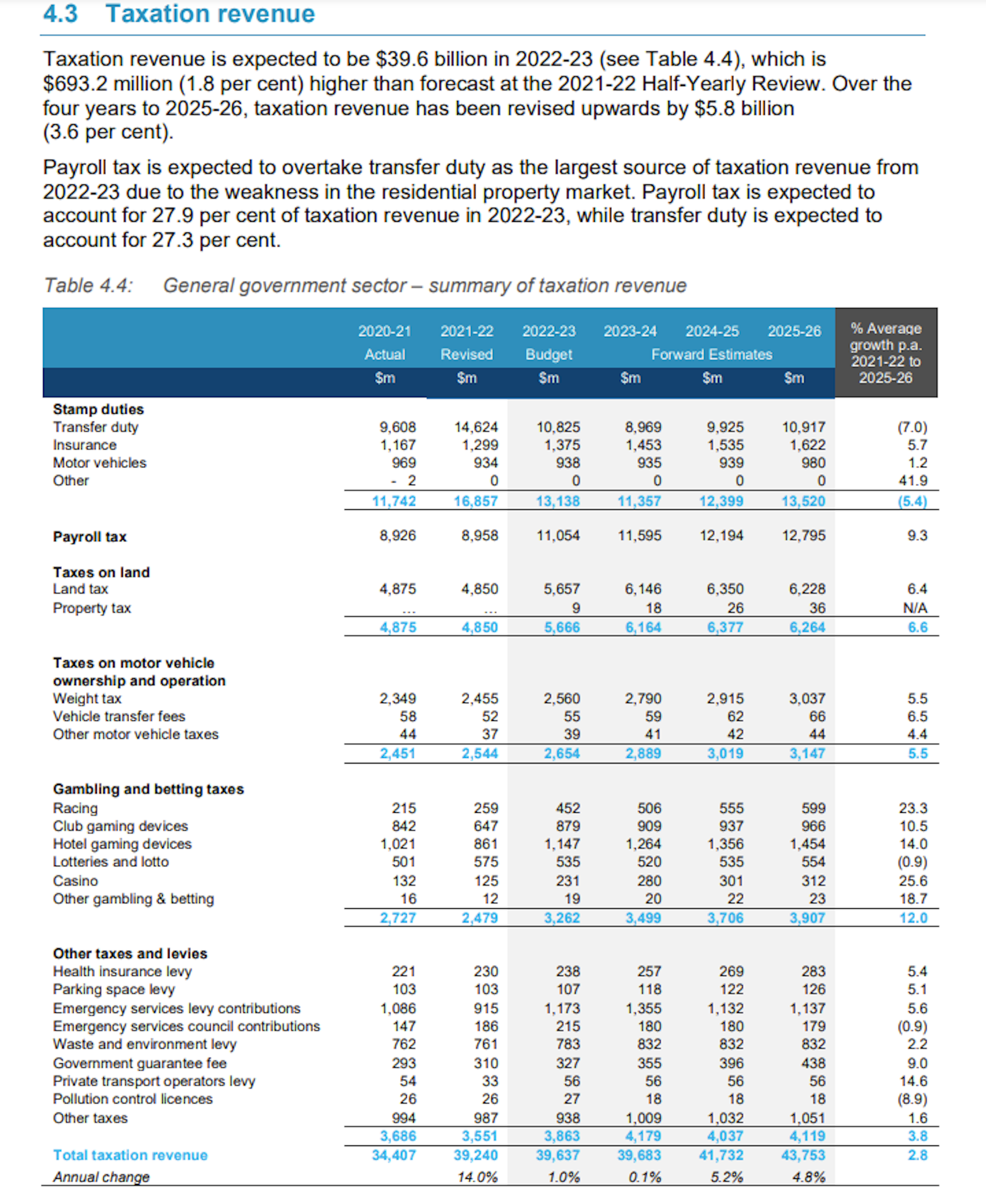
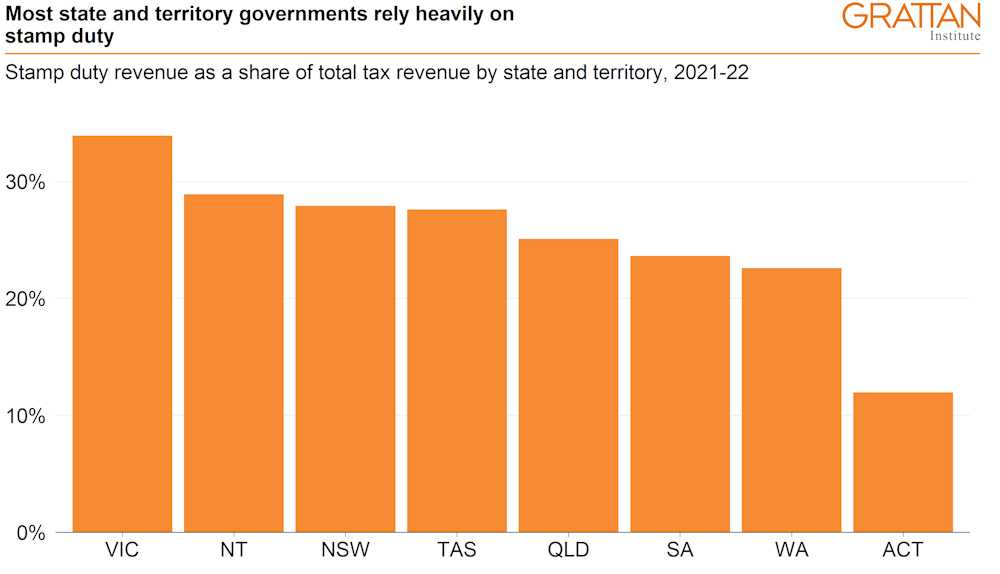
Stamp duty is critical to helping state governments pay the bills. All states or territories, except the ACT, use them to collect at least one-fifth of their tax revenue.
These revenues pay to keep our hospitals running and schools open.
NSW expects to collect around $10 billion[11] in stamp duty this financial year alone.
In contrast, Labor’s NSW giveaway for first-home buyers will cost $722 million[12] in its first three years. The Coalition’s will cost $728 million[13] over four years.
To really get rid of stamp duty altogether, we need to replace it with something else. Land tax is a good candidate because it doesn’t distort people’s decisions[14].
Whereas homeowners can avoid paying stamp duty again by refusing to move, land can’t be moved, meaning land tax can’t be avoided.
Read more: Killing off stamp duty: a good policy that no politician supports[15]
The NSW Coalition government started with bolder plans[16] for a meaningful transition, until a scare campaign[17] and the opposition from Labor and the Greens forced it to wind it back.
This has left NSW Labor in the unfortunate position of being against the bad tax (stamp duty) but also against the good tax that would have to replace it: land tax.
Other options – such as increasing the goods and services tax to cover the cost of abolishing stamp duty – appear even less likely.
NSW is stuck in a quagmire in which stamp duty seems here to stay.
Only the ACT is showing the way
The Australian Capital Territory’s approach of slowly reducing one tax while slowly increasing the other shows it can be done.
After announcing the switchover in 2012, the then treasurer Andrew Barr was reelected as chief minister in 2016 and in 2020.
He is ahead in the race to actually remove stamp duty by replacing it with something. He is showing the rest of Australia it needn’t be afraid.
References
- ^ divorced women (grattan.edu.au)
- ^ Axing stamp duty is a great idea, but NSW is doing it wrong (theconversation.com)
- ^ 4.7% (theconversation.com)
- ^ $17 billion per year (grattan.edu.au)
- ^ Australian Capital Territory (www.revenue.act.gov.au)
- ^ one-upping (www.smh.com.au)
- ^ Stamp duty is an economic drag. Here's how to move to a better system (theconversation.com)
- ^ $800,000 (www.abc.net.au)
- ^ $1.5 million (www.nsw.gov.au)
- ^ tend to push up prices (www.pc.gov.au)
- ^ $10 billion (images.theconversation.com)
- ^ $722 million (www.abc.net.au)
- ^ $728 million (www.treasury.nsw.gov.au)
- ^ doesn’t distort people’s decisions (theconversation.com)
- ^ Killing off stamp duty: a good policy that no politician supports (theconversation.com)
- ^ bolder plans (www.afr.com)
- ^ scare campaign (www.abc.net.au)
Authors: Joey Moloney, Senior Associate, Grattan Institute