When governments have to insure the tankers: Hormuz enters a new phase
- Written by: The Times
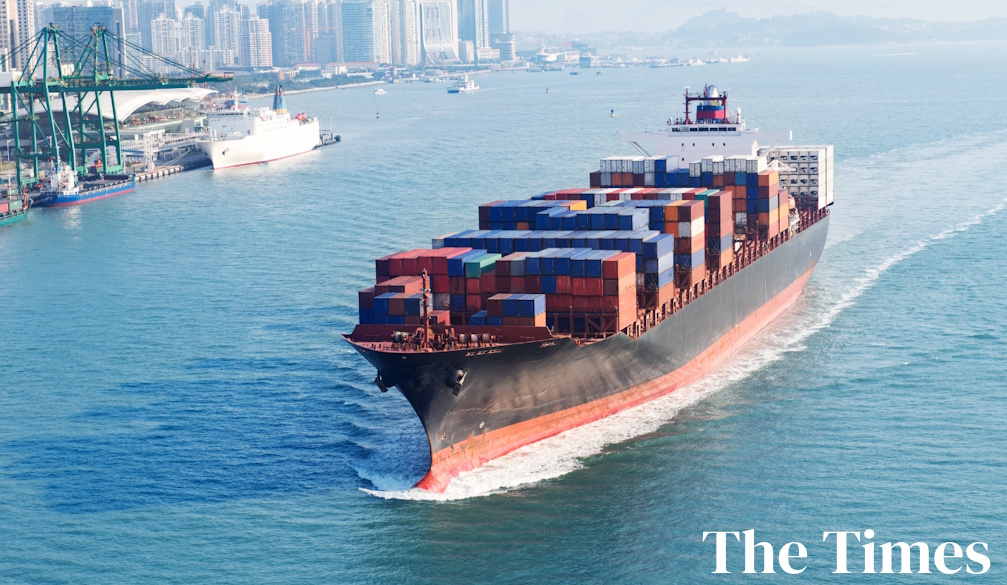
Saudi Arabia is considering state-backed war-risk insurance to keep ships moving through an increasingly dangerous Middle East. It reveals an overlooked truth about the Strait of Hormuz crisis: a shipping route does not have to be physically closed if commercial insurers decide it is simply too dangerous to use.
The Strait of Hormuz crisis has entered another extraordinary phase.
Governments may increasingly have to do something normally left to commercial markets:
Insure the ships.
Saudi Arabia is discussing the creation of a state-backed war and political-risk insurance scheme as conflict with Iran and attacks elsewhere in the region drive up insurance costs and make some commercial underwriters increasingly reluctant to cover vessels.
The proposal being discussed with London insurance brokers could establish a pooled fund providing up to 700 million Saudi riyals — about US$186 million — of cover for each incident.
Missile attacks and vessel seizures are among the risks that could potentially be covered.
Saudi state support could ultimately stand behind the scheme through the Saudi Export-Import Bank, alongside Saudi and potentially international reinsurers.
The proposal remains under discussion.
It is not yet an operating insurance program.
But the fact that one of the world's largest oil exporters is considering becoming an insurer of last resort tells us something important about the condition of Middle Eastern shipping.
The ships can sail — but who will insure them?
This is the increasingly important question surrounding Hormuz.
Much of the public discussion concentrates on military control of the Strait.
Is it open?
Is it closed?
Who controls it?
How many ships are getting through?
But a modern commercial vessel does not simply sail because the water ahead is physically navigable.
There is an enormous financial system behind every voyage.
The ship has an owner.
There may be a charterer.
The cargo has an owner.
Banks may finance the vessel or transaction.
There are crews and employment obligations.
And there are insurers.
Take away affordable insurance and a theoretically open shipping route can become commercially unusable.
Insurance is becoming part of the battlefield
War-risk insurance exists because conventional marine insurance does not necessarily cover the extraordinary dangers created by armed conflict.
When a vessel enters a high-risk region, additional war-risk premiums can be imposed.
The greater the danger, the greater the premium.
At some point the calculation can become prohibitive.
An insurer may decide the premium required to justify the risk is enormous.
It may limit coverage.
It may impose conditions.
Or it may simply refuse the risk.
The result can resemble a blockade even when no navy physically prevents the vessel from sailing.
The ship could go.
Commercially, it cannot.
Saudi Arabia has a problem
Saudi Arabia has enormous energy resources and considerable infrastructure designed to reduce its dependence upon Hormuz.
Its East-West pipeline can transport crude from the country's eastern producing areas towards the Red Sea.
That provides Saudi Arabia with strategic flexibility unavailable to some neighbouring producers.
But Saudi Arabia is much more than an oil exporter.
It imports goods.
It exports products.
Its ports support enormous volumes of commercial activity.
Its economic development strategy depends upon international trade and investment.
It therefore has a powerful interest in keeping shipping commercially viable throughout the region.
The proposed insurance pool should be viewed in that context.
Saudi Arabia is effectively considering whether government financial backing can replace some of the risk capacity that commercial markets are becoming reluctant to provide.
Why would government need to intervene?
Because the risks are no longer theoretical.
Fewer than 20 tracked commodity vessels crossed Hormuz over the weekend.
Only four were recorded on Sunday, following 13 on Saturday and 16 on Friday.
Traffic over the latest measured period remained approximately 90 per cent below pre-conflict levels.
Some ships are operating without their normal public transponder signals, meaning vessel-tracking figures cannot capture every movement.
But the overall picture is unmistakable.
Commercial shipping through one of the world's most important waterways remains extraordinarily depressed.
Twenty-three attacks change the insurance calculation
There is an obvious reason.
Britain's UK Maritime Trade Operations has recorded 23 incidents involving projectile strikes causing vessel damage since July 6, according to Reuters.
Think about what that means to an insurance underwriter.
The risk is no longer:
Could a commercial vessel theoretically be attacked?
The relevant questions become:
How frequently are vessels being attacked?
What kinds of ships are being targeted?
What national connections increase risk?
What is the value of the vessel?
What is the cargo worth?
Could the ship be detained or seized?
What happens if the Strait becomes inaccessible after the vessel enters?
How much might salvage cost?
Could an LNG tanker suffer catastrophic damage?
Insurance is the business of putting prices on risks.
Twenty-three damaging projectile incidents make that pricing exercise considerably less theoretical.
A $100 million ship concentrates the mind
Consider a hypothetical tanker worth US$100 million.
A seemingly small war-risk premium measured as a percentage of hull value can translate into hundreds of thousands or millions of dollars.
That cost exists before considering the cargo itself.
Then consider the possibility of a vessel being damaged sufficiently to require repairs.
Or detained.
Or seized.
Or lost.
Then add potential environmental liabilities.
Crew risks.
Salvage.
Cargo losses.
Delay.
Lost charter revenue.
Suddenly the extraordinary insurance premiums surrounding high-risk voyages become easier to understand.
Iran has just added another risk
At precisely the same time, Iran is tightening its claimed regulatory control over Hormuz.
Its newly established Persian Gulf Strait Authority has warned vessels that failure to comply with Iranian transit requirements could result in fines, detention or confiscation.
Iran has also published a list of vessels it considers non-compliant and warned that ships cooperating with listed vessels through arrangements such as ship-to-ship transfers could themselves be restricted.
Cargo owners have been told to check the Iranian list before beginning Gulf-related voyages.
This adds another dimension to maritime risk.
A shipping company is no longer assessing only the possibility of missile or drone attack.
It must consider the possibility of regulatory enforcement, detention or confiscation.
Whatever international governments think about the legitimacy of Iran's claimed authority, the commercial operator still has to assess what could happen to its ship.
Insurance prices reality, not diplomatic arguments
This distinction is fundamental.
A government can declare that Iran has no lawful authority to impose a particular restriction.
An insurer still has to calculate whether Iran has the practical ability to detain the vessel.
Those are different questions.
Commercial insurance does not determine international maritime law.
It determines financial exposure.
If an insurer believes there is a meaningful probability that a US$100 million vessel could be seized, damaged or destroyed, the premium reflects that probability.
That is one reason insurance has become such an important invisible component of the Hormuz crisis.
Hormuz can be closed without being closed
This leads to the central lesson.
Iran does not necessarily have to sink tankers across the Strait.
It does not need to mine every navigable channel.
It does not need to physically prevent every ship from entering.
If enough ship owners refuse to sail;
if crews refuse assignments;
if charterers refuse the risk;
if banks refuse financing;
and if insurers refuse affordable coverage,
commercial traffic collapses anyway.
That is effectively what parts of the shipping industry are confronting.
The Strait remains physically navigable.
But commercial movement remains around 90 per cent below normal levels.
That is not normal navigation.
It is a market responding to danger.
Government becomes insurer of last resort
This is what makes the Saudi proposal so interesting.
Governments routinely become lenders of last resort during financial crises.
Central banks provide liquidity when commercial financial markets malfunction.
The concept now emerging in shipping is analogous.
Government as insurer of last resort.
If private insurers cannot provide sufficient affordable war-risk capacity, the state provides financial backing.
That allows commercially important activities to continue despite risks that the private market cannot comfortably absorb.
Saudi Arabia would not be eliminating the danger.
It would effectively be transferring part of the financial consequences from individual commercial insurers towards a broader state-supported structure.
America has already confronted the same problem
The concept itself is not unprecedented in this crisis.
The United States previously announced government-backed reinsurance support intended to encourage shipping through Hormuz after commercial war-risk coverage was disrupted.
That tells us something important.
Two very different governments can reach the same conclusion:
Military access is not enough.
You can protect a shipping lane with naval power.
But if nobody can afford to insure the ships using it, the oil still does not move normally.
The commercial system must function alongside the military one.
The LNG problem is particularly serious
Liquefied natural gas illustrates the stakes.
An LNG carrier is an enormously sophisticated and valuable vessel carrying a specialised cargo.
Qatar, one of the world's largest LNG exporters, lies inside the Persian Gulf.
Its LNG exports ordinarily depend heavily upon access through Hormuz.
A damaged crude tanker is serious.
A seriously damaged LNG carrier introduces an entirely different range of concerns.
That naturally affects insurers' appetite for risk.
It also helps explain why the absence or scarcity of LNG carriers among recent tracked Hormuz movements deserves particular attention.
Insurance costs travel with the cargo
This is where the story reaches Australia.
Insurance is not an abstract financial service detached from the physical product.
It becomes part of the cost of transporting that product.
Suppose transporting a fuel cargo becomes more expensive because the tanker requires extraordinary war-risk insurance.
That increases the cost of delivering the cargo.
If tankers become scarce because owners are unwilling to enter dangerous waters, freight rates can rise as well.
If voyages take longer because operators use alternative arrangements, costs increase again.
If cargoes require ship-to-ship transfers, there is another cost.
Ultimately the landed price of energy reflects the chain required to deliver it.
Australia can change suppliers — but not escape the market
Australia does not need every litre of petroleum it consumes to originate inside the Persian Gulf.
That does not insulate us.
We buy into regional and international markets.
If Asian buyers lose access to one source, they compete for another.
If one shipping route becomes dangerous, demand for safer vessels and routes increases.
If insurance becomes more expensive, freight becomes more expensive.
If refiners cannot obtain their preferred crude grades, refined-product markets can tighten.
Australia can seek alternative supply.
The important question is:
At what price?
We are already seeing the answer
Australia has so far maintained relatively strong refined-fuel import volumes despite the disruption affecting Asian markets.
That is a considerable advantage.
But it has come at higher cost.
Asian refining margins have surged as supplies of important middle distillates such as diesel and aviation fuel tighten.
Australia's own Ampol has demonstrated the extraordinary economics of the moment, reporting record first-half profit as refining margins at its Lytton refinery more than tripled.
That does not mean Ampol caused the problem.
It demonstrates how valuable available refining capacity becomes during a regional fuel shortage.
Insurance represents another layer in the same supply chain.
The Australian economy eventually absorbs it
Higher shipping and fuel costs do not remain confined to petroleum companies.
Diesel powers trucks.
Trucks deliver supermarket goods.
Diesel powers agricultural equipment.
It powers mining machinery.
It powers construction equipment.
Aviation fuel moves Australians and international visitors around an enormous continent.
Petroleum products are embedded throughout modern economic activity.
Every additional cost imposed between an oilfield and an Australian fuel tank has the potential to move further through the economy.
This matters to inflation
That is why the insurance story eventually becomes an inflation story.
War-risk premiums themselves will never dominate Australia's Consumer Price Index.
But they are part of a larger accumulation of costs:
higher crude prices;
higher refining margins;
higher tanker rates;
higher insurance premiums;
longer voyages;
scarcer refined fuels;
and stronger competition for available cargoes.
Each layer contributes something.
Together they can become significant.
And once again the Reserve Bank cannot fix the underlying cause.
Australian interest rates cannot reduce the risk of a missile striking a tanker in the Persian Gulf.
There is a bigger economic lesson
Modern global trade has spent decades becoming extraordinarily efficient.
Businesses optimise supply chains.
Inventory is minimised.
Ships are enormous.
Ports specialise.
Refineries specialise.
Production concentrates where it is most economical.
Insurance allows financial risk to be distributed internationally.
The system works because thousands of participants assume the infrastructure connecting them will continue functioning.
Hormuz is demonstrating what happens when one of those assumptions fails.
Suddenly redundancy matters.
Alternative pipelines matter.
Strategic reserves matter.
Domestic refining matters.
Alternative suppliers matter.
And government-backed insurance matters.
Efficiency is valuable.
Resilience is valuable when efficiency stops working.
What happens next?
The Saudi proposal is still being negotiated.
That qualification matters.
No one should describe the scheme as operational until it actually is.
But its development gives us another indicator to monitor.
Do Saudi Arabia and its insurance partners establish the fund?
How much risk will it cover?
Which vessels qualify?
Will international reinsurers participate?
Will ship owners actually use it?
Most importantly:
Will government-backed insurance persuade more vessels to sail?
If the answer is yes, vessel traffic should begin telling us.
If traffic remains around 90 per cent below normal despite state-supported insurance, the implication will be considerably more serious.
It would suggest money alone cannot overcome the perceived physical risk.
The Times View
The Strait of Hormuz does not need a chain stretched across it to be closed.
It doesn't even require every vessel to be attacked.
Modern global trade relies upon something less visible than ships and oil terminals:
confidence that risks can be managed.
Insurance is one of the principal mechanisms through which that confidence is created.
When commercial insurers become reluctant to assume a risk, trade can slow remarkably quickly.
Saudi Arabia's consideration of state-backed war-risk insurance therefore tells us more about the seriousness of the Hormuz crisis than another political speech from Washington or Tehran.
One of the world's great oil-producing nations is considering putting government-supported capital behind the ships required to keep trade moving.
That is extraordinary.
For Australia, the consequence is straightforward.
Every additional cost required to persuade a tanker owner, crew, financier or insurer to move fuel through a dangerous region eventually becomes part of the economics of energy.
We have learned to watch the ships.
We have learned to watch what comes out of the refineries.
Now there is another indicator worth watching:
Watch who is willing to insure them.