Why Anthony Albanese’s presence at Pope Leo’s inauguration is shrewd politics
- Written by: Darius von Guttner Sporzynski, Historian, Australian Catholic University
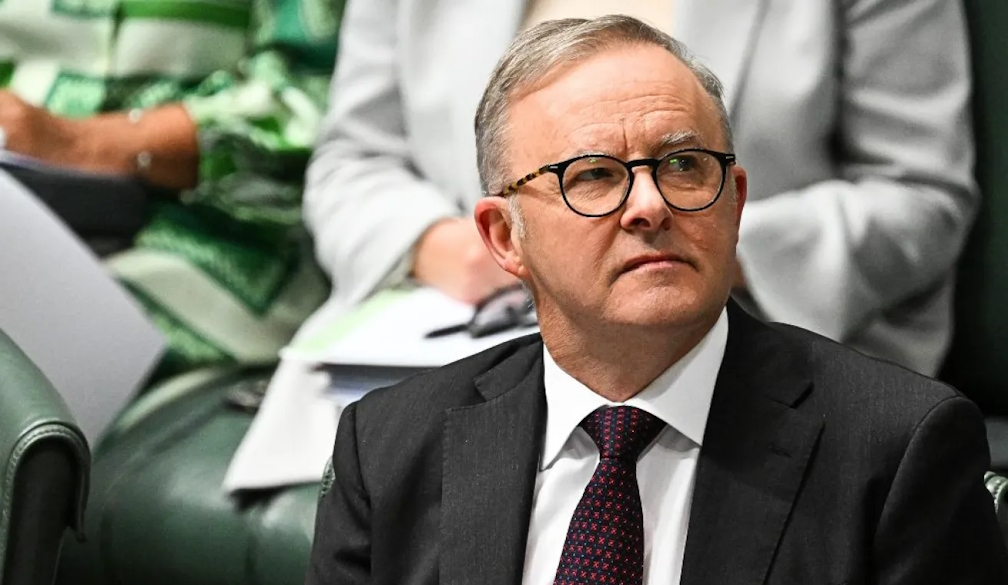
When Prime Minister Anthony Albanese steps into St Peter’s Square for the inaugural Mass of Pope Leo XIV[1] on Sunday, the optics will be far more than pious courtesy.
For a day, the Vatican will temporarily be the world’s premier diplomatic stage. And a canny Australian leader can use such an occasion to advance domestic and foreign policy agendas simultaneously.
Faith optics and domestic politics
Albanese has lately spoken of “reconnecting[2]” with his Catholic heritage. He called the election of the US-born pontiff “momentous[3]” for believers and non-believers alike.
In multicultural Australia, where roughly one in four citizens identifies as Catholic[4], Albanese’s trip to the Vatican allows him to reassure a core constituency that sometimes feels politically overlooked: Catholics.
This signalling costs Albanese nothing. Yet, it helps to boost Labor’s broader narrative[5] of inclusion and respect for faith communities.
St Peter’s Square as a diplomatic crossroads
The inaugural mass will also attract a rare concentration of global powerbrokers in one square kilometre. The head-of-state guest list is still fluid, but several confirmations make the trip worth Albanese’s while.
Albanese’s most immediate objective will likely be to revive free-trade negotiations[6] with the European Union, which broke down in 2023[7].
The Australian has reported[8] that Albanese hopes to bend the ear of European Commission President Ursula von der Leyen and European Council President António Costa.
Albanese will also get a chance to meet Prince Edward, who will represent King Charles III, as well as his newly elected counterpart in Canada, Prime Minister Mark Carney.
Ukrainian President Volodymyr Zelensky is also expected to attend after a week of overtures to the new pope concerning Kyiv’s quest for a just peace in its war with Russia.
Speculation was swirling around the possibility of US President Donald Trump returning to Rome, fresh from his high-visibility appearance at Pope Francis’s funeral on April 26.
But Vice President JD Vance will lead the US delegation[9], joined by Secretary of State Marco Rubio.
For Albanese, a corridor encounter with Vance would allow him to set a personal tone before his expected visit to Washington later this year, without the media glare that accompanies an Oval Office photo-op.
Why leaders flock to the Vatican
Some commentators may frame the attendance of world leaders at the mass cynically: a chance to use a sacred event for their own political purposes.
Yet, politicians have long been a fixture at papal events. Such participation is hardly exceptional. It reflects a centuries-old dynamic in which those with temporal political power seek moral sanction, and the papacy demonstrates its enduring capacity to convene the political order.
Pope Francis’s inauguration in 2013 drew 31 heads of state and 132 official delegations[10] from national governments or international organisations.
And John Paul II’s funeral in 2005 assembled more than 80 sitting heads of state[11]. It was one of the largest gatherings of leaders[12] in modern history.
Why does the Vatican exert such magnetic pull?
First, it is a neutral micro-state whose moral authority can confer legitimacy on secular, political initiatives. Consider, for example, John Paul II’s role in Poland’s democratic revolution[13].
Second, the Holy See’s diplomatic corps is the world’s oldest continuous foreign service. It boasts diplomatic relations with 184 states[14], including Palestine and Taiwan (one of a dozen states in the world to do so).
Although every pontiff is first and foremost the universal pastor of the Catholic Church, the Lateran Treaty of 1929[15] also endowed him with full sovereignty over the territory of Vatican City.
The pope’s head-of-state status is most visible at multilateral forums. In 2024, for instance, Pope Francis became the first pontiff[16] to address[17] a G7 summit, speaking in a special session on artificial intelligence.
He also had a string of bilateral meetings on the sidelines with the leaders of the United States, Ukraine, France, Brazil, Turkey, Canada and India, among others.
When a pope travels, host governments roll out the symbols of a state visit, though the Vatican insists on calling such trips “apostolic journeys”. Conversely, when foreign leaders come to Rome, they are received in the pope’s own apartments, not in a government palace. These meetings therefore take on a spiritual, as well as political, cast.
In short, the pope moves with ease between being a shepherd and sovereign. His spiritual authority opens doors for dialogue, while his head-of-state status allows him to receive ambassadors, sign treaties and sit across the table from presidents and prime ministers.
The result is a singular blend of moral voice and diplomatic reach unmatched in global affairs.
Pragmatic statecraft under the colonnade
For a middle-power such as Australia, dialogue between a prime minister and a pope can have a multiplier top-down effect. These discussions often echo across chancelleries in the Global South, especially in Catholic Latin America and the Philippines[18]. These are both priority markets for Australian education and green-hydrogen exports[19].
In Rome, Albanese can also affirm Australia’s commitment to multilateralism at a moment when Indo-Pacific tensions have nudged Canberra towards increased defence spending and an over-militarised image. The sacred stage permits a softer register: diplomacy as dialogue, not deterrence.
When the incense clears on Sunday, most viewers will remember the pageantry: the fisherman’s ring[20] (a gold signet ring cast for each new pope), the pallium[21] (the white woollen band draped over the pope’s shoulders during mass), and the roar of 100,000 pilgrims.
Yet, the quieter choreography in the diplomatic boxes may shape trade flows, security partnerships and refugee corridors for years.
Albanese appears to have recognised this rare alchemy. Showing up in Rome is pragmatic statecraft, executed under Bernini’s colonnade. This is where religious and political figures have long mingled — and will continue to do so as long as popes and prime minister seize the moment.
References
- ^ inaugural Mass of Pope Leo XIV (www.vaticannews.va)
- ^ reconnecting (www.theguardian.com)
- ^ momentous (apnews.com)
- ^ identifies as Catholic (www.abs.gov.au)
- ^ broader narrative (www.abc.net.au)
- ^ revive free-trade negotiations (www.lowyinstitute.org)
- ^ broke down in 2023 (www.france24.com)
- ^ has reported (www.theaustralian.com.au)
- ^ will lead the US delegation (www.forbes.com)
- ^ 31 heads of state and 132 official delegations (www.dw.com)
- ^ 80 sitting heads of state (en.wikipedia.org)
- ^ largest gatherings of leaders (www.cbsnews.com)
- ^ Poland’s democratic revolution (www.tandfonline.com)
- ^ diplomatic relations with 184 states (aleteia.org)
- ^ Lateran Treaty of 1929 (www.britannica.com)
- ^ first pontiff (www.voanews.com)
- ^ address (www.vatican.va)
- ^ Philippines (www.austrade.gov.au)
- ^ green-hydrogen exports (greenreview.com.au)
- ^ fisherman’s ring (news.sky.com)
- ^ pallium (www.turismoroma.it)