Uninspiring leaders, stressed voters and the shadow of Trump make for an uncertain contest
- Written by: Michelle Grattan, Professorial Fellow, University of Canberra
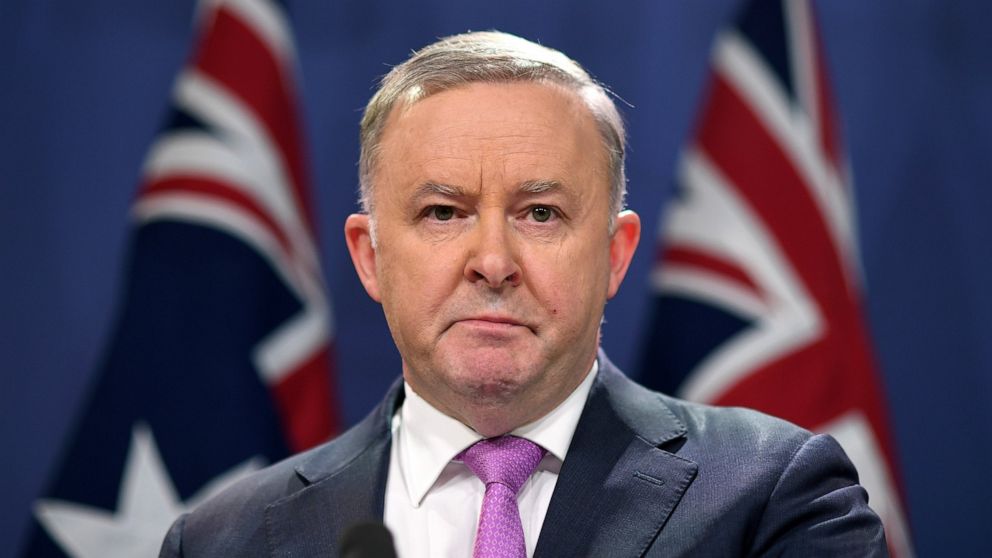
The usual story for a first-term government is a loss of seats, as voters send it a message, but ultimate survival.
It can be a close call. John Howard risked all in 1998 with his GST, and almost lost office, despite having a big majority.
But you have to go back to 1931 to find a first-term government thrown out.
So, going into this campaign, Anthony Albanese has the weight of history on his side. But modern day politics is volatile, and the voters are cranky, which has in recent months given the opposition hope it could run the government close or even defy the odds.
Government and opposition start the formal campaign with the polls close on the two-party vote. In the past few weeks, the government has improved its position, arguably to be now in the lead. If the election were held today, Labor would probably win more seats than the Coalition, and form government.
But the margins are narrow. With the next parliament, like this one, expected to have a large crossbench, present polling is pointing towards a minority government as a likely outcome. Things can change during a campaign.
Albanese started the term with substantial public goodwill – although his majority was razor thin, and his 2022 election owed more to the unpopularity of then prime minister Scott Morrison than to any real enthusiasm for Labor.
If one had to point to the single biggest political mistake the prime minister made, it was his over-investment in the Voice referendum. Whatever one thinks of the proposal itself, Albanese let it distract from what was a growing-cost-of-living crisis. The referendum was probably always destined to fail, but Albanese and the “yes” side were also out-campaigned by the “no” forces, strongest among them opposition spokeswoman Jacinta Price.
Albanese never properly recovered from the Voice’s defeat.
Early in the term the government was complacent about its opponents, believing Peter Dutton was unelectable. Indeed, that was a widespread view, including among many on the conservative side of politics. It underestimated Dutton’s strategic and tactical skills, the changing nature of the electorate, and how deeply the cost-of-living crisis – with its dozen interest rate rises under Labor, on top of one under Morrison – would bite.
Suburbia up for grabs
What was once ALP heartland, outer suburbia, is now up for grabs. Many of the tradies have become conservatives, to whom Dutton’s blunt, black-and-white political pitch is not just acceptable but potentially attractive.
Labor’s appeal to working people in this campaign is that the worst is over on the economy, with unemployment still low and real wages in (slightly) positive territory. The latest national accounts figures showed Australia’s per capita recession, which had lasted seven quarters, was over. The February interest rate fall has also been a plus for the government: it may not be a big vote changer but it has reinforced Labor’s argument that things are going in the right direction.
The question remains: will people buy the story of life getting better when they are still not back to where they were a few years ago, and continue to feel under the financial pump?
This week’s budget and Dutton’s reply have homed in on cost of living. The government has come up with modest tax cuts, starting mid next year. These were legislated in a rush before parliament rose, so the Coalition was forced into saying it would repeal them. Dutton countered by promising an immediate cut to the excise on petrol and diesel[1]. The opposition leader also used his budget reply to open another front in the battle over the energy transition, with the promise of a gas reservation scheme.
In the past month or two, there has been some change in the political atmosphere. Dutton’s momentum seemed to have stalled. The tight internal disciple he had maintained frayed somewhat, with mixed messages over some policy and internal fears Dutton had left policy announcements too late.
Will voters think they don’t know enough about Peter Dutton?
The risk for Dutton is that people will fear they’re buying a pig in a poke. He has run a small target strategy; leaders (Howard in 1996, Abbott in 2013) have won on that approach before. But if Dutton’s policy offerings in the campaign fall short, or his policy doesn’t stand up to the forensic scrutiny that comes in a campaign, he is likely to run into problems. So far, Dutton has established himself as a strong negative campaigner but he has yet to come through as a positive alternative prime minister.
His signing up to Labor’s $8.5 billion bulk-billing initiative was an example of a short-term tactic to neutralise an issue that raised questions about the Coalition’s inability to produce its own health blueprint.
The government will mobilise industrial relations against the Coalition, arguing Labor has delivered benefits to workers that a Coalition government would attack. This is risky for Dutton. His plans for slashing the public service, curbing working-from-home and removing the right to disconnect will fuel Labor’s negative campaigning, which will focus too on Dutton’s general plan to cut spending.
The Trump factor
A major unknown is what impact overseas events will have on this election. There has been a general swing to the right internationally. But the Trump factor has become a danger for Dutton.
His opponents seek cast Dutton as Trump-lite. The opposition leader is a critic of Trump on Ukraine, and he’s aware Trumpism is now politically scary for many voters. Nevertheless, Dutton’s pre-occupation with the size of the public service and his emphasis on cuts (without giving detail) will, to some voters, sound like echoes (albeit faint) of Trump. Labor claims its focus groups show people have been increasingly seeing Dutton as Trumpist.
Trump this week announced tariffs on foreign cars (not a worry to Australia, which doesn’t make any anymore). Next week he’ll announced the next stage in his tariff policy. This will feed into the election campaign. The extent it does will depend on whether Australia is directly hit. The government is busy with intense last-minute lobbying.
The cost of living is front and centre in the election, but the recent appearance of Chinese ships near Australia and their live-fire exercise has contributed to making national security and defence (especially how much we should be spending on it) issues as well, although second tier for most voters.
Major attention in this election will be on the performance of independents. Half a dozen so-called teals seized Liberal seats in 2022, and it would be very hard for the Coalition to obtain a majority without regaining some of them. The Melbourne seats of Kooyong and Goldstein will be especially closely watched. In New South Wales, one teal seat has already been lost through the redistribution.
The teals ran last time on climate change, integrity, and equity for women. This election, climate is less to the fore in the voters’ minds, while we now have an anti-corruption body, the National Anti-Corruption Commission. And there is no Scott Morrison, who was a lightning rod for the Liberals’ “women problem”. So in terms of issues, the teals have a harder case to make than before.
On the other hand, people remain deeply disillusioned with the major parties, and the teals have had plenty of time to dig into their seats. The general “community candidate” movement has strengthened and broadened. Whatever its precise composition, the new House of Representatives is expected to have a large crossbench.
In the event of a hung parliament, the crossbench will come into play. This means its potential members, especially the teals, will be under pressure during the campaign to indicate what factors they would take into account in deciding to whom to give confidence and supply. They are likely to keep their cards close to their chests.
The election will also test whether the hardline positions the Greens have taken, on local and foreign issues, have alienated or attracted voters. The Greens are at an historic high with four seats in the lower house. The three of those that are in Queensland will be on the line.
Given the closeness of the polls as the formal campaign starts, what happens in the coming five weeks, and notably the personal performances of Anthony Albanese and Peter Dutton could be crucial to the outcome. This is not one of those elections where either side can be confident it has the result in the bag.
References
- ^ excise on petrol and diesel (theconversation.com)