The US and UK have decimated their aid spending. Australia has a unique opportunity to help fill the vacuum
- Written by: Melissa Conley Tyler, Honorary Fellow, Asia Institute, The University of Melbourne
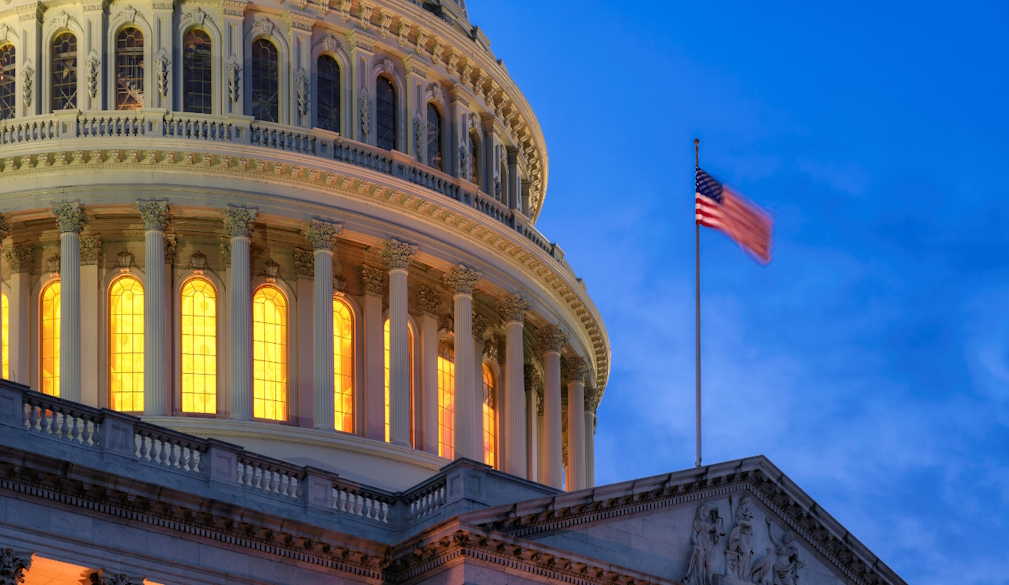
Hard on the heels of Donald Trump’s dismantling[1] of USAID, the United Kingdom has ripped[2] more than A$12 billion (£6 billion) from its foreign assistance budget.
The double hit from two of the globe’s biggest contributors to international development has been branded a betrayal[3] of poorer countries that will cost lives.
What does this mean for Australia as we head towards the federal election?
Australia is different
Australia’s aid context is strikingly different.
International development is deeply integrated[4] in the Department of Foreign Affairs and Trade (DFAT) and can’t easily be pulled apart. There is no separate aid agency to target.
Recent experience also reminds us why it is unwise to cut overseas assistance. When the Abbott[5] government made major cuts to development spending, other actors including China quickly filled the vacuum[6] throughout the Pacific.
Most importantly, more than 20 of Australia’s regional neighbours[7] are developing countries. This means an adequate overseas aid budget is non-negotiable if we want to exert influence[8] throughout the region.
At a minimum, both the Labor Party and the Coalition should commit to maintaining[9] current levels of development assistance.

If you want to see how every dollar of Australia’s overseas aid is being spent, you can visit the transparency portal[11] on the DFAT website. The portal outlines each investment, which includes peace building in Sri Lanka, countering people trafficking in Vietnam, preventing foot and mouth disease in Indonesia, and disaster preparedness across the Pacific.
This is cost-effective spending: dealing with the aftermath of a crisis is massively more expensive than the relatively small outlays needed to prevent them from happening in the first place. By way of contrast, the budget for defence is $48 billion[12] each year compared to less than $5 billion for preventive spending on development.
New opportunities
Initial reaction to the severe foreign aid cuts focused on how China[13] and Russia[14] could benefit from the void left by Washington and London. But it is now being recognised that their shortsightedness may provide a golden geopolitical opportunity for Australia[15].
It is an opportunity that could be seized upon by whoever wins the election.
Think back to the Boxing Day tsunami, when John Howard’s response[16] transformed the relationship with Indonesia and led to the formation of the Quad[17] grouping.
When the US withdrew from the Trans-Pacific Partnership Agreement in 2017, Japan stepped up[18] and showed the leadership needed to conclude negotiations. With Australia’s support, the deal went ahead and is now one of the largest free-trade agreements in the world. Major achievements can still be made even without the involvement of the US.
We are now faced with a similar moment. While Australia cannot compete with the scale of US and UK international development, there is much it can do[19] across the region and throughout the broader global system.
What Australia can do
If Australia was to think big, it would announce that it will elevate funding for overseas aid from its current level[20] of 0.68% of the federal budget to 1% over the next two to three years.
This would generate positive worldwide coverage and differentiate Australia for a relatively small investment[21]. John Howard, Kevin Rudd and Julia Gillard were all able to keep[22] the international development budget at more than 1%, so it’s not impossible.
There is a perception that a much larger slice of the budget pie currently goes to development assistance. The average Australian believes we spend 14%[23] of the budget helping out our neighbours. In reality the outlay is less than 70 cents per $100.

Even a smaller increase for emergency funding could be very meaningful. The impact of the US 90-day pause on foreign assistance has been immediate, with charities[25] and contractors[26] left with no income and forced to let staff go and shutter offices[27]. There is a real risk[28] some international aid charities won’t survive the freeze. Emergency funding is needed to stave off collapse and stop the loss of specialist skills[29].
At the global level, Australia could help to maintain the essential humanitarian work of organisations[30] like the World Food Programme, UNAIDS, UNHCR and the World Health Organisation, which may face existential funding crises[31].
Australia’s national interest
Australia’s security, stability and prosperity depend[32] on both the region and cultivating wider relationships.
We could use this moment to partner with critical countries in the Pacific and South East Asia to preserve the programs most at risk. Australia could also build deeper relationships with other donors like Japan, South Korea, India, Indonesia, Canada, and EU members and institutions.
There are many competing priorities in the budget process, so foreign aid is never an easy sell. But there will be international praise for Australian leadership, including from the US and the UK, if Australian aid helps maintain Western presence in key geopolitical arenas. It would be a diplomatic win and very much in Australia’s interest.
Now is the time for Australia to announce the steps it will take to preserve and even increase development aid as one of the key tools of statecraft[33] to create a world that Australians want to live in.
References
- ^ dismantling (theconversation.com)
- ^ ripped (www.theguardian.com)
- ^ betrayal (www.theguardian.com)
- ^ deeply integrated (www.sbs.com.au)
- ^ Abbott (theconversation.com)
- ^ vacuum (www.crikey.com.au)
- ^ regional neighbours (www.aspistrategist.org.au)
- ^ influence (theconversation.com)
- ^ maintaining (www.dfat.gov.au)
- ^ Jim Lo Scalza/AAP (photos.aap.com.au)
- ^ transparency portal (adp.dfat.gov.au)
- ^ $48 billion (www.minister.defence.gov.au)
- ^ China (www.theguardian.com)
- ^ Russia (www.firstpost.com)
- ^ geopolitical opportunity for Australia (thediplomat.com)
- ^ response (www.dfat.gov.au)
- ^ Quad (www.google.com)
- ^ Japan stepped up (www.lowyinstitute.org)
- ^ can do (www.abc.net.au)
- ^ current level (devpolicy.org)
- ^ relatively small investment (saferworld.org.au)
- ^ keep (saferworld.org.au)
- ^ 14% (www.internationalaffairs.org.au)
- ^ Tolga Akman/AAP (photos.aap.com.au)
- ^ charities (thewest.com.au)
- ^ contractors (www.politico.com)
- ^ shutter offices (www.icvanetwork.org)
- ^ real risk (www.aspistrategist.org.au)
- ^ stop the loss of specialist skills (open.spotify.com)
- ^ organisations (www.lowyinstitute.org)
- ^ existential funding crises (www.devintelligencelab.com)
- ^ depend (www.dfat.gov.au)
- ^ key tools of statecraft (devpolicy.org)