Sanctioning extremist Israeli ministers is a start, but Australia and its allies must do more
- Written by: Jessica Whyte, Scientia Associate Professor of Philosophy and ARC Future Fellow, UNSW Sydney
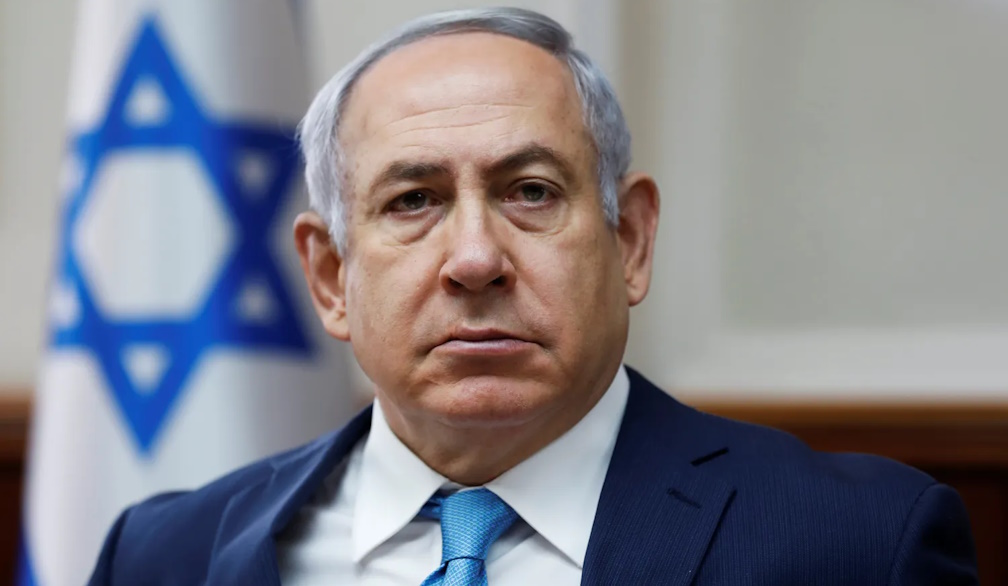
The Australian government is imposing financial and travel sanctions on two far-right Israeli ministers: Itamar Ben-Gvir (the national security minister) and Bezalel Smotrich (finance minister).
This is a significant development. While Australia has previously sanctioned seven individual Israeli settlers[1], Ben-Gvir and Smotrich are the most high-profile Israeli nationals to face such sanctions.
Civil society organisations have long called for sanctions[2] against these ministers and others in the Israeli cabinet.
Australian Foreign Minister Penny Wong previously rebuffed such calls by saying[3] that “going it alone gets us nowhere”. These latest sanctions have been imposed by a coalition of five states: Australia, Canada, New Zealand, Norway and the United Kingdom.
A joint statement[4] by the foreign ministers of these countries says Ben Gvir and Smotrich “have incited extremist violence and serious abuses of Palestinian human rights.”
Explaining the sanctions further, Wong told ABC[5] Smotrich and Ben-Gvir are the “most extreme proponents of the unlawful and violent Israeli settlement enterprise”.
A history of violent statements
There is no doubt both men are extremists.
Ben-Gvir, who is responsible for Israel’s police force, was convicted of racist incitement[6] in 2007.
As national security minister, he has handed out thousands of assault rifles[7] to West Bank settlers. He has also boasted[8] he’s worsened the “abominable conditions[9]” of Palestinian prisoners.
Smotrich has overseen a dramatic expansion of unlawful settlements[10] in the West Bank. He’s vowed to annex[11] the occupied Palestinian territory, in violation of international law.
He has also complained[12] no one would allow Israel “to cause two million civilians to die of hunger, even though it might be justified and moral until our hostages are returned.”
Last month, he argued[13] that “until the last hostage is returned, we should not even be sending water” to Gaza.
The joint statement[14] by the foreign ministers explains Ben-Gvir and Smotrich have been sanctioned for “inciting violence against Palestinians in the West Bank”.
The statement notes these measures “cannot be seen in isolation from the catastrophe in Gaza”. However, it also goes on to express “unwavering support for Israel’s security” and vows to “continue to work with the Israeli government”.
It does not note that the International Court of Justice has found[15] Palestinians in Gaza are facing a plausible risk of genocide[16].
Nor does it make clear Ben-Gvir and Smotrich are not bad apples; they are integral members of the far-right Israeli government that is responsible for the destruction of Gaza and the starvation of its people[17].
Indeed, just this week, a UN independent fact-finding commission report found Israel was committing the “crime against humanity of extermination[18]” in Gaza, among other war crimes.
What are Magnitsky sanctions?
Smotrich and Ben-Gvir have been sanctioned under Australia’s Autonomous Sanctions Act 2011[19]. This act grants the foreign minister broad discretionary powers to impose sanctions.
In 2021, the Australian government amended this act[20] to allow the government to impose sanctions on specific “themes”, such as:
- serious violations or serious abuses of human rights
- threats to international peace and security
- activities undermining good governance or the rule of law, including serious corruption.
These targeted sanctions on human rights abuses are often called “Magnitsky-style sanctions” after the Russian lawyer Sergei Magnitsky[21], who died in custody after exposing serious corruption in Russia. They enable a government to freeze the assets of and impose travel bans on individuals and specific entities, not just countries.
Since coming into force, Australia has imposed[22] the Magnitsky-style sanctions on numerous Russian military leaders, members of Myanmar’s junta, and the commander in chief of the Iranian Army.
But Australia does not only sanction individuals from these countries. It also imposes country-wide sanctions on Russia[23], Myanmar[24] and Iran[25].
These broader sanctions restrict all trade in arms, including weapons, ammunition, military vehicles and equipment, as well as spare parts and accessories.
Australia can – and should – do more
The Australian Centre for International Justice, which had lobbied the government to sanction Smotrich and Ben-Gvir, welcomed the decision[26]. It called it:
an important demonstration of Australia’s commitment to upholding international law and human rights.
But the centre’s acting executive director, Lara Khider, stressed[27] the need for further concrete action. This includes “the imposition of a comprehensive two-way arms embargo on Israel”.
Indeed, sanctions are not just political or diplomatic tools that states can apply at their discretion. International law can require states to apply sanctions, such as through a resolution of the UN Security Council.
Last July, the International Court of Justice declared[28] that Israel’s occupation of the West Bank and Gaza, including its imposition of a regime of racial segregation, is unlawful.
In that advisory opinion, the court also clarified[29] the legal obligations of all states concerning Israel’s occupation of Palestine. Such obligations include the duty on all states to “take steps to prevent trade or investment relations that assist in the maintenance of the illegal situation”.
Nothing less than a two-way trade and arms embargo is adequate now. Just as Australia imposes such sanctions on Russia, Myanmar and Iran, it must do the same for Israel.
References
- ^ sanctioned seven individual Israeli settlers (www.foreignminister.gov.au)
- ^ called for sanctions (acij.org.au)
- ^ saying (www.smh.com.au)
- ^ joint statement (www.foreignminister.gov.au)
- ^ Wong told ABC (www.abc.net.au)
- ^ convicted of racist incitement (www.sbs.com.au)
- ^ handed out thousands of assault rifles (dawnmena.org)
- ^ boasted (x.com)
- ^ abominable conditions (www.newarab.com)
- ^ a dramatic expansion of unlawful settlements (www.abc.net.au)
- ^ vowed to annex (www.theguardian.com)
- ^ He has also complained (www.un.org)
- ^ argued (www.israelnationalnews.com)
- ^ joint statement (www.foreignminister.gov.au)
- ^ found (www.icj-cij.org)
- ^ facing a plausible risk of genocide (www.abc.net.au)
- ^ the starvation of its people (www.abc.net.au)
- ^ crime against humanity of extermination (docs.un.org)
- ^ Autonomous Sanctions Act 2011 (www.legislation.gov.au)
- ^ amended this act (www.dfat.gov.au)
- ^ Sergei Magnitsky (www.theguardian.com)
- ^ imposed (www.dfat.gov.au)
- ^ Russia (www.dfat.gov.au)
- ^ Myanmar (www.dfat.gov.au)
- ^ Iran (www.dfat.gov.au)
- ^ welcomed the decision (acij.org.au)
- ^ stressed (acij.org.au)
- ^ declared (www.ohchr.org)
- ^ clarified (www.icj-cij.org)