The Times Australia
Google AI
The Times World News

.

Liberals send in veteran warhorses to deal with party’s hot mess

  • Written by Michelle Grattan, Professorial Fellow, University of Canberra
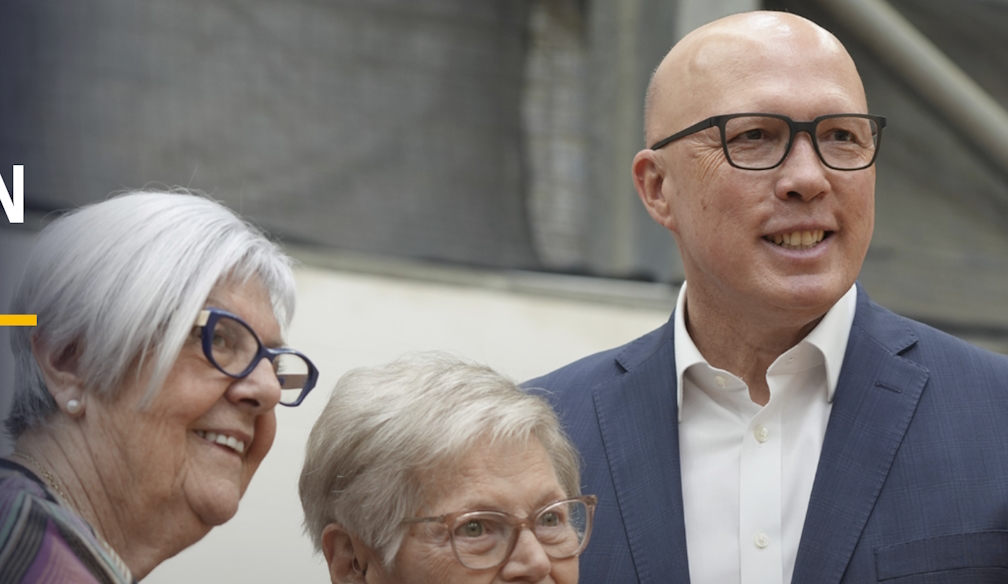


Finally, just months out from the election, the Liberal Party is tackling the Augean stable that is its New South Wales division. It is a task that should have been a priority two years ago, after the division’s toxic factionalism had been on inglorious display in the run-up to the 2022 federal election.

As Liberal leader, Peter Dutton has performed better than most observers expected. In this week’s Newspoll, the opposition is equal with the government on a two-party basis. On current polling, Dutton could push Albanese into minority government.

But, until now, Dutton had not managed to force the NSW Liberal organisation to undertake reform.

This week the Liberal federal executive finally intervened in NSW. The trigger was an unbelievable snafu that saw a raft of Liberal local council candidates miss the deadline for nomination because the party didn’t submit their names in time.

Even the intervention was botched (inviting the well-worn joke, if you can’t run yourselves, how can you run the country?).

A three-man panel was announced to oversee the ten-month takeover of the NSW division. It included two former federal presidents of the party, both Victorians: Richard Alston (a former federal minister) and Alan Stockdale (a former Victorian minister). The third member was Rob Stokes, a former NSW minister, who was nominated by NSW. But Stokes’ participation was not tied down before the announcement and he immediately ruled himself out.

Apart from that bungle, the panel quickly came under fire from within the party. Stockdale and Alston were criticised for being from outside NSW, too old and part of an alleged right-wing seizing of a division where the moderates have the edge. And what party in its right mind that has been told it has a “women problem” would set up a panel without a woman? The Stokes misfortune at least allows that to be rectified.

After the nominations disaster, Dutton was alarmed. A report was commissioned into the stuff-up and also the state of preparations for the federal election. Done by former federal director Brian Loughnane, it highlights the rampant factionalism that has bedevilled the NSW division for decades.

This destructive behaviour parallels the disease we’ve seen in Labor over the years.

In the NSW Liberals, moderates and conservatives carve up preselections and often fight each other more bitterly than they do the party’s political opponents.

Before the 2022 election, manoeuvring by then minister Alex Hawke, Scott Morrison’s numbers man, delayed preselections until the death knock. Morrison then made a captain’s pick for Warringah. That was Katherine Deves, an anti-trans campaigner who proved a liability well beyond the seat, which the independent incumbent, Zali Steggall, held comfortably.

Bianca De Marchi/AAP The NSW Liberals decades ago had some 50,000 members; now, the number is reportedly about 10,000. One senior member of the division (from the right) says members are “expected to turn up, pay up and shut up. They are frozen out of preselections and discouraged from debating policy issues.” There is a wider issue: few people want to join political parties these days. But the parties still need robust organisations for their “ground games”, going door to door and handing out how-to-vote cards in individual electorates. This campaigning is as crucial as ever, and probably even more so, because contests in many seats are becoming more local. The importance of local volunteers was shown in 2022 by the success of the “teal” candidates who managed to mobilise enthusiastic bands of volunteers. The need for local presences is one reason the absence of so many Liberal-labelled council candidates is a negative for the NSW party. For example, in the highly marginal south coast federal seat of Gilmore, held by Labor, the Liberals’ Andrew Constance will be hampered by the Liberal team being unable to stand for the Shoalhaven council. More widely, the party’s campaigning capacity is weakened by being in opposition at state level, so it has fewer MPs with resources to help out in the federal election. If Dutton is to eat into Albanese’s majority significantly, he needs to have wins in NSW, and that requires candidates who have time to campaign. While the NSW party is doing better with its federal preselections than in 2022, some key seats are still to have candidates installed – among them Warringah and the teal-held Mackellar (although nominations have opened). Next week the Australian Electoral Commission will release its final redrawn boundaries for NSW. On its draft boundaries, the teal seat of North Sydney will be scrapped. Not only do the Liberals have to win seats in NSW; they also have to stop further erosion of their existing seats. The Liberal seat of Bradfield, held by frontbencher Paul Fletcher, a moderate, is potentially vulnerable to a teal. It’s not just the NSW division that is a problem. Victoria is also faction-ridden, with the state parliamentary party consumed by the debilitating culture war between Opposition Leader John Pesutto and Moira Deeming. Deeming, who was expelled from the parliamentary Liberal Party and now sits as a Liberal independent, is suing Pesutto for defamation. This case is about to begin, with all the dirty linen set to be aired.
Victorian state MP Moira Deeming leaves the opposition party room after her colleagues voted to expel her from the parliamentary caucus. Diego Fedele/AAP

In South Australia, factionalism has long been endemic , and remains so. The state opposition leader, David Speirs, recently resigned, declaring he’d had “a gutful”, followed by the party’s state director.

Campaigning in Adelaide on Thursday, former prime minister John Howard condemned the factionalism in the party. “It’s true of the South Australian division, it’s true of the New South Wales division. Look, factionalism around policy differences is one thing, but factionalism which is no more than the competition between different preferment co-operatives is bad.”

The Western Australia Liberal organisation is less dysfunctional than its counterparts elsewhere, but heavy defeats there in the last state and federal elections have left the party depleted.

In finally driving intervention in NSW, Dutton is following a path taken by opposition leaders on the Labor side.

In 2020 Anthony Albanese spearheaded a takeover of the Victorian ALP after an expose of branch-stacking. Way back when, Gough Whitlam also forced intervention in Victoria.

For Dutton, winning next year’s election would be against the odds. But so were Tony Abbott’s chances in 2010 – when he came within a whisker of victory. Back then, some Liberals reportedly blamed the under-performance of the NSW party for not delivering the extra seats needed. Dutton doesn’t want to risk living with that regret.


Read more https://theconversation.com/grattan-on-friday-liberals-send-in-veteran-warhorses-to-deal-with-partys-hot-mess-238229

Times Magazine

With Nvidia’s second-best AI chips headed for China, the US shifts priorities from security to trade

This week, US President Donald Trump approved previously banned exports[1] of Nvidia’s powerful ...

Navman MiVue™ True 4K PRO Surround honest review

If you drive a car, you should have a dashcam. Need convincing? All I ask that you do is search fo...

Australia’s supercomputers are falling behind – and it’s hurting our ability to adapt to climate change

As Earth continues to warm, Australia faces some important decisions. For example, where shou...

Australia’s electric vehicle surge — EVs and hybrids hit record levels

Australians are increasingly embracing electric and hybrid cars, with 2025 shaping up as the str...

Tim Ayres on the AI rollout’s looming ‘bumps and glitches’

The federal government released its National AI Strategy[1] this week, confirming it has dropped...

Seven in Ten Australian Workers Say Employers Are Failing to Prepare Them for AI Future

As artificial intelligence (AI) accelerates across industries, a growing number of Australian work...

The Times Features

Macquarie Capital Investment Propels Brennan's Next Phase of Growth and Sovereign Tech Leadership

Brennan, a leading Australian systems integrator, has secured a strategic investment from Macquari...

Will the ‘Scandinavian sleep method’ really help me sleep?

It begins with two people, one blanket, and two very different ideas of what’s a comfortable sle...

Australia’s Cost-of-Living Squeeze: Why Even “Doing Everything Right” No Longer Feels Enough

For decades, Australians were told there was a simple formula for financial security: get an edu...

A Thoughtful Touch: Creating Custom Wrapping Paper with Adobe Firefly

Print it. Wrap it. Gift it. The holidays are full of colour, warmth and little moments worth celebr...

Will the Australian dollar keep rising in 2026? 3 factors to watch in the new year

After several years of steadily declining, the Australian dollar staged a meaningful recovery in...

The Daily Concerns for People Living in Hobart

Hobart is often portrayed as a lifestyle haven — a harbour city framed by Mount Wellington, rich...

Planning your next holiday? Here’s how to spot and avoid greenwashing

More of us than ever are trying to make environmentally responsible travel choices. Sustainable ...

AEH Expand Goulburn Dealership to Support Southern Tablelands Farmers

AEH Group have expanded their footprint with a new dealership in Goulburn, bringing Case IH and ...

A Whole New World of Alan Menken

EGOT WINNER AND DISNEY LEGEND ALAN MENKEN  HEADING TO AUSTRALIA FOR A ONCE-IN-A-LIFETIME PERFORM...