Hamas leader’s killing in Tehran likely to further escalate violence in Middle East
- Written by: Ian Parmeter, Research Scholar, Centre for Arab and Islamic Studies, Australian National University
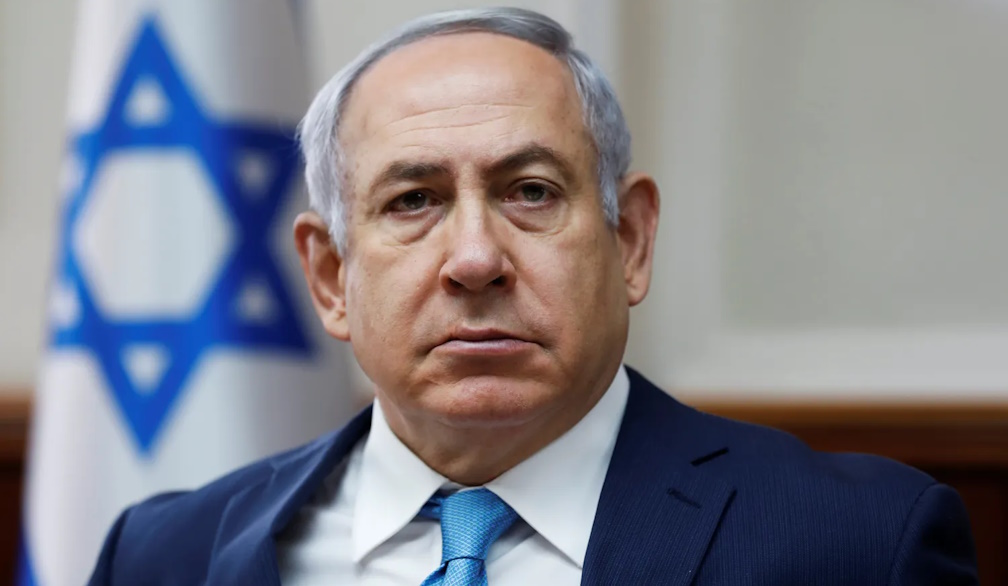
Palestinian militant group Hamas says its top political leader, Ismail Haniyeh, has been killed[1] in his home in Tehran. It blames Israel for the attack, saying it was “a Zionist airstrike on his residence in Tehran after he participated in the inauguration of Iran’s new president”.
Iran has not yet given any details on how Haniyeh was killed, but says it is under investigation.
With the war in Gaza showing no sign of abating and the whole Middle East on a knife’s edge, the killing raises questions about whether it may spark a wider regional war.
Who is Ismail Haniyeh?
Haniyeh is the most senior political leader of Hamas, based in Doha, Qatar. He was essentially the Hamas leader for the ceasefire negotiations with Israel in the Gaza War, brokered by the United States, Egypt and Qatar. These negotiations will obviously now be on hold.
While Israel has not yet claimed responsibility for his death – and this is unlikely, given it does not typically claim responsibility for covert actions – Haniyeh has long been on its list of targets.
What is surprising, though, is where and how it was done. Haniyeh was in Tehran to attend the swearing-in ceremony of Iran’s new president[2], Masoud Pezeshkian. Details of exactly what happened are still sketchy, but it appears Haniyeh was killed along with one of his bodyguards by an explosion in his building. We do not yet know if the explosion was from a remotely controlled bomb or a missile attack.
Iran’s Islamic Revolutionary Guard Corps (IRGC) is investigating the killing.

What does this mean for a wider regional war?
There are two important issues that will be under close scrutiny in the coming hours and days.
The first is that, assuming it was Israel that was responsible for Haniyeh’s killing, it raises the question of whether Iran will retaliate because Haniyeh was under the country’s protection when he was killed. His death is likely to cause enormous anger in Iran, and may in turn prompt retaliation against Israel on top of that from Hamas.
Tensions between Iran and Israel have been long been high. In April, Iran launched more than 300 missiles and drones at Israel in retaliation for an attack on the Iranian consulate in Damascus. The attack killed several senior IRGC leaders.
The attack on Haniyeh is indicative of a remarkable degree of intelligence and operational access that Israel seems to have in Iran at the moment. In recent years there has been a steady stream of Iranian scientists working on the nuclear program who have been killed. This includes the program’s “father”, Mohsen Fakhrizadeh, who was killed[4] by a sophisticated remote-controlled machine gun in 2020.
However, there remain Hamas leaders on Israel’s list who, as far as can be discerned, are still alive. Gaza political leader Yahya Sinwar is apparently still directing the operations of militants there. In July[5], Israel carried out a strike that was believed to have killed the elusive military leader Mohammed Deif. However, Hamas has not acknowledged this, and Deif has survived several previous assassination attempts.
The second major question is whether Lebanon-based Hezbollah will launch an attack on Israel, at Iran’s behest.
The Haniyeh killing comes within hours of an Israeli airstrike in southern Beirut[6], in which Israeli officials believe they have killed senior Hezbollah commander Fuad Shukr.
 An Israeli airstrike on Southern Beirut, Lebanon threatens to further increase tensions in the region. Hussein Malla/AP[7]
If Iran were to retaliate, it might be through Hezbollah from Lebanon. A major missile barrage from Hezbollah could potentially overwhelm Israel’s Iron Dome[8] missile defence system.
Iran also has other allies on which it can call, including Shia militant groups in Syria and Iraq, as well as the Houthis in Yemen who have already launched a drone strike[9] on Tel Aviv last week. Israel quickly retaliated.
What happens now is difficult to say until there is more information. But what is certain is that the killing of Haniyeh is likely to cause a significant escalation in the Gaza War, and possibly in the wider Middle East.
References
- ^ been killed (www.abc.net.au)
- ^ new president (apnews.com)
- ^ EMILIO MORENATTI/AP (photos.aap.com.au)
- ^ was killed (www.timesofisrael.com)
- ^ July (www.abc.net.au)
- ^ Israeli airstrike in southern Beirut (www.bbc.com)
- ^ Hussein Malla/AP (photos.aap.com.au)
- ^ Iron Dome (www.bbc.com)
- ^ drone strike (www.bbc.com)