‘Are we dating the same guy?’ These women-run groups are accused of being toxic, but they carry a feminist legacy
- Written by: Natasha Szuhan, Lecturer, History and Sociology, Australian National University
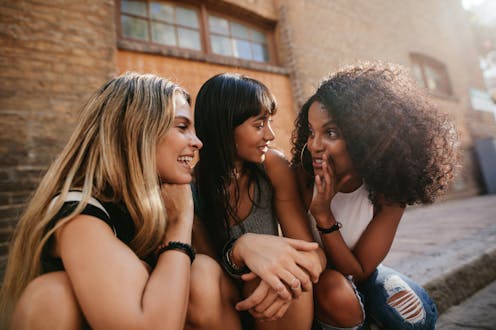
In 2022, a social network was formed[1] in New York for women to share warnings about their interactions with men on dating apps. These were men who had allegedly lied, manipulated, cheated on, ghosted, used or abused them.
Since then, “Are we dating the same guy[2]?” (AWDTSG) groups have exploded online across Facebook and other social platforms, attracting anywhere from hundreds to more than 150,000 members depending on the city they serve.
These groups are trying to improve women’s online safety where dating app developers are failing. In doing so, they’re tapping into a long history of feminist initiatives aimed at protecting women from allegedly hostile or predatory men.

How it works
Globally, millions of women gather in AWDTSG groups. The majority of these private digital spaces are explicit about their intent. The first group to emerge had the unofficial motto: “it’s about protecting women, not judging men”. This has been widely adopted by offshoots.
Posts follow two main themes: unprompted “red flag” warnings about men women have dated, and prompts for “tea or red flags” about potential dates. The men in these posts are identified by name and location, and at least one dating profile screenshot.
Posts can be made anonymously so women don’t risk retaliation, but are vetted by moderators to ensure they comply with group rules.
Safety is never guaranteed
Online dating apps are often framed as a necessary evil in the 2020s. They conform to the same conventions as early chatrooms such as AOL[3], MSN Messenger and IRC[4] (internet relay chat), and digital classifieds such as Craigslist and Gumtree.
These sites enabled random connections[5] with strangers without any vetting; the onus of safety was on the user[6]. They have become the source of both heartwarming success stories[7], as well as tales of murder[8] and revenge rape[9] offences.
Dating app developers admit[10] there are safety risks inherent to their business model – and they’ve yet to adequately address them. Many apps have an optional verification feature, but this merely weeds out catfishes: people using a fake online identity. It doesn’t guarantee safety.
Bumble advertises itself as a feminist[11] app that’s focused on safety[12], as women must initiate the conversations with their matches. However, as posts on AWDTSG groups demonstrate, this puts the onus on women to be particularly discerning[13].
Dating app users have to open themselves to random interactions with strangers (and therefore to unqualified risk) just to be able to use the service. One 2022 survey found three in four people[14] experienced abuse while using these apps.
Read more: 49 women have been killed in Australia so far in 2023 as a result of violence. Are we actually making any progress?[15]
A history of women supporting women
Historically, governments and communities[16] have been reticent to take responsibility for family and domestic violence. In the 1970s, those in the women’s liberation movement understood they had very limited protections from sexual and physical abuse that came at the hands of boyfriends or husbands[17].
This prompted the liberationists to form consciousness raising groups[18]. These groups aimed to spread knowledge about the many facets of women’s oppression, and implement solutions such as providing refuge[19] for women and children escaping family violence.
 American Actress Jane Fonda raises her clenched fist during a 1972 demonstration run by the Italian Feminist movement.
AP Photo/Claudio Luffoli
American Actress Jane Fonda raises her clenched fist during a 1972 demonstration run by the Italian Feminist movement.
AP Photo/Claudio Luffoli
Into the 1990s, women and girls started to embrace new kinds of feminism that aggressively prioritised the sisterhood over men, including “girl power[20]” and “grrrl power[21]” feminism.
These branches built on the gains of second wave feminism[22] which taught women they could, and should, embrace power and step up to solve their problems. That same decade, do-it-yourself feminism[23] spawned from the merger of these ideas, teaching women the way to solve societal sexism was to solve it themselves.
AWDTSG groups follow in these footsteps. By providing a space where women can support and empower each other, they fulfil the consciousness raising and DIY aspirations of previous generations of feminists.
They also demonstrate how, even now, there are limited societal protections for women who have faced[24], or may face, violence or harassment by men.
The counterargument
Both the admins and members of AWDTSG groups face risks in the process of facilitating these spaces. While group posts mainly remain private, there can be retaliation or even legal[25] repercussions when someone “snitches” and leaks a post.
In cases where men have discovered posts about them and wish to have them removed, the admins tend to only do this if the man is willing to “rat out” the snitch[26] (which they usually are). This ensures women undermining the group’s aims of sisterhood and safety are named, shamed and removed.
Several counter group such as r/AWDTSGisToxic[27], End AWDTSG[28], and victims of AWDTSG[29] have emerged to rail against the movement. They claim AWDTSG groups enable the bullying and shaming of men just for being bad dates.
The goals of both the pro- and counter-AWDTSG groups give rise to spurious claims[30]. Each side can end up facilitating forms of “bullying”, “toxicity” and even serious violence[31] against individuals.
Grey areas
Anti-AWDTSG groups claim they support protecting women from truly violent men, but a lack of verification means there are more false accusations[32] than true ones.
Last month, a man from Chicago launched a lawsuit[33] against the city’s AWDTSG group and several social media sites, including Meta, for defamation. The case seeks to force the host platforms, primarily Facebook, to regulate these private groups to protect men.
Off the back of that, a new group AWDTSG Lawsuits[34] was formed. It aims to bring men together to potentially sue Facebook and the groups it hosts for defamation.
It’ll be interesting to see how the case plays out, and whether platforms profiting from women’s engagement in AWDTSG groups are willing to take sides in this supposed battle of the sexes.
Either way, one thing is certain: the patriarchy’s influence is diminished in a generation of tech-savvy women who wholeheartedly believe the “personal is political[35]”.
Read more: Tinder fails to protect women from abuse. But when we brush off 'dick pics' as a laugh, so do we[36]
References
- ^ formed (mashable.com)
- ^ Are we dating the same guy (www.facebook.com)
- ^ AOL (www.smithsonianmag.com)
- ^ IRC (www.wikihow.com)
- ^ random connections (academic.oup.com)
- ^ was on the user (www.latimes.com)
- ^ success stories (www.huffpost.com)
- ^ murder (www.bbc.com)
- ^ revenge rape (www.latimes.com)
- ^ admit (datingsafetyguide.com)
- ^ feminist (www.ibtimes.com)
- ^ safety (bumble.com)
- ^ to be particularly discerning (www.pewresearch.org)
- ^ three in four people (theconversation.com)
- ^ 49 women have been killed in Australia so far in 2023 as a result of violence. Are we actually making any progress? (theconversation.com)
- ^ governments and communities (theconversation.com)
- ^ boyfriends or husbands (www.brazenhussies.com.au)
- ^ consciousness raising groups (daily.jstor.org)
- ^ refuge (www.tandfonline.com)
- ^ girl power (www.smh.com.au)
- ^ grrrl power (www.feministpress.org)
- ^ second wave feminism (www.britannica.com)
- ^ do-it-yourself feminism (commons.lib.jmu.edu)
- ^ have faced (www.abc.net.au)
- ^ legal (www.minclaw.com)
- ^ “rat out” the snitch (www.reddit.com)
- ^ r/AWDTSGisToxic (www.reddit.com)
- ^ End AWDTSG (endawdtsg.com)
- ^ victims of AWDTSG (www.facebook.com)
- ^ spurious claims (www.vice.com)
- ^ serious violence (www.wtkr.com)
- ^ false accusations (www.washingtonpost.com)
- ^ lawsuit (storage.courtlistener.com)
- ^ AWDTSG Lawsuits (www.facebook.com)
- ^ personal is political (www.carolhanisch.org)
- ^ Tinder fails to protect women from abuse. But when we brush off 'dick pics' as a laugh, so do we (theconversation.com)