Meal kits are booming – but how do they stack up nutritionally?
- Written by: Kylie Fraser, PhD Candidate, Deakin University

Meal kits are a billion dollar industry[1] selling the promise of convenience while cooking healthy meals at home. Delivering ingredients and step-by-step recipes to the doorstep, meal kits reduce the time and energy to plan, shop and prepare meals. But do they deliver on their promise of health?
While people may think[2] meal kits are healthy, our new research[3] suggests this varies.
The range and quantity of vegetables in a meal is a great indicator of how healthy it is. So we assessed the vegetable content[4] of recipes from six Australian meal kit providers. We found when it comes to nutrition, whether it be budget friendly or high-end, it’s more about the meals you choose and less about what company to use.
Read more: Are we overthinking family meals? 5 realistic tips to ease the pressure[5]
What we found
For our new research[6] we purchased a one-week subscription to nine Australian-based meal kit companies to access weekly recipes. Six companies provided their full week of recipes. The vegetable content of these recipes were analysed.
Of the 179 meals analysed, we found recipes use a median of three different types of vegetables and provide a median of 2.5 serves of vegetables per person. At first glance, this looks promising. But on closer inspection, the number and types of vegetables vary a lot.
Some recipes provide less than one serve and others more than seven serves of vegetables per person. Not surprisingly, vegetarian recipes provide more vegetables, but almost one-third of these still include less than two vegetables serves per person.
The variety of vegetables included also varies, with recipes providing between one and six different types of vegetables per meal.
What’s for dinner?
Dinner[7] is the time when we’re most likely to eat vegetables, so low levels of vegetables in meal kit meals matter[8].
Eating vegetables is known to reduce the risk[9] of type 2 diabetes, heart disease, obesity[10] and some cancers. What’s more, food preferences and eating habits are learned[11] in childhood. So being exposed to a wide range of vegetables from a young age is important for future health.
But few Australians eat enough vegetables. According to the Australian Dietary Guidelines[12], children should be eating 2.5 to five serves and adults at least five serves of vegetables each day. Currently children eat an average of less than[13] two serves and adults less than three serves of vegetables per day.
So there’s room for improvement and meal kits may help.

Read more: Trying to spend less on food? Following the dietary guidelines might save you $160 a fortnight[15]
Meal kits have advantages
The good news is that using meal kits can be a healthier alternative to ordering takeaway delivery or prepared ready-to-heat meals. When we cook at home, we have much more say in what’s for dinner. We can use healthier cooking methods (think grilled rather than deep-fried), healthier fats (olive or canola oil) and add in plenty of extra veg. All make for better nutrition and better health.
Meal kits might also build your cooking confidence to cook more “from scratch” and to learn about new ingredients, flavour combinations and time-saving techniques. Cooking with meal kits may even cut household food waste[16] by providing the exact amount of ingredients needed to prepare a meal.
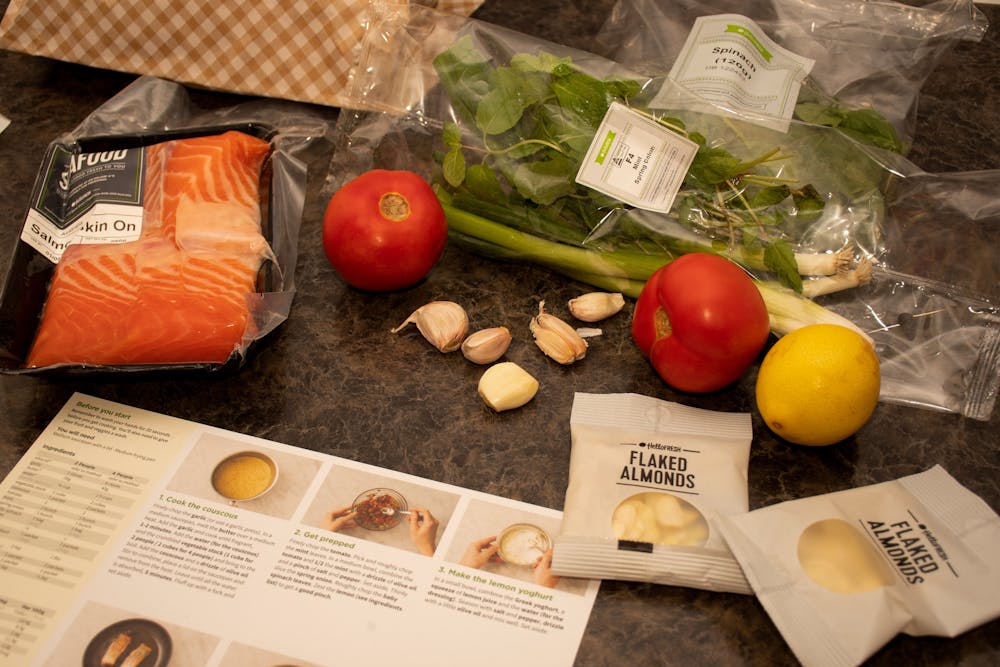 You can always add extra vegetables to meal kits or tweak the recipes.
Shutterstock[17]
You can always add extra vegetables to meal kits or tweak the recipes.
Shutterstock[17]
Read more: How to save $50 off your food bill and still eat tasty, nutritious meals[18]
5 tips for getting the most out of meal kits
1) Select some vegetarian options
This way you can have meat-free[19] dinners during the week. Vegetarian recipes are more likely to help you meet daily vegetable intakes and to eat a wider variety of vegetables
2) Choose recipes with at least 3 different types of vegetables
Eating a range of vegetable types and colours will help maximise nutritional benefits. Research[20] shows eating a variety of vegetables at dinner can increase our vegetable intakes. Exposing children to “eating the rainbow[21]” can also increase their willingness to eat vegetables
3) Choose recipes with unfamiliar or new vegetables
Research tells us that learning to prepare and cook vegetables can increase cooking confidence[22] and skills. This can influence our willingness to buy a wider range of vegetables. Worried about fussy eaters? Add your child’s favourite cooked or raw veg to their plate (one familiar, one new)
4) Look for ways to add more vegetables
It’s OK to tweak the recipe! Adding vegetables from your fridge – maybe some lettuce on the side or chopped up carrots to a cooked sauce – to meal kit meals will help reduce household food waste[23]. You can also extend meals by adding a can of lentils or beans to mince-based meals, or frozen peas or chickpeas to a curry. This adds valuable fibre to the meal and also bulks up these recipes, giving you leftovers for the next day
5) Use less
While vegetables are important for health, it’s also important to consider the salt[24], fat and energy[25] content of meal kit recipes. When using meal kits, you can use less[26] seasoning, spice mix or stock cubes and add more herbs instead.
References
- ^ billion dollar industry (www.statista.com)
- ^ think (www.sciencedirect.com)
- ^ our new research (academic.oup.com)
- ^ vegetable content (academic.oup.com)
- ^ Are we overthinking family meals? 5 realistic tips to ease the pressure (theconversation.com)
- ^ new research (academic.oup.com)
- ^ Dinner (www.ncbi.nlm.nih.gov)
- ^ matter (theconversation.com)
- ^ reduce the risk (www.ncbi.nlm.nih.gov)
- ^ obesity (www.ncbi.nlm.nih.gov)
- ^ learned (pubmed.ncbi.nlm.nih.gov)
- ^ Australian Dietary Guidelines (www.eatforhealth.gov.au)
- ^ less than (www.abs.gov.au)
- ^ Annie Spratt/Unsplash (unsplash.com)
- ^ Trying to spend less on food? Following the dietary guidelines might save you $160 a fortnight (theconversation.com)
- ^ cut household food waste (theconversation.com)
- ^ Shutterstock (www.shutterstock.com)
- ^ How to save $50 off your food bill and still eat tasty, nutritious meals (theconversation.com)
- ^ meat-free (meatfreemondays.com)
- ^ Research (www.ncbi.nlm.nih.gov)
- ^ eating the rainbow (theconversation.com)
- ^ confidence (pubmed.ncbi.nlm.nih.gov)
- ^ food waste (www.dcceew.gov.au)
- ^ salt (academic-oup-com.ezproxy-b.deakin.edu.au)
- ^ fat and energy (pubmed.ncbi.nlm.nih.gov)
- ^ use less (www.heartfoundation.org.au)
Read more https://theconversation.com/meal-kits-are-booming-but-how-do-they-stack-up-nutritionally-218339