David McBride is facing jailtime for helping reveal alleged war crimes. Will it end whistleblowing in Australia?
- Written by: Rebecca Ananian-Welsh, Associate Professor, TC Beirne School of Law, The University of Queensland
The long-awaited trial of former Australian Defence Force lawyer David McBride was short-lived.
He stood accused of putting national security at risk by sharing confidential information with journalists, who then reported on alleged Australian war crimes[1] in Afghanistan.
An unexpected strategic move by the Department of Defence succeeded in withholding key documents from the ACT Supreme Court, all but dismantling[2] McBride’s claim for whistleblower protection.
Having now pleaded guilty[3] to unlawfully sharing classified material, what happens to McBride? And what does it say about the state of whistleblower protection laws in this country?
Read more: How and why Australian whistleblowing laws need an overhaul: new report[4]
The end of a winding road
David McBride was charged in 2019[5] for disclosing secret military information to two ABC journalists.
His concerns had included Australian soldiers being sent to Afghanistan by a government he believed was more concerned with politics[6] than the troops. Interestingly, the court heard last week McBride was also concerned about the “over-investigation”[7] of misconduct by special forces.
Instead, that information revealed allegations of war crimes by Australian soldiers in Afghanistan and a culture of cover-up[8] in the Defence Force.
The ABC used the information to publish the Afghan Files reports[9]. Many allegations were later supported by the inspector-general of the Australian Defence Force in the Brereton report[10].
That report, released in November 2020, recommended the chief of the Defence Force refer 36 matters relating to 25 incidents and involving 19 individuals to the Australian Federal Police for investigation.
So far, the only charges to have been laid as a result of these investigations are against McBride himself. A brief of evidence was also prepared against ABC journalist Dan Oakes, though the Commonwealth Director of Public Prosecutions declined to prosecute[11] Oakes on public interest grounds.
It took four years for McBride’s case to get to court. Delays due to the pandemic and issues around maintaining the secrecy of classified information in court prolonged this process.
Eventually, the Department of Defence claimed public interest immunity over key information. This allows the government to withhold evidence (such as classified material) from the court on public interest grounds.
It means neither party can rely on the information.
This strategic decision meant McBride faced difficulties establishing key aspects of his whistleblower case. This included whether the information revealed relevant wrongdoing, his attempts to tell the department or police about his concerns, or whether the extent of the disclosure was necessary to establish wrongdoing.
On the other hand, the information McBride disclosed was security classified defence material that journalists were not authorised to receive. It is, therefore, not particularly surprising that he pleaded guilty to disclosure offences.
His only hope had been to avoid prosecution by grasping the shield of whistleblower protections.
What next for McBride?
McBride will now be sentenced for his offences, likely next year[12].
There is a chance the court will show leniency in sentencing, taking into account the demonstrated public interest in McBride’s disclosures.
This happened in the prosecution of Witness K,[13] who conspired to reveal an alleged spying operation in East Timor during oil and gas treaty negotiations.
They were not covered by whistleblower laws because the legislation does not apply to intelligence information, and also pleaded guilty to secrecy offences.
Read more: Tax office whistleblowing saga points to reforms needed in three vital areas[14]
Alternatively, the judge may not be swayed by the public interest in McBride’s disclosures and McBride could face a lengthy jail term.
The length of any jail term will depend on a number of factors, such as:
the extent of information disclosed
the deliberate nature of the disclosures
a need to deter future disclosures of classified defence information.
What does this mean for whistleblowers?
The punishment of McBride would have tragic impacts on whistleblowing in Australia.
Far from being a crime, research has identified whistleblowing as “the single most important way[15] that wrongdoing or other problems come to light in organisations”.
Whistleblowing led not only to the Brereton report, but the Robodebt inquiry, the Banking royal commission, and Fitzgerald inquiry[16] into police misconduct, to name but a few high profile examples.
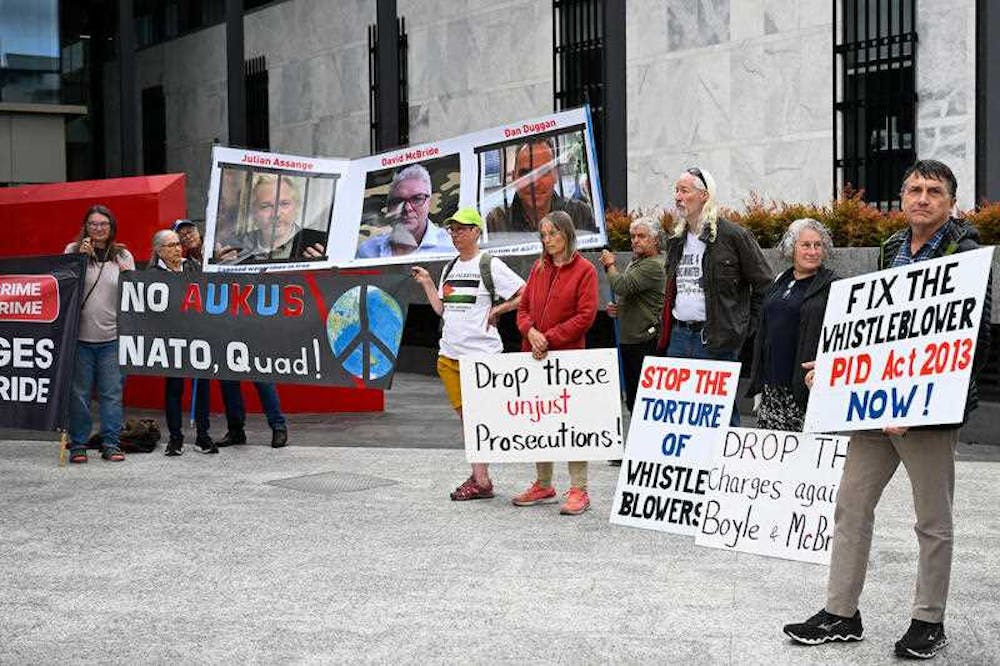
The importance of whistleblowing has been recognised in Public Interest Disclosure Acts across Australia, protecting whistleblowers from reprisals, victimisation and prosecution.
The importance of these protections is heightened in recent years by the government’s willingness to prosecute whistleblowers such as Richard Boyle[17] (who accused the Australian Taxation Office of using aggressive tactics[18] to retrieve money), David McBride, and Witness K for calling out government wrongdoing.
Whistleblower protection law is not perfect. Calls for its improvement[19] point to a need for greater consistency across private and public sector protections.
They also call for better protection for intelligence and defence[20] whistleblowers, and supports for press freedom[21].
Read more: It's a new era for Australia's whistleblowers – in the private sector[22]
The protections are yet to be tested. McBride’s case would have been the first opportunity to see how courts interpret and apply whistleblower law.
But the government’s decision to withhold information from court stopped these laws from being tested.
It’s easy to see how the government’s reaction to McBride’s decision to blow the whistle will deter future whistleblowers, sending a bad message about transparency, accountability and the importance of calling out wrongdoing by those in positions of power.
References
- ^ alleged Australian war crimes (www.abc.net.au)
- ^ all but dismantling (www.theguardian.com)
- ^ guilty (www.abc.net.au)
- ^ How and why Australian whistleblowing laws need an overhaul: new report (theconversation.com)
- ^ charged in 2019 (www.theguardian.com)
- ^ politics (www.afr.com)
- ^ “over-investigation” (www.abc.net.au)
- ^ culture of cover-up (www.abc.net.au)
- ^ Afghan Files reports (www.abc.net.au)
- ^ Brereton report (www.defence.gov.au)
- ^ declined to prosecute (www.theguardian.com)
- ^ next year (www.abc.net.au)
- ^ Witness K, (www.abc.net.au)
- ^ Tax office whistleblowing saga points to reforms needed in three vital areas (theconversation.com)
- ^ most important way (parkesfoundation.org.au)
- ^ Fitzgerald inquiry (www.ccc.qld.gov.au)
- ^ Richard Boyle (www.theguardian.com)
- ^ aggressive tactics (www.abc.net.au)
- ^ its improvement (parkesfoundation.org.au)
- ^ intelligence and defence (classic.austlii.edu.au)
- ^ press freedom (law.uq.edu.au)
- ^ It's a new era for Australia's whistleblowers – in the private sector (theconversation.com)