

The Football Ferns’ historic win in the World Cup opener scores another goal for all women’s sport in New Zealand
- Written by: Holly Thorpe, Professor in Sociology of Sport and Gender, University of Waikato
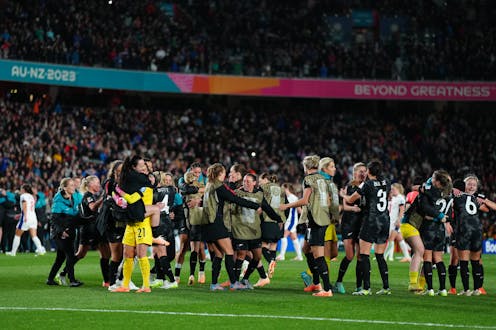
The opening match of the FIFA Women’s World Cup in Auckland was a historic moment for women’s sport in New Zealand – and not just because the Football Ferns upset highly-ranked Norway to win one-nil.
Played in front of 42,137[1] noisy and enthusiastic fans, the game showed just how far football has come since women were discouraged or simply banned from playing, right up to the 1960s.
The previously most-attended football game in New Zealand was between the All Whites and Peru in 2017. For the women’s team, last night’s stadium was like nothing they’d experienced – the biggest crowd they’d played in front of until last night was 13,000 (against the USA at Eden Park earlier this year).
There had also been doubts leading up to the tournament. Many were asking why ticket sales were lagging[2], and the Football Ferns came into the competition on a ten-game losing streak[3] (bar the pre-tournament win over Vietnam).
In hindsight, the delayed enthusiasm may have simply been a reflection of football’s traditionally second-tier status in New Zealand. Despite being among the most popular sports[4] for children and young people (and at times the most played sport by New Zealanders[5]), football has struggled for the kind of media attention[6] enjoyed by rugby, cricket, and netball.
So the World Cup win by the Football Ferns signals an important milestone in New Zealanders’ relationship with the game – and women’s sport in general.
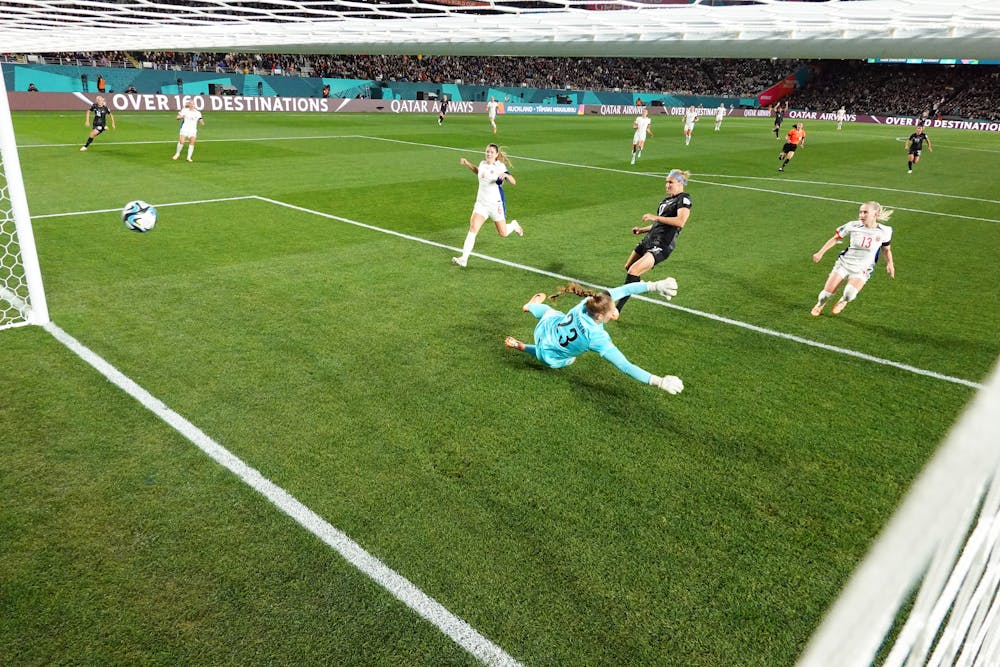
The long game
Women’s football has a long history[7] in New Zealand, dating back to the first decade of the 20th century. But generations of talented and dedicated players have had to fight to play and be visible and respected within clubs and organisations.
As football researcher Alida Shanks has shown, women were banned from playing for 50[8] years because football wasn’t considered socially appropriate. From the 1960s, however, women began organising themselves, navigating space in male-dominated clubs, or creating their own associations.
Read more: Long-range goals: can the FIFA World Cup help level the playing field for all women footballers?[9]
This history of exclusion and marginalisation has had lasting effects, and can still be seen and felt in many clubs around the country. As Shanks has shown[10], 36% of women who work in New Zealand football federations feel they have been discriminated against, and 28% believe bias has limited their careers within their current organisations.
Yet despite the challenges, football’s popularity with girls and women has continued to grow. Participation rates have increased by over 35%[11] since 2011, according to New Zealand Football (NZF).
This growth might be attributed to the growing visibility[12] of the women’s game globally. But efforts by NZF and regional sports organisations have also made the game more accessible and exciting to a wider range of girls and women.
Top down and bottom up
We may also be seeing the fruits of significant government investment through the Sport NZ Women and Girls in Sport strategy[13]. This long-term initiative has sought to improve opportunities for girls and women to participate in sport, active recreation and play – and to improve conditions for women as athletes and leaders.
The Women’s World Cup has also seen the game’s perennial underfunding turn around, with the government pledging NZ$19 million[14] to upgrade facilities, including improved accessibility and gender-neutral spaces in some stadiums.
Read more: From 'girls' to Lionesses: how newspaper coverage of women's football has changed[15]
The current minister of sport Grant Robertson has been a strong advocate, too, backing New Zealand hosting the “world cup trilogy[16]” of cricket, rugby and now football.
But these top-down strategies have been matched by the many layers of women working tirelessly behind the scenes to promote, grow and develop sporting opportunities for girls and women at all levels.
Building the legacy
Those early fears that New Zealanders might not get behind the team, or fully recognise the significance of co-hosting such a globally significant sporting event, appear to have been unfounded.
In particular, the number of families with young children – girls and boys – who turned out to watch the Football Ferns dominate a former World Cup champion team suggests new generations will keep building the local game.
As Ferns captain Ali Riley proclaimed, with tears in her eyes, at the end of the match:
There have been a lot of doubters because of our previous results, but we believed in ourselves. This is what dreams are made of. Anything is possible.
Going in as underdogs, the Football Ferns gave the crowd exactly what they wanted – a reason to believe in and celebrate women’s athleticism and dedication, and to respect the long fight to play the sport they love.
The historic opening match will undoubtedly encourage New Zealanders to fill stadiums in Hamilton, Wellington and Dunedin over the coming weeks. If that happens, the ripple effects of this extraordinary game and the tournament in general will be felt across communities and seen on football fields for years to come.
Read more: Will the Matildas and Football Ferns have a home ground advantage?[17]
References
- ^ 42,137 (www.stuff.co.nz)
- ^ ticket sales were lagging (www.stuff.co.nz)
- ^ ten-game losing streak (www.1news.co.nz)
- ^ most popular sports (www.stuff.co.nz)
- ^ most played sport by New Zealanders (www.nzfootball.co.nz)
- ^ struggled for the kind of media attention (www.tandfonline.com)
- ^ long history (journals.sagepub.com)
- ^ banned from playing for 50 (www.stuff.co.nz)
- ^ Long-range goals: can the FIFA World Cup help level the playing field for all women footballers? (theconversation.com)
- ^ Shanks has shown (mro.massey.ac.nz)
- ^ increased by over 35% (www.nzfootball.co.nz)
- ^ growing visibility (abcnews.go.com)
- ^ Sport NZ Women and Girls in Sport strategy (www.tandfonline.com)
- ^ pledging NZ$19 million (www.rnz.co.nz)
- ^ From 'girls' to Lionesses: how newspaper coverage of women's football has changed (theconversation.com)
- ^ world cup trilogy (www.tandfonline.com)
- ^ Will the Matildas and Football Ferns have a home ground advantage? (theconversation.com)










