COVID-19 in babies – here's what to expect
- Written by: Shidan Tosif, Honorary Clinical Associate Professor, The University of Melbourne
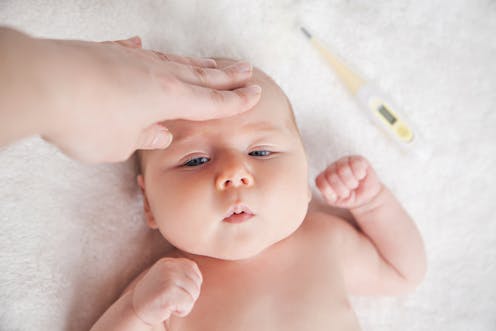
Parents are understandably worried about what would happen if their infant caught COVID-19. Babies may be considered vulnerable due to immature immune systems, and are also not eligible for most of the treatments and vaccinations available for older children and adults.
The good news is, most babies experience mild illness. Here’s what to expect if your baby tests positive.
Can I protect my baby if I have COVID-19?
If you test positive, and have a newborn or infant at home, there are some protective steps you can take. These include hand-washing before providing care, and wearing a mask when breastfeeding or in close contact. Current evidence[1] suggests COVID-19 cannot be spread through breastmilk.
Read more: Should I get a COVID vaccine while I'm pregnant or breastfeeding? Is it safe for me and my baby?[2]
It’s still really important to continue breastfeeding (if you do so already) and there is no need to separate mother and baby.
Transmission from older siblings and other close contacts may also be reduced by vaccination. Vaccination of parents and caregivers will also reduce their chance of severe disease, thereby minimising the risks and interruptions for mother and baby.
What do I do if my baby has cold symptoms or a fever?
Testing your baby is similar to testing yourself. Babies can often get PCR tests in the same places where you will be tested, or you can use a rapid antigen test (RAT) on them.
If you are using a RAT it’s important to check it’s for the correct age group, as not all RATs can be used on children. It will say on the packet whether it is suitable. Otherwise ask your pharmacist for the correct test for your child’s age.
It’s also important to follow the specific instructions for the test you have purchased, as not all will be the same.
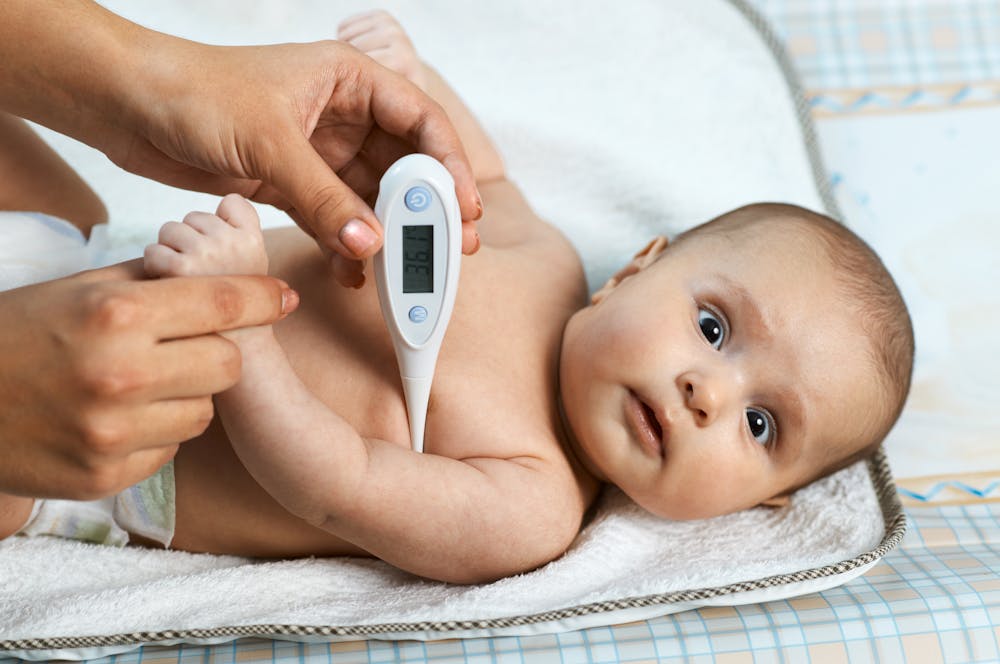
COVID-19 is usually mild in babies
Throughout the pandemic, children of all ages have been less likely[3] to experience severe disease compared with adults. The likelihood of severe disease also appears to be lower with Omicron[4] compared with previous variants, although the transmission of later variants has been higher.
From our clinical experience, and international research[5], babies with COVID-19 have mostly had mild disease. The need for hospitalisation or intensive care is extremely uncommon. Babies may be at higher risk if they are premature or have another underlying serious illness or condition[6]. Studies describing COVID-19 in newborns reflect that similar to other respiratory viruses like influenza and RSV, deaths are very rare[7].
Read more: Coronavirus while pregnant or giving birth: here's what you need to know[8]
A range of immune differences in newborns have been proposed to explain why babies usually get less severe disease[9]. While there is no vaccine for infants, antibodies transfer[10] from mothers who have been vaccinated while pregnant to newborns, which may offer protection.
What symptoms do babies usually get?
Babies may exhibit a range of symptoms when they have COVID-19 that are typical of other respiratory viruses. Up to 25% of babies may have no symptoms[11].
Fever, nasal congestion, feeding difficulties and cough are more common symptoms.
Breathing difficulties, lethargy and persistent fever may be signs of severe disease.
How do I treat it?
You can give your baby paracetamol or ibuprofen if there is fever or discomfort, and nasal saline drops can ease congestion. If you are considering giving medication to an infant under three months of age, please consult your GP.
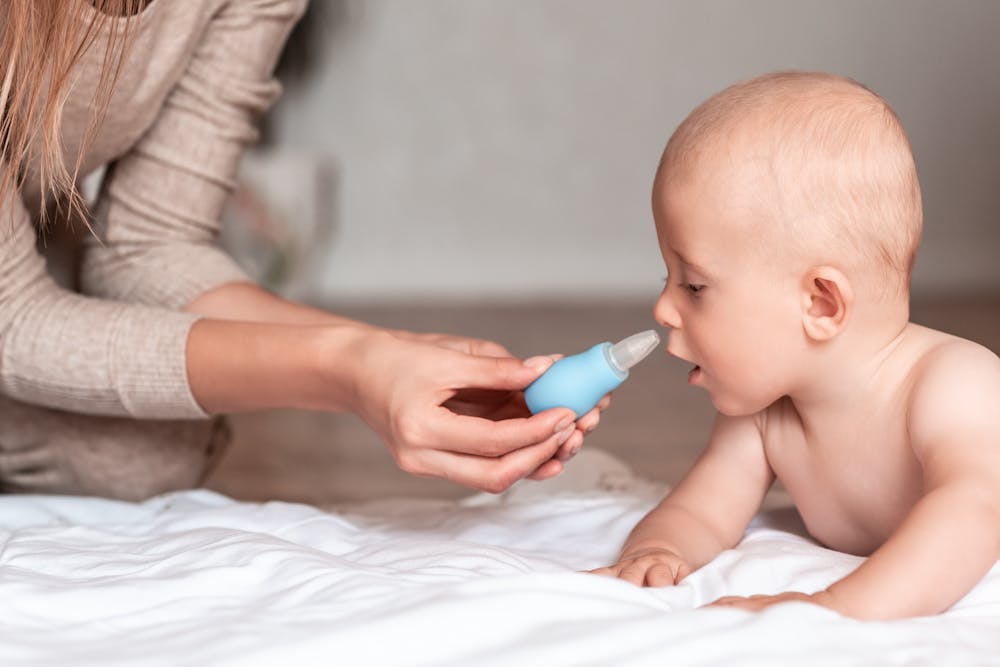 Babies with COVID may feel congested.
Shutterstock
Babies with COVID may feel congested.
Shutterstock
When should I seek medical advice?
Talk to your doctor if your baby has any of the following:
It is important to note any fever in a newborn up to three months of age requires a medical review, regardless of whether the baby has COVID.
Anything else I should know?
Especially as we enter winter, protecting against other common circulating viruses which can affect babies, such as influenza, is also important. Children above six months of age can receive the influenza vaccine.
References
- ^ evidence (pubmed.ncbi.nlm.nih.gov)
- ^ Should I get a COVID vaccine while I'm pregnant or breastfeeding? Is it safe for me and my baby? (theconversation.com)
- ^ less likely (www.bmj.com)
- ^ lower with Omicron (theconversation.com)
- ^ international research (fn.bmj.com)
- ^ serious illness or condition (www.thelancet.com)
- ^ rare (www.bmj.com)
- ^ Coronavirus while pregnant or giving birth: here's what you need to know (theconversation.com)
- ^ disease (www.nature.com)
- ^ antibodies transfer (jamanetwork.com)
- ^ 25% of babies may have no symptoms (fn.bmj.com)
Read more https://theconversation.com/covid-19-in-babies-heres-what-to-expect-181940