why these stories about a country vet still charm today
- Written by: Helen Young, Lecturer, Deakin University
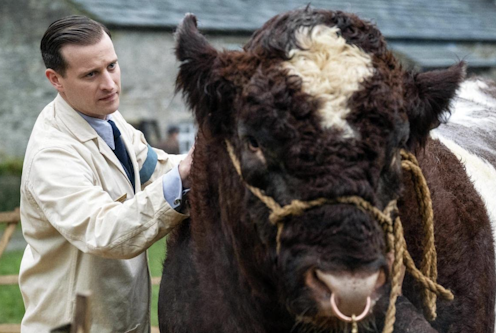
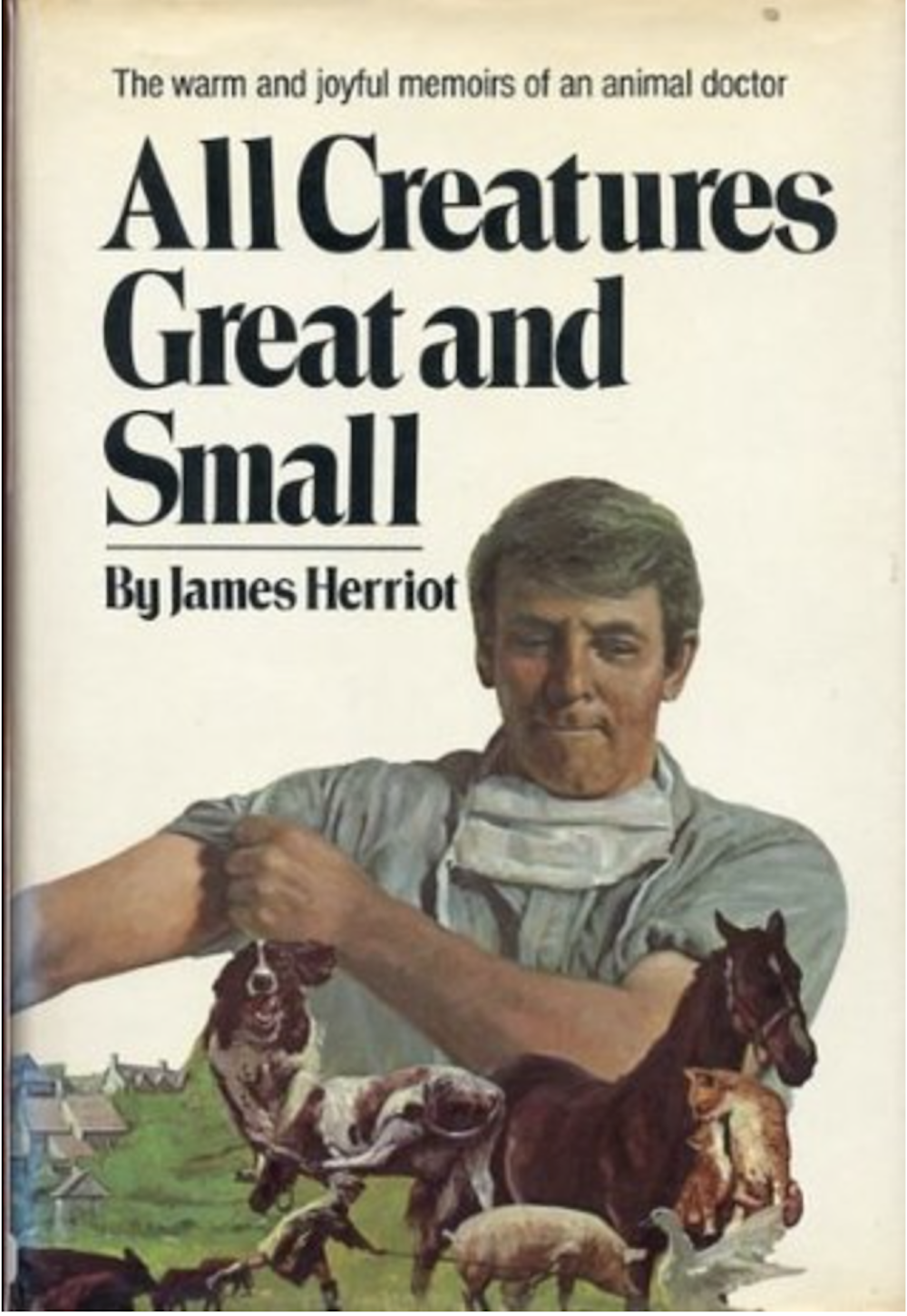
When Mum was pregnant with me, Dad bought her a paperback copy of James Herriot’s All Creatures Great and Small because it was an easy, pleasant read. I read my mother’s Pan paperback copy, with its cover image of sheep, farmers, and the vet’s vintage car, when I was growing up. We all watched the BBC adaptation when it was on television. And when my son is a bit older, I’m sure I’ll read the book to him or he’ll read it himself.
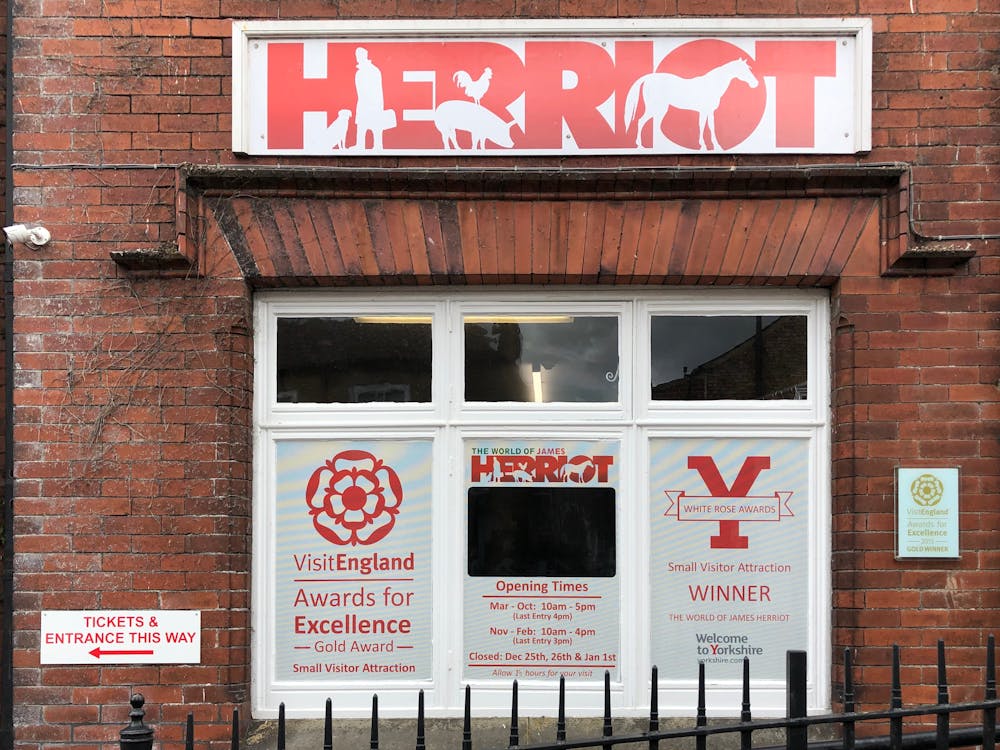 The Herriot Museum in Yorkshire.
Shutterstock
The books are episodic, with vignettes bound together by the narrative of Jim’s life (the character Jim is clearly based on Wight himself). He slowly moves from being a newcomer to the fictional town of Darrowby to acceptance within the originally sceptical community, marrying and building his own family and professional life.
Animals are part of every story, but the human characters really shine. These include the brothers Siegfried and Tristan Farnon, with whom Jim shares the vet practice, the wealthy widow Mrs Pumphrey, and a series of dour Yorkshire farmers including Jim’s future father-in-law Mr Alderson.
The Herriot Museum in Yorkshire.
Shutterstock
The books are episodic, with vignettes bound together by the narrative of Jim’s life (the character Jim is clearly based on Wight himself). He slowly moves from being a newcomer to the fictional town of Darrowby to acceptance within the originally sceptical community, marrying and building his own family and professional life.
Animals are part of every story, but the human characters really shine. These include the brothers Siegfried and Tristan Farnon, with whom Jim shares the vet practice, the wealthy widow Mrs Pumphrey, and a series of dour Yorkshire farmers including Jim’s future father-in-law Mr Alderson.
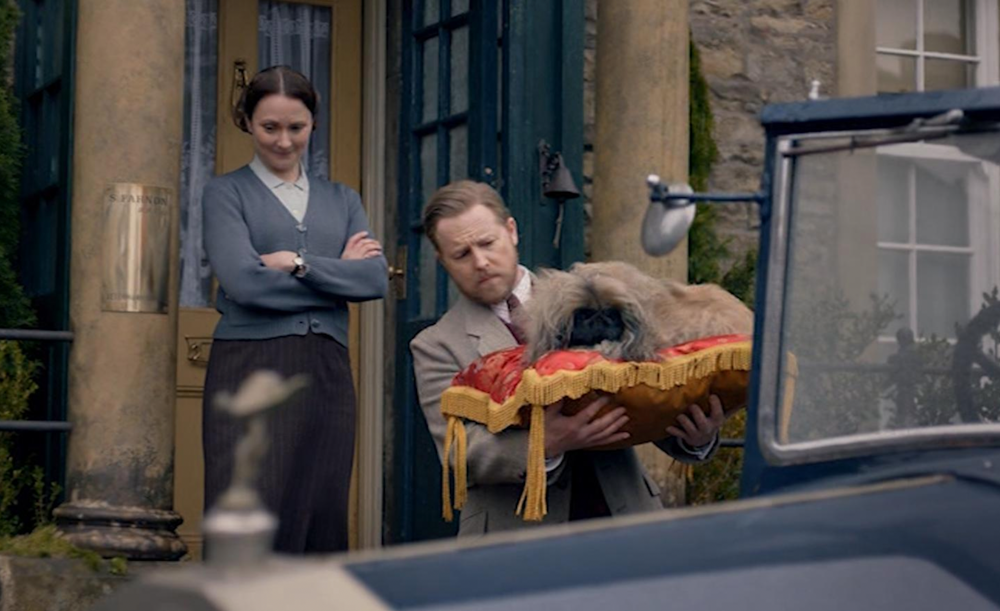 Anna Madeley (Mrs Hall) and Samuel West (Siegfried Farnon) in the most recent TV adaptation of All Creatures Great and Small (2020).
Playground Entertainment
Some like Siegfried, Tristan and Mrs Pumphrey were based on real people, others were combinations of real people; still others purely made up. This enabled Herriot to create characters that feel authentic.
Mrs Pumphrey, who pampers and fusses over her beloved Pekingese dog Tricki Woo, was one of the few characters recognisable to the real person on whom she was based: Miss Marjorie Warner (and her Pekingese Bambi).
Read more:
Pets and owners - you can learn a lot about one by studying the other[5]
The character is a figure of fun. She uses euphemistic phrases like “flop bott” to describe her dog’s various ailments and makes numerous calls to the vets for both real and imagined illnesses on behalf of Tricki Woo, and later, her pet pig Nugent. Still, she is painted as generous, kind and caring.
Anna Madeley (Mrs Hall) and Samuel West (Siegfried Farnon) in the most recent TV adaptation of All Creatures Great and Small (2020).
Playground Entertainment
Some like Siegfried, Tristan and Mrs Pumphrey were based on real people, others were combinations of real people; still others purely made up. This enabled Herriot to create characters that feel authentic.
Mrs Pumphrey, who pampers and fusses over her beloved Pekingese dog Tricki Woo, was one of the few characters recognisable to the real person on whom she was based: Miss Marjorie Warner (and her Pekingese Bambi).
Read more:
Pets and owners - you can learn a lot about one by studying the other[5]
The character is a figure of fun. She uses euphemistic phrases like “flop bott” to describe her dog’s various ailments and makes numerous calls to the vets for both real and imagined illnesses on behalf of Tricki Woo, and later, her pet pig Nugent. Still, she is painted as generous, kind and caring.
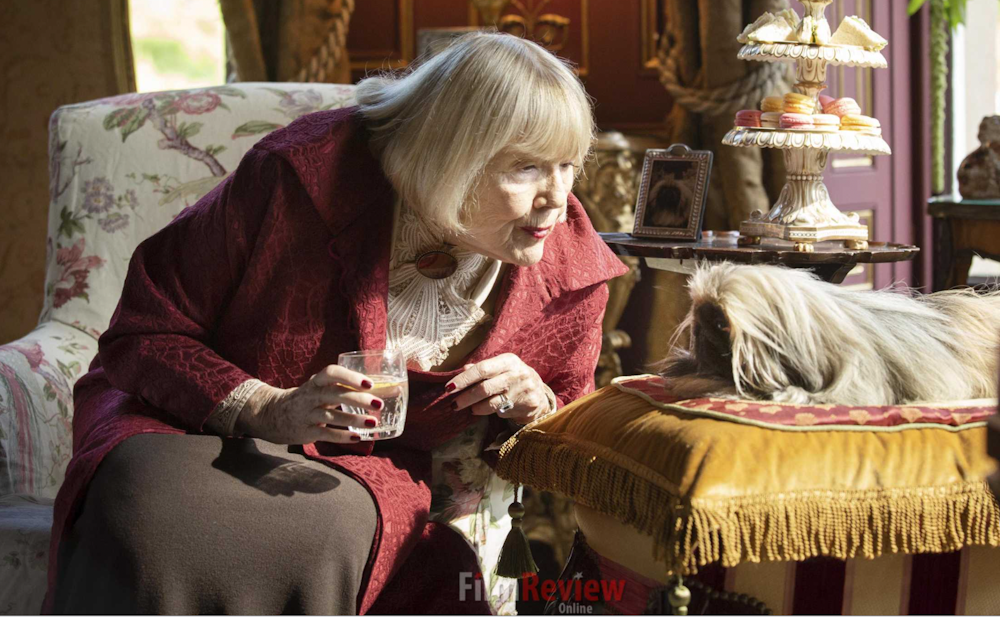 Diana Rigg plays Mrs Pumphrey.
Playground Entertainment
Life is hard at times. In one story, the famously aggressive cattle on Mr Copfield’s farm crush Jim against the wall, charging, kicking and whipping him in the face with faeces and urine-sodden tails.
The farmer’s sons help him wrestle them into submission, all in “the spirit of a game with encouragement to the man in action”.
Jim’s work is physically demanding. Being woken by a phone call in the middle of the night to drive to a cold farm and tend to a sick animal is commonplace. Still his willingness to do it earns him respect and hospitality on the bleak farms, where farmers might invite Jim in “for a bit o’ dinner” or “slip half a dozen eggs into the car”. There are moments of joyful professional satisfaction, too, such as when Jim safely delivers a newborn lamb and its twin, which has been caught in the ewe’s birth canal.
Herriot laughs at himself as often as he does at the people around him.
Diana Rigg plays Mrs Pumphrey.
Playground Entertainment
Life is hard at times. In one story, the famously aggressive cattle on Mr Copfield’s farm crush Jim against the wall, charging, kicking and whipping him in the face with faeces and urine-sodden tails.
The farmer’s sons help him wrestle them into submission, all in “the spirit of a game with encouragement to the man in action”.
Jim’s work is physically demanding. Being woken by a phone call in the middle of the night to drive to a cold farm and tend to a sick animal is commonplace. Still his willingness to do it earns him respect and hospitality on the bleak farms, where farmers might invite Jim in “for a bit o’ dinner” or “slip half a dozen eggs into the car”. There are moments of joyful professional satisfaction, too, such as when Jim safely delivers a newborn lamb and its twin, which has been caught in the ewe’s birth canal.
Herriot laughs at himself as often as he does at the people around him.
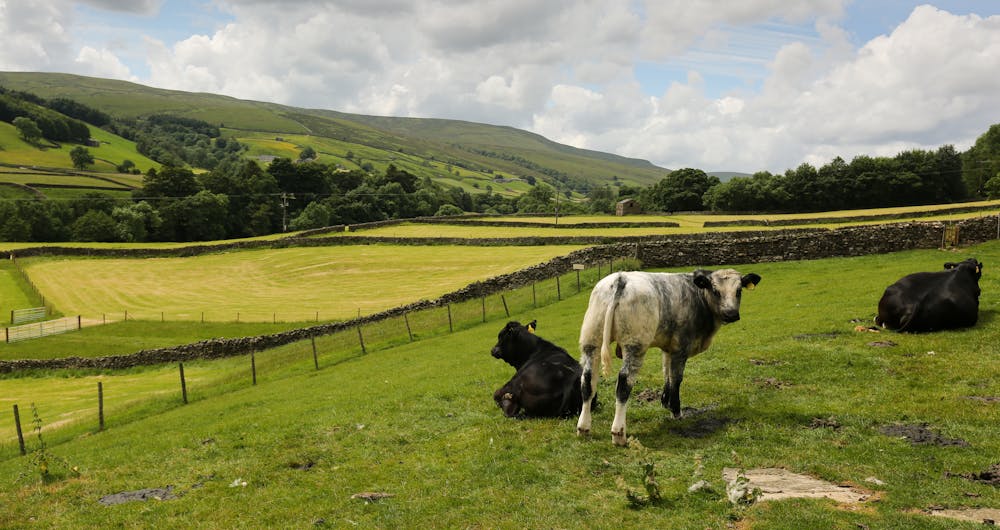 Though picturesque, life on the Yorkshire Dales was tough.
Shutterstock
Read more:
Why your veterinarian may refuse to euthanise your pet[6]
Nostalgia
Herriot’s books are set in the 30s, 40s and 50s, some years earlier than his real-life experiences. Nostalgia for what has been called a “fast-disappearing way of life[7]” has unquestionably been part of the appeal of the franchise. They became best-sellers in the USA before they did in the UK[8].
The absence of story lines that might lead to “difficult” conversations around political or sensitive topics also make them comfortable, escapist entertainment. Even in Vet in Harness[9], set when Siegfried and Jim are in the Royal Air Force, the stories focus on the personal and human, balancing humour and hardship.
Wight’s children still receive letters from readers around the world telling how his books helped them cope with difficult times. One American man said the books were so uplifting[10] they helped save his life during a bout of severe depression. According to his daugher, Rosie, Wight himself suffered from “melancholic episodes”[11].
With pet ownership on the rise[12] animal stories will remain part of our culture. But it’s the vision of easy humanity in Herriot’s stories that has kept us coming back for more.
References^ 60 million copies (www.irishtimes.com)^ eight in total (www.goodreads.com)^ most recent British TV adaptation (tvtonight.com.au)^ museum (worldofjamesherriot.com)^ Pets and owners - you can learn a lot about one by studying the other (theconversation.com)^ Why your veterinarian may refuse to euthanise your pet (theconversation.com)^ fast-disappearing way of life (www.thirteen.org)^ best-sellers in the USA before they did in the UK (www.thirteen.org)^ Vet in Harness (www.goodreads.com)^ uplifting (www.dailymail.co.uk)^ “melancholic episodes” (www.dailymail.co.uk)^ on the rise (spots.com)
Though picturesque, life on the Yorkshire Dales was tough.
Shutterstock
Read more:
Why your veterinarian may refuse to euthanise your pet[6]
Nostalgia
Herriot’s books are set in the 30s, 40s and 50s, some years earlier than his real-life experiences. Nostalgia for what has been called a “fast-disappearing way of life[7]” has unquestionably been part of the appeal of the franchise. They became best-sellers in the USA before they did in the UK[8].
The absence of story lines that might lead to “difficult” conversations around political or sensitive topics also make them comfortable, escapist entertainment. Even in Vet in Harness[9], set when Siegfried and Jim are in the Royal Air Force, the stories focus on the personal and human, balancing humour and hardship.
Wight’s children still receive letters from readers around the world telling how his books helped them cope with difficult times. One American man said the books were so uplifting[10] they helped save his life during a bout of severe depression. According to his daugher, Rosie, Wight himself suffered from “melancholic episodes”[11].
With pet ownership on the rise[12] animal stories will remain part of our culture. But it’s the vision of easy humanity in Herriot’s stories that has kept us coming back for more.
References^ 60 million copies (www.irishtimes.com)^ eight in total (www.goodreads.com)^ most recent British TV adaptation (tvtonight.com.au)^ museum (worldofjamesherriot.com)^ Pets and owners - you can learn a lot about one by studying the other (theconversation.com)^ Why your veterinarian may refuse to euthanise your pet (theconversation.com)^ fast-disappearing way of life (www.thirteen.org)^ best-sellers in the USA before they did in the UK (www.thirteen.org)^ Vet in Harness (www.goodreads.com)^ uplifting (www.dailymail.co.uk)^ “melancholic episodes” (www.dailymail.co.uk)^ on the rise (spots.com)