The national history curriculum should not be used and abused as an election issue
- Written by: Rebecca Cairns, Lecturer in Education, Deakin University
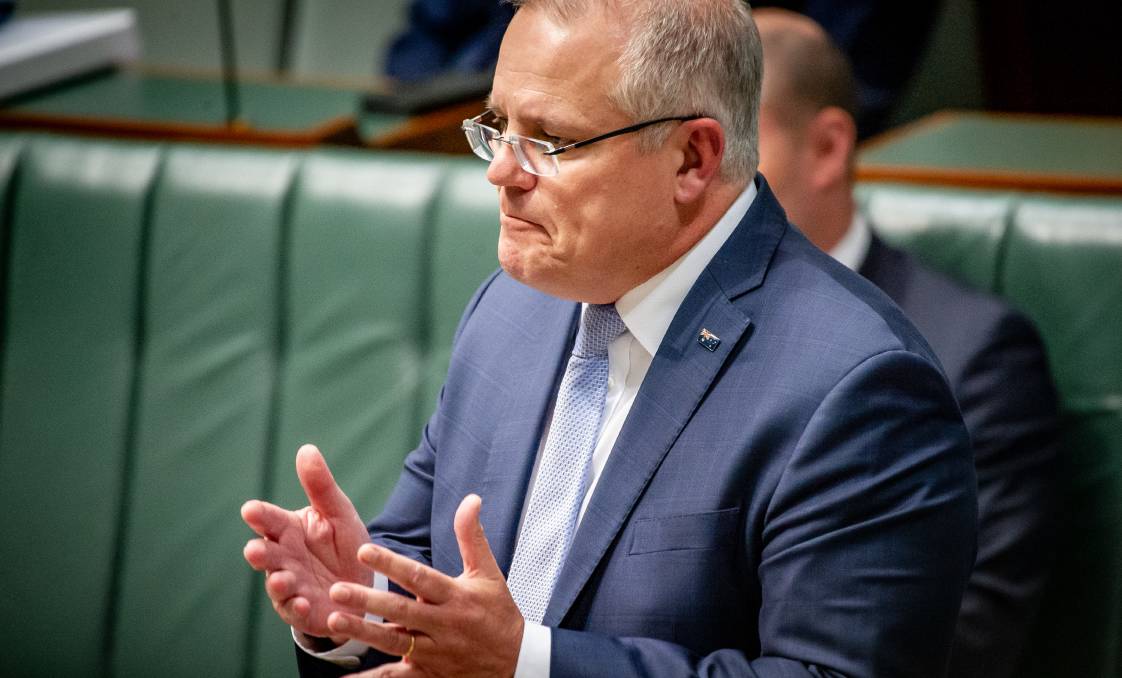
Everyone has an opinion about what should go into history curriculum. Politicians are especially good at expressing theirs.
The acting federal education minister, Stuart Robert, has announced[1] a delay in approving the revised Australian Curriculum[2] until at least April. This means the ongoing debate about Australian history in the curriculum is likely to be dragged out to the eve of the next federal election. History curriculum is political but should not be used as a political plaything at election time.
The federal government and Western Australian government are concerned[3] that the revised history curriculum is “very busy”. Robert said[4] Western civilisation “is well and truly back in the curriculum, but it remains quite cluttered”.
Read more: A 'crowded curriculum'? Sure, it may be complex, but so is the world kids must engage with[5]
This latest delay comes after the then education minister, Alan Tudge, last year rejected the first draft. Tudge called for[6] “a positive, optimistic view of Australian history” and more content about Australia’s “Western heritage”.
The draft was the product of an independent review by the Australian Curriculum, Assessment and Reporting Authority (ACARA[7]).
Delay gives Coalition an election issue
The delay gives the Coalition the opportunity to control the debate and use history curriculum as a wedge issue in the lead-up to the election.
We saw the way historical narratives get split along political lines last year. Tudge argued[8] for describing Anzac Day as “sacred” rather than “contested”. This was criticised by Labor’s shadow education minister, Tanya Plibersek, who spoke[9] about the importance of not censoring history.
Read more: The past is not sacred: the 'history wars' over Anzac[10]
Signing off on the revised curriculum close to an election might be a good political tactic. A national history curriculum that promotes a more “patriotic” narrative would appeal to Coalition voters. It would also reinforce an ideological point of difference from Labor.
Around the world governments promote their preferred historical narratives to push their political agendas. And, of course, public discussion about the complexities of Australian and world history is important. So is debate about how and what young people study in history.
However, if these issues are used to divide voters, they are in danger of being simplified and reduced to political rhetoric. We know from past rounds of the “history wars” that the black armband versus white blindfold history[11] approach has a dividing effect.
As Anna Clark[12] notes in her latest book, Making Australian History[13]:
“History can play a vital role in truth-telling and reconciliation […] Seeking justice, remembering and addressing this nation’s past is an ongoing and necessary condition of individual and collective healing.”
Expanding our collective historical understanding takes much more than a series of media moments.
‘Cluttered’ curriculum claim is overblown
Attempts to extend debate about “decluttering” history overlook the complexities of curriculum reform. Decisions do need to be made about what topics are included at each year level. However, we cannot apply a Marie Kondo approach to history and keep only the bits that “spark joy[14]”.
The minister’s insistence that history content must be reduced further suggests a neater narrative is needed.
Historians help us to understand that the past is long, messy and requires special skills for interpreting it. For this reason, the approach taken in the Australian Curriculum[15] places equal emphasis on the skills and knowledge students need to do historical inquiry.
One of the stated aims is to ensure students develop interest in and enjoyment of historical study. Another is to develop understanding of historical concepts: evidence, continuity and change, cause and effect, significance, perspectives, empathy and contestability.
Read more: Teaching a ‘hatred’ of Australia? No, minister, here’s why a democracy has critical curriculum content[16]
History curriculums provide maps for teachers and students to navigate a range of topics. Some topics get selected and some do not.
Even after the introduction of the national curriculum, research shows[17] it still gets adapted at the state and territory level. Teachers in schools then interpret the curriculum in different ways. Local context is seen to be an important factor in selecting content and perspectives.
Therefore, not every point in the curriculum will get covered. So perhaps it does not matter if the history curriculum is “busy”.
Read more: First, it's not an instruction manual: 3 things education ministers need to know about the Australian Curriculum[18]
We also know from research[19] that students will make their own meanings of curriculum, regardless of how other people might want them to make sense of certain messages.
The government’s attitude to delaying the review process and now inviting “mums and dads to be involved” fails to acknowledge the process[20] of a curriculum review. There was an extended consultation period[21] in 2021. Teachers, subject experts, educational organisations and curriculum professionals have worked hard during that process to improve the existing curriculum.
The government will use the overdue publication of version 9.0[22] of the Australian Curriculum as an opportunity to stamp its authority on it. But decisions about history curriculum should not be a matter of political opinion.
References
- ^ announced (ministers.dese.gov.au)
- ^ revised Australian Curriculum (www.acara.edu.au)
- ^ are concerned (www.smh.com.au)
- ^ said (ministers.dese.gov.au)
- ^ A 'crowded curriculum'? Sure, it may be complex, but so is the world kids must engage with (theconversation.com)
- ^ called for (ministers.dese.gov.au)
- ^ ACARA (www.acara.edu.au)
- ^ Tudge argued (www.theguardian.com)
- ^ spoke (www.theguardian.com)
- ^ The past is not sacred: the 'history wars' over Anzac (theconversation.com)
- ^ black armband versus white blindfold history (epress.lib.uts.edu.au)
- ^ Anna Clark (theconversation.com)
- ^ Making Australian History (www.penguin.com.au)
- ^ spark joy (konmari.com)
- ^ Australian Curriculum (www.australiancurriculum.edu.au)
- ^ Teaching a ‘hatred’ of Australia? No, minister, here’s why a democracy has critical curriculum content (theconversation.com)
- ^ research shows (www.deakin.edu.au)
- ^ First, it's not an instruction manual: 3 things education ministers need to know about the Australian Curriculum (theconversation.com)
- ^ from research (www.oecd.org)
- ^ the process (www.acara.edu.au)
- ^ extended consultation period (theconversation.com)
- ^ version 9.0 (www.acara.edu.au)