TCMA joins Saraburi Province to mark one year anniversary of progress "SARABURI SANDBOX" Thailand’s first low-carbon city
BANGKOK, THAILAND - Media OutReach Newswire - 29 January 2025 - Thai Cement Manufacturers Association (TCMA) and cement manufacturers with fully support to Saraburi Province, government agencies, private sectors, and civil society to present the one-year anniversary of progress of SARABURI SANDBOX, Thailand's first low-carbon city.
The initiative is set to advance efforts in clean energy transition, green industry, and value creation for carbon with support from all stakeholders and international cooperation, advanced technologies, and green financing.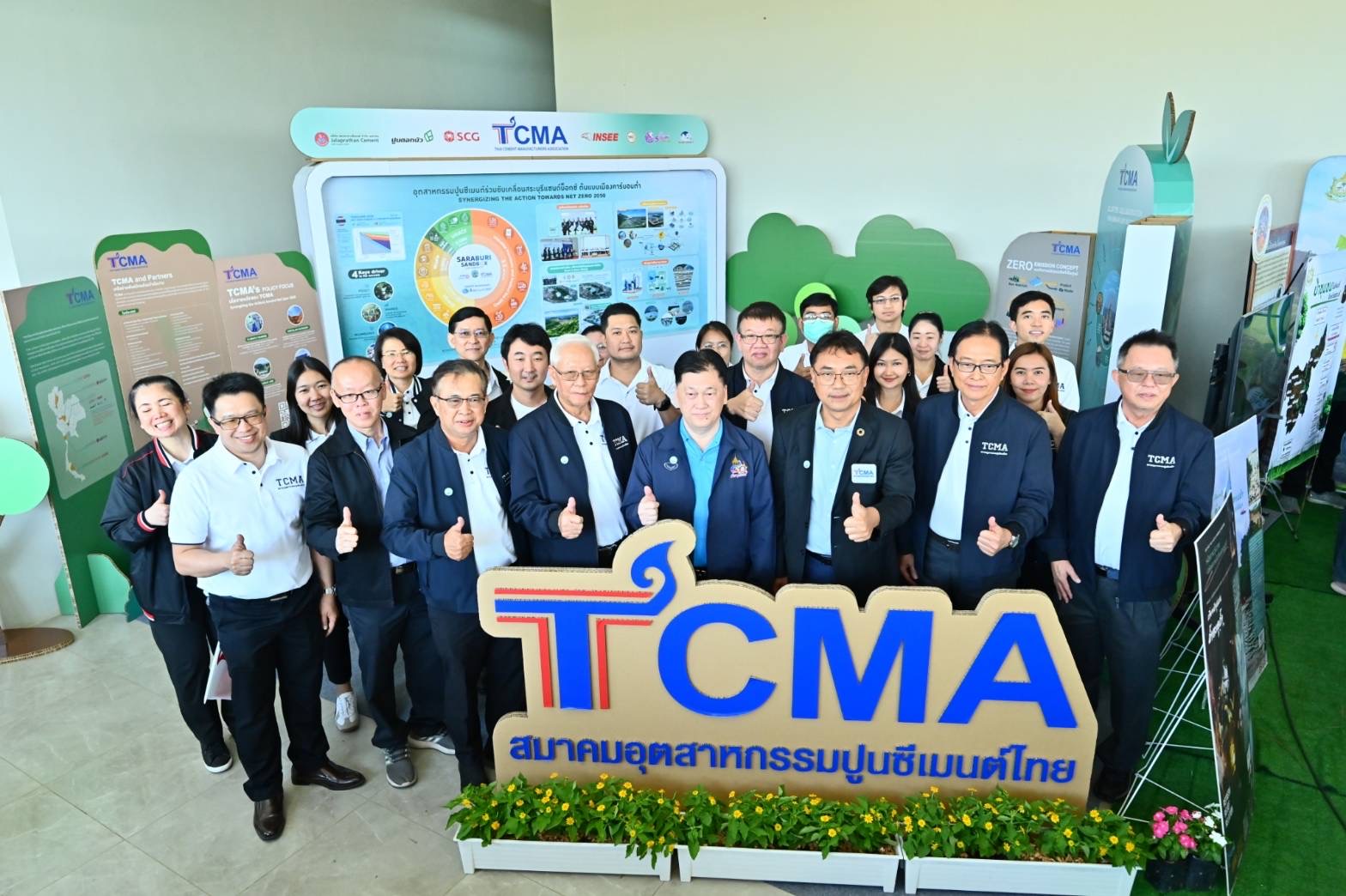
SARABURI SANDBOX is an area-based collaborative effort, driven by the Public-Private-People Partnership (PPP) approach, comprising three key stakeholders: Saraburi Province, TCMA, and FTI Saraburi Provincial Chapter. Led by the Governor of Saraburi Province and supported by domestic and international partners, aiming at transforming Saraburi into a low-carbon city by fostering collaboration among the government sector, the private sector, civil society, and related industries for various pilot projects of CO2 reduction.
A year of action since the joint declaration of commitment on August 15, 2023, the tangible and significant progress has been made across five key focus areas: 1) clean energy transition, 2) green industry promotion, 3) waste to value, 4) low-carbon agriculture, and 5) green space expansion. The project still continues with collaborative effort of all sectors, including to seek additional green funding to achieve a target reduction of 5 million tons of carbon dioxide equivalent by 2027.
Mr. Bancha Chaowarin, Governor of Saraburi Province emphasized the collaborative approach, outlining four key working principles: 1) immediate action, 2) trial-and-error, flexibility and adaptability, 3) respectful dialogue and consensus-building, and 4) maintaining a positive working atmosphere. The Saraburi Governor affirmed Saraburi's readiness to serve as a lab city for new technologies and innovations, with the goal of replicating successful models across other provinces, leading to tangible greenhouse gas reduction outcomes, and spreading economic and social benefits to the locals of Saraburi. The Saraburi Governor stressed that the next phase requires continued cooperation, particularly policy support from the government to achieve the Thailand Nationally Determined Contribution (NDC) goals.
Dr. Chana Poomee, Chairman of Thai Cement Manufacturers Association (TCMA) and Vice Chairman of the Federation of Thai Industries stated that TCMA, as a representative of Thailand's leading cement manufacturers and a key manufacturing sector in Saraburi, TCMA plays a pivotal role in this project, is committed to achieving net-zero carbon emissions by 2050, in alignment with the Thailand 2050 Net Zero Cement and Concrete Roadmap. TCMA's contributions to building Saraburi as the first low-carbon city of Thailand include optimizing cement production processes, fostering collaboration among stakeholders, and seeking green fund and opportunities for international cooperation.
Over the past year, the cement industry has made significant contributions to the SARABURI SANDBOX across several areas: 1) Industrial Process and Product Use (IPPU): research and development of clinker substitution, leveraging nanotechnology to enhance cement properties. Collaboration among stakeholders is essential for knowledge development, machinery upgrades, investment incentives, and regulatory adjustments to promote the adoption of hydraulic cement-a low carbon cement. These actions can contribute CO2 reduction by over 1 million tons in 2023-2024. 2) Green and Smart Mining: efficient resource utilization, coupled with sustainable land rehabilitation to benefit local communities and the environment. 3) Clean Energy Transition: implementation of waste heat recovery (WHR) systems, increased use of renewable energy sources such as solar power, and adoption of biomass and refuse derived fuel (RDF) to replace coal through the co-processing in cement kilns. These measures are expected to cut carbon emissions by approximately 9-12 million tons per year and mitigate PM 2.5 pollution from agricultural burning, while generating additional income for farmers and promoting efficient waste management to zero landfill. 4) Carbon Value Creation: researching carbon utilization methods, including CO2-to-Methanol. Notably, SARABURI SANDBOX has become the first industrial cluster in Thailand accepted into the Transitioning Industrial Clusters Initiative of the World Economic Forum.
Dr. Chana Poomee highlighted that while significant progress has been made, achieving the goal of establishing a low-carbon city requires innovative approaches, strong leadership across sectors, strong local administration, and substantial international support. Moving forward, increased collaboration with organizations such as the Global Cement and Concrete Association (GCCA), the United Nations Industrial Development Organization (UNIDO), the German International Cooperation Organization (GIZ), and other global entities will be crucial in supporting energy transition and carbon capture, utilization, and storage (CCUS) efforts. Dr. Chana emphasized the need for government policies to provide essential support, including knowledge sharing, technological integration, and funding to facilitate meaningful change.
***********************************************
The "SARABURI SANDBOX: Joining Forces to Create Thailand's First Low-Carbon City" event was held on January 22, 2025, the Navaminda Kasatriyadhiraj Royal Air Force Academy (NKRAFA), Muak Lek District, Saraburi Province. The event aimed to raise public awareness, extract key lessons from the past year, and brainstorming to gather input from various sectors to shape the future strategies of SARABURI SANDBOX. More than 700 participants from different sectors attended the event.
Hashtag: #TCMA #ThaiCementManufacturersAssociation
The issuer is solely responsible for the content of this announcement.