GPE: Catch-up classes keep students in school in the Central African Republic
- In the Central African Republic, 39% of students drop out of primary school. Many drop out due to the poor quality of education: a lack of infrastructure and qualified teachers make it difficult for students to acquire the basic skills needed to advance to higher grades.
- A GPE-funded remedial education program helps keep children in school by providing low-performing students at risk of dropping out with additional instruction to strengthen their reading and math skills.
- This program runs over school holidays and will benefit almost 100,000 students in 480 public primary schools by 2025.
VILLAGE OF BOYALI, CENTRAL AFRICAN REPUBLIC - Media OutReach Newswire - 24 January 2024 - The Central African Republic (CAR) is one of the poorest and most fragile countries in the world. Since gaining independence in 1960, CAR has not experienced a sustained period of peace. In 2019, the government signed an agreement with armed groups which continues to provide a roadmap to long-term peace and stability, but violence and political tensions continue to take their toll on civilians, particularly on children and their education.
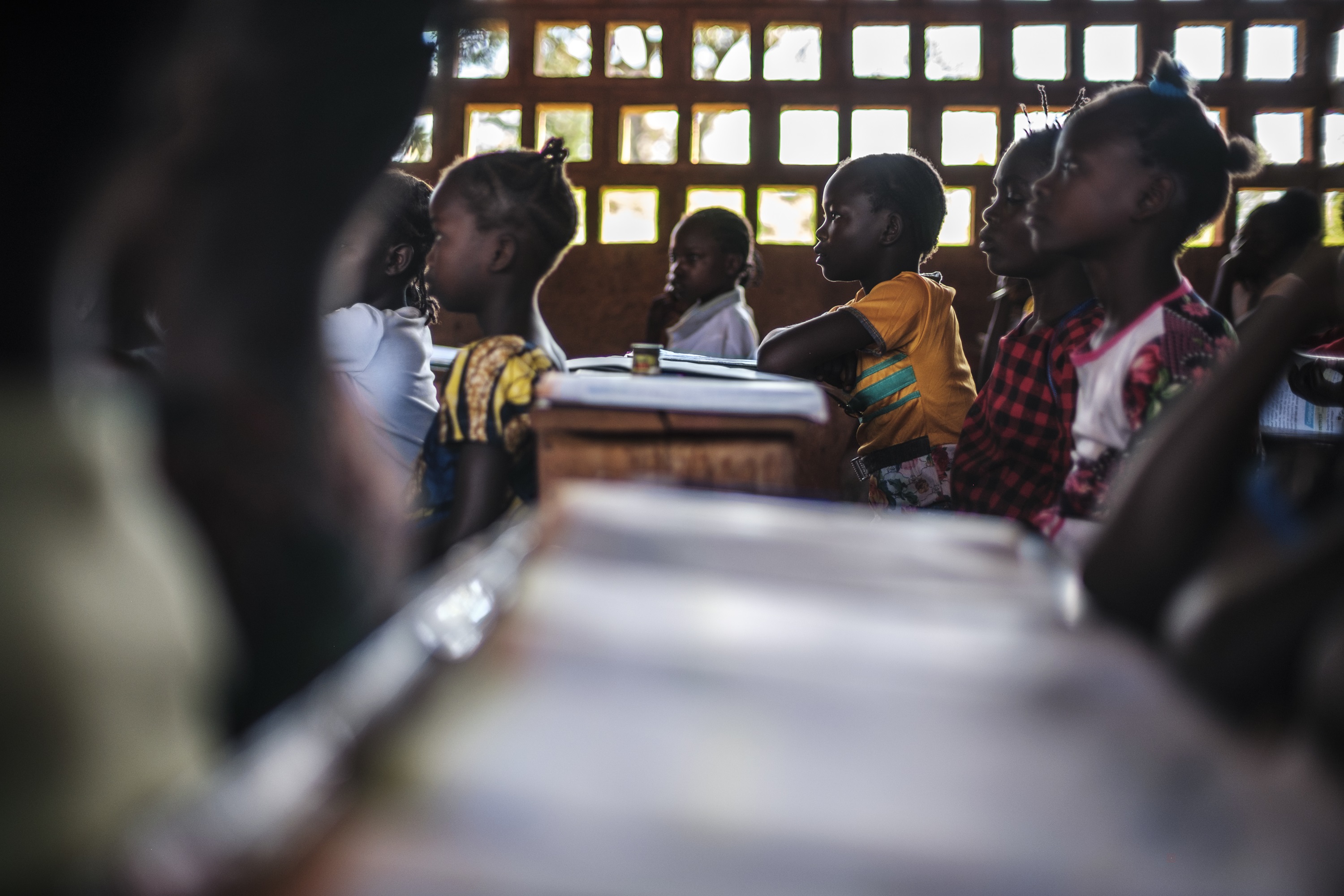
Students participate in a class at the Boyali 2 school, in the village of Boyali, Central African Republic. (Eduardo Soteras/AP Images for Global Partnership for Education)
With a population of about 6.1 million, almost half are under 14 years old, but with limited resources, CAR's financing for the education sector is less than 2% of GDP. There is not enough infrastructure to accommodate the growing student population, and a lack of qualified teachers makes it difficult to provide education that equips students with basic competencies.
The poor quality of education results in high dropout rates – 47% for girls and 31% for boys at the primary school level. The expected length of schooling is 5.3 years for boys compared to 3.8 years for girls.
Despite immense challenges facing the sector, the government is committed to education as a key driver for recovery, peacebuilding and economic development. CAR's current education plan demonstrates a strong political will to improve access and quality for all Central African children.
One intervention to keep children in school identifies low-performing students and provides them with additional literacy and numeracy classes to strengthen their basic competencies. Teachers play a key role in identifying children who are unable to keep pace with their peers and are thus at risk of dropping out.
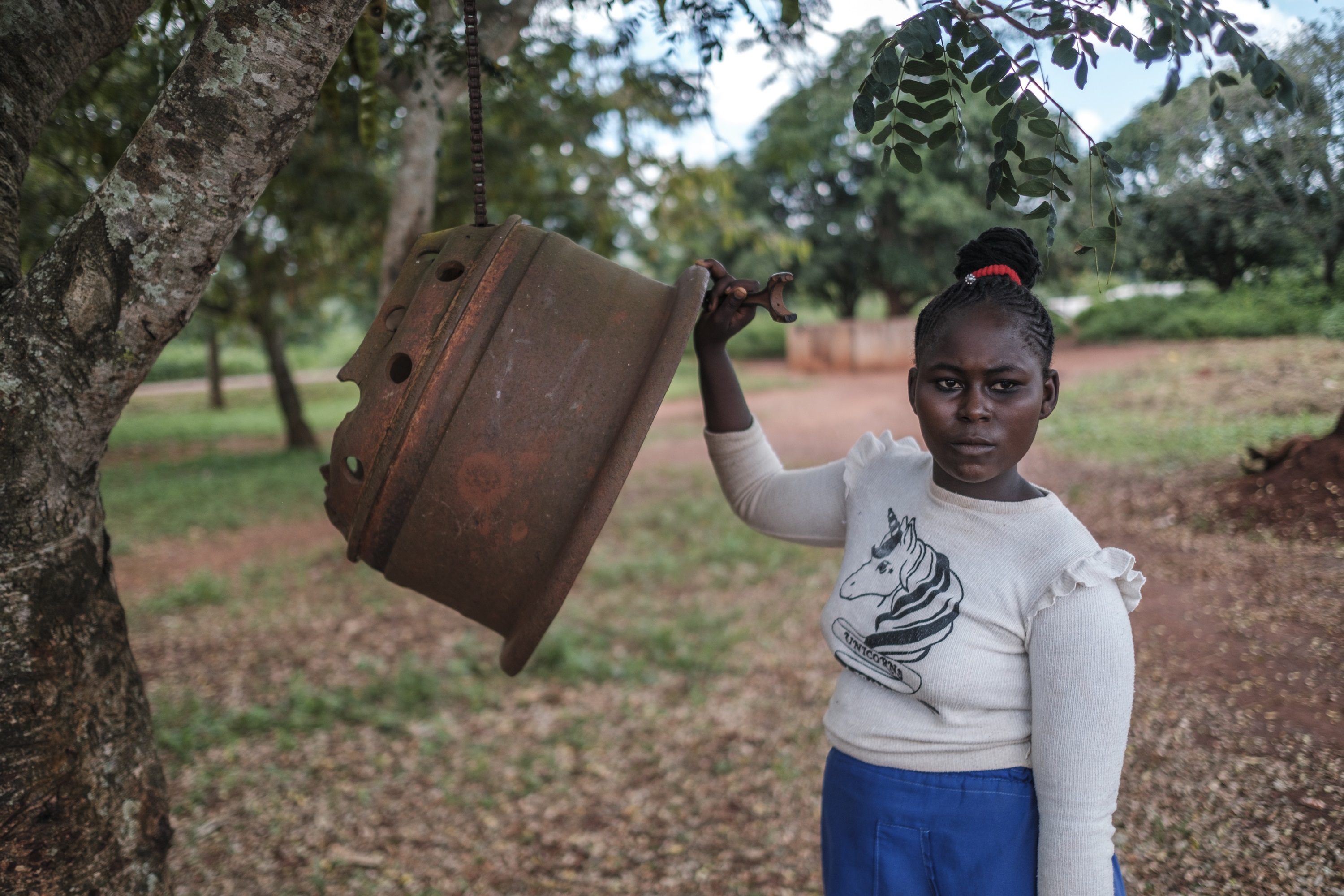
Student Naomi Bakeré rings a metal bell at break time at the Boyali 2 school, in the village of Boyali, Central African Republic. (Eduardo Soteras/AP Images for Global Partnership for Education)
Naomi Bakeré, a 16-year-old student at Boyali 2 School, is one of 99,000 students receiving additional instruction through the GPE-supported catch-up education program.
"I am in the remedial course because I want to be a journalist. I have to speak languages well," said Naomi. "I'm taking part in the catch-up class, so I'll have a good level when I go back to school."
"The aim of these courses is to help children, either with reading or mathematics, to increase, and raise their level of knowledge, said Thierry Gbagama, a teacher who took part in a GPE-supported training to help children catch up with their peers. "I have a total of 50 students in my class. Naomie couldn't properly speak and write, but now she can read quite well – she's one of the students who can read and write very well."
Courses run over school holidays and are set to benefit 99,000 students in 480 public primary schools by 2025. In April 2023, during the second-term vacation, over 21,800 students participated in the program, exceeding the original goal. In August 2023, around 46,800 students participated in the program, and more are expected to participate in December.
This has been made possible by a US$31.6 million GPE grant, implemented by the World Bank. The funding helps the Ministry of National Education increase access to quality education, with a focus on children living in disadvantaged districts.
Visit globalpartnership.org to learn how GPE supports partner countries to ensure all children get a quality education.
Part of a multi-format production, images are available to subscribers on AP Newsroom – Search 'GPE CAR 2023' – long form text and additional media available at apmultimedianewsroom.com/GPE.
Hashtag: #GPE
The issuer is solely responsible for the content of this announcement.