Inflation jumps in October, adding to pressure on government to make budget savings
- Written by: Stephen Bartos, Professor of Economics, University of Canberra
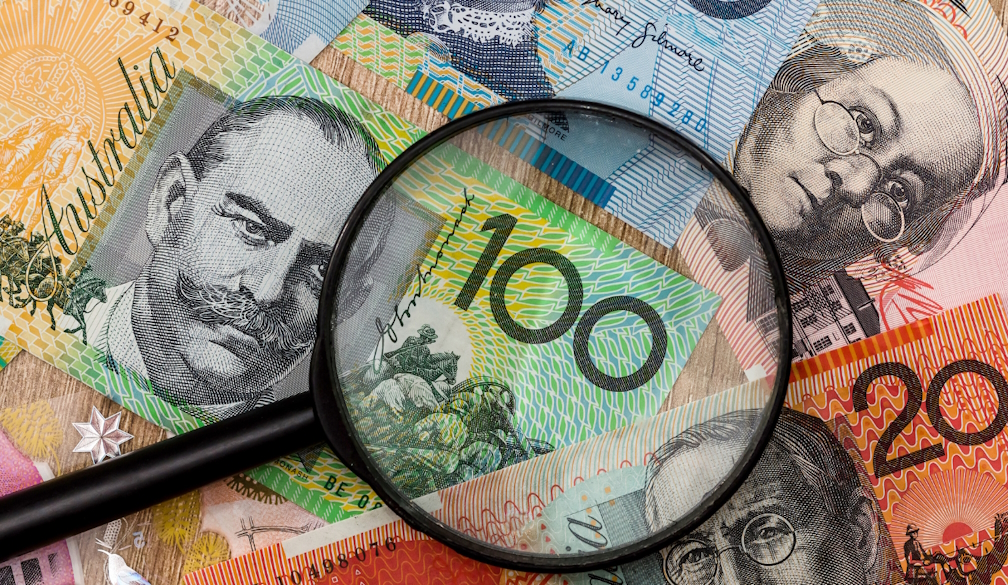
Annual inflation rose[1] to a 16-month high of 3.8% in October, adding to pressure on the government as it seeks to make savings across the public sector.
When governments, whether Commonwealth, state or local, increase spending it adds to inflation. Opinions differ on whether Commonwealth spending makes a significant difference. Opposition finance spokesperson Jane Hume argues it does[2]; Treasurer Jim Chalmers countering “the Reserve Bank hasn’t mentioned that in their recent statements”.
Reducing government spending will, however, help curb inflation. It may be one of the motives for a reported federal government decision[3] to seek budget cuts of up to 5% across its departments and agencies.
Finance Minister Katy Gallagher has denied the reports[4], saying in question time:
the idea that we are imposing a 5% cut on agencies is incorrect. […] What we have asked agencies to do is to think about […] all the programs they administer and to consider whether they are still priorities.
Put like that, it is normal budget process. Departments are always asked to consider priorities.
If, however, the report of a 5% savings target is true, we will likely see cuts to various kinds of departmental spending including salaries, overtime, consultants, IT and travel.
Cuts such as these, although hard for the public service, would be welcome for the Reserve Bank. Then Reserve Bank governor Philip Lowe[5] put the case bluntly in a 2023 speech that fiscal policy (that is, government tax and spending) should align better with monetary policy (setting interest rates) to support economic growth.
What the inflation report shows
The latest Australian Bureau of Statistics report showed inflation over the year[6] to October rose to 3.8%, up from 3.6% in the year to September.
The largest contributors to annual inflation were the things people notice the most: housing (up 5.9%), food and beverages (3.2%), and recreation (3.2%). The housing component was driven by a 37.1% jump in electricity costs as some state energy rebates unwound.

It means cost of living will remain front-of-mind for voters and politicians.
The group with the lowest increase in prices was communications (up 0.8%). This reflects the highly competitive structure of the telecommunications industry and the impact of technological change.
The annual figure was also affected by a negative inflation number from October 2024[8] dropping out of the annual calculations.
The new, complete CPI
This is the first release[9] of the improved “complete” monthly consumer price index (CPI). Previously, the monthly update was called an “indicator” because it covered fewer goods[10] and services than the long-running quarterly CPI report.
But even the improved monthly series will be more volatile than the quarterly report.
Underlying inflation, which takes out the items with the most extreme price changes and is called the “trimmed mean”, was 3.3% in October. This was only marginally changed from 3.2% in September.
This measure is generally a better guide to the ongoing trend in inflation, but it too remains above the Reserve Bank’s 2–3% target band.
What does it mean for my mortgage?
At its meeting earlier this month, the Reserve Bank board considered[11] the most recent forecasts[12] prepared by its staff. These implied that if the central bank cut interest rates again, as markets were expecting, underlying inflation was “expected to be above 3% until the second half of 2026”. But if they left interest rates unchanged, inflation would be “settling closer to the midpoint” of the 2–3% inflation target[13].
The implication was that the Reserve Bank would not be cutting (or raising) rates unless incoming economic data was sufficiently dramatic to change the forecasts materially. Today’s data would probably not be regarded as being sufficiently dramatic.
The Reserve Bank regards the underlying “trimmed mean” measures of the monthly and quarterly inflation rates as the more important. But it will still be concerned about today’s high “headline” number.
Expectations matter
Most economists expect[14] the central bank to leave rates on hold for several months at least.
Media stories about high inflation may lift inflationary expectations in the community. If businesses think suppliers and competitors are raising prices, they are more likely to do so themselves. And if union leaders think prices are rising faster than wages (currently[15] growing by 3.4%), they may be more likely to push for higher wage increases.
Some of the change between September and October could have arisen from the Bureau of Statistics adopting a new methodology, expanding the sample of prices of goods and services it measures. The bureau did not say how much of an impact this has had. It complicates the picture for the Reserve Bank and makes it even more likely they will adopt a “wait and see” approach.
References
- ^ rose (www.abs.gov.au)
- ^ argues it does (www.skynews.com.au)
- ^ federal government decision (www.afr.com)
- ^ denied the reports (www.aph.gov.au)
- ^ Philip Lowe (www.bis.org)
- ^ inflation over the year (www.abs.gov.au)
- ^ Diego Fedele/AAP (photos.aap.com.au)
- ^ October 2024 (www.abs.gov.au)
- ^ release (www.abs.gov.au)
- ^ fewer goods (theconversation.com)
- ^ considered (www.rba.gov.au)
- ^ forecasts (www.rba.gov.au)
- ^ inflation target (www.rba.gov.au)
- ^ expect (www.abc.net.au)
- ^ currently (www.abs.gov.au)