

Beyond power generation: How China's Heqi No. 1 explores nuclear energy to cut carbon emissions
BEIJING, CHINA - Media OutReach Newswire - 19 September 2025 - At the Tianwan Nuclear Power Station (TNPS), located in Lianyungang City, east China's Jiangsu Province, eight nuclear power units are lined up, among which six operational units have a total installed capacity of over 6.6 million kilowatts, supplying approximately 158 million kilowatt-hours of clean electricity daily to the East China Power Grid.
Today, the station has taken on a new mission: producing industrial steam.
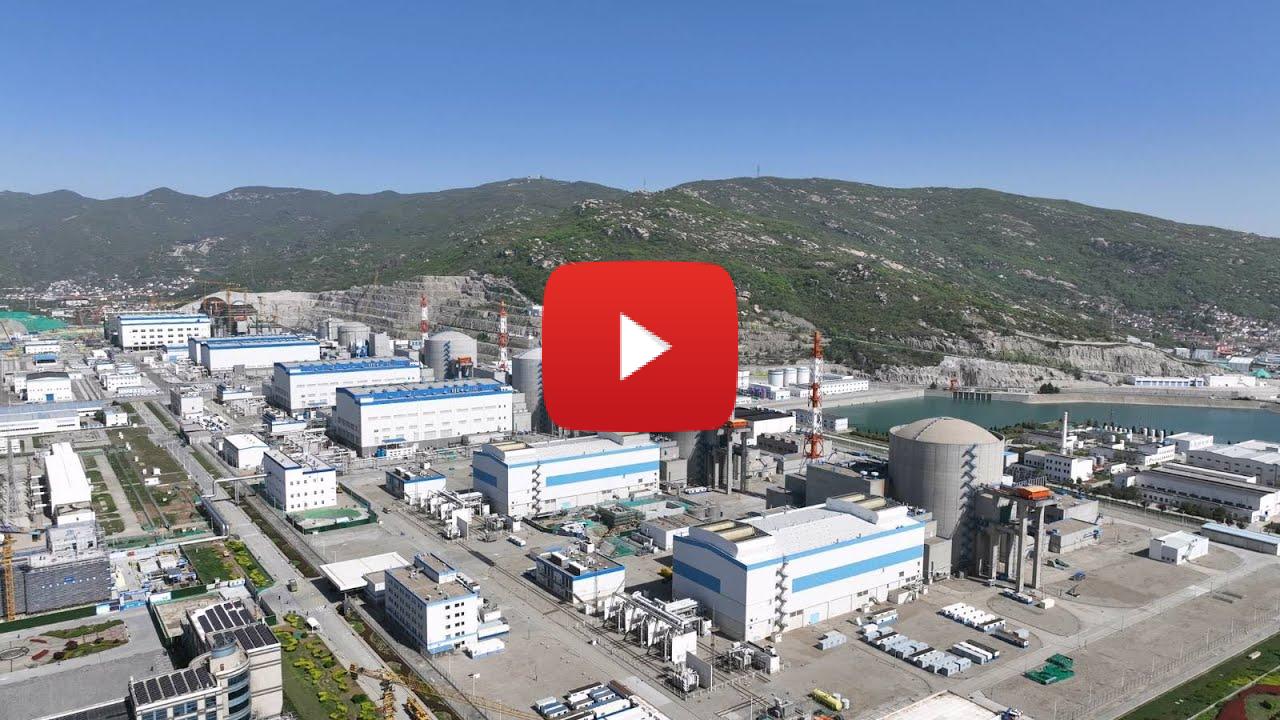
In June 2024, Heqi No. 1, China's first industrial-use nuclear energy steam supply project, was officially put into operation at TNPS. The project delivers 4.8 million tons of zero-carbon steam annually to the petrochemical base of Lianyungang City, equivalent to reducing the combustion of 400,000 tons of standard coal each year or planting 2,900 hectares of new woods. This marks the first project of its kind worldwide to produce industrial steam at such a scale using nuclear power.
Industrial steam is a critical energy source for manufacturing, chemical, and textile industries, primarily used for heating, drying, and powering equipment. In recent years, China's industrial steam market has shown steady growth. Yet, traditional fossil fuel-based steam production emits carbon dioxide, sulfur dioxide, and other gases. Using nuclear energy, therefore, offers a cleaner alternative.
Industrial steam requires temperatures above 260°C. To achieve this, Heqi No. 1 uses multi-stage heat exchange technology, with equipment including preheaters, steam generators, and superheaters. Through a coordinated process involving the pump, preheater, steam generator, superheater, etc., industrial steam is continuously produced. Heqi No. 1's core steam conversion unit extracts reactor steam and achieves production through partitioned heat exchange, operating similarly to a self-heating hotpot, according to Li Ruigang, deputy director of the Operation Division No. 2, Jiangsu Nuclear Power Corporation.
While Heqi No. 1 can be likened to a giant "self-heating hotpot," transitioning from nuclear power generation to steam supply is a complex systemic challenge. Nuclear reactor operations must maintain a dynamic balance between energy production and consumption. The project team used reverse engineering to analyze hundreds of parameters in the reactor control system over nearly seven months. In March 2024, the team successfully tested the "Reactor-Turbine Heat Matching" technology.
While the Heqi No. 1 team focused on technological breakthroughs, construction work was carried out simultaneously. Spanning six years from design and development to engineering construction, the Heqi No. 1 project led to 37 technological innovation patents and has contributed significantly to China's experience in the integrated utilization of nuclear energy.
The completion of the Heqi No. 1 project marks only the start of China's broader push into nuclear energy applications. In the coming years, nuclear technology is poised for rapid expansion across fields such as medicine, industry, agriculture, and security.
Hashtag: #ChinaNewsService
The issuer is solely responsible for the content of this announcement.










