Weekend Results from Residential Property Auctions in the Capital Cities — What Was the Trend
- Written by: The Times
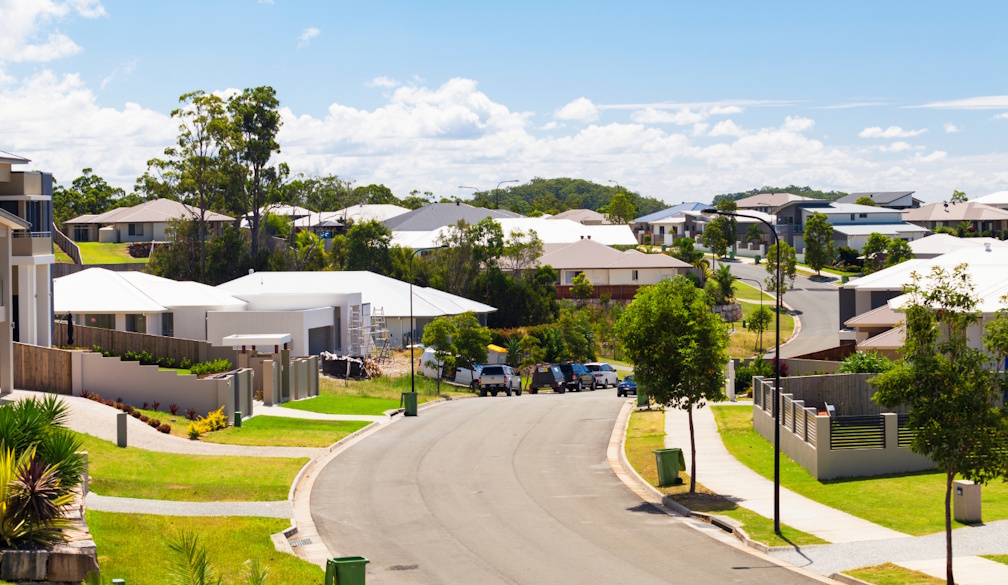
The latest weekend of residential property auctions across Australia’s capital cities delivered a clear message: the market remains active, but it is uneven, cautious, and increasingly sensitive to interest rate expectations and economic uncertainty. While auction volumes lifted in key cities, clearance rates continue to signal a market that is no longer uniformly in favour of sellers.
This is not a collapse — but it is a recalibration.
A market defined by mixed signals
Across the combined capital cities, auction clearance rates are now sitting in the mid-50% range, broadly considered a “balanced” or even slightly buyer-leaning market.
Historically, clearance rates above 70% indicate rising prices and strong competition. Below 60%, the market tends to soften, with buyers gaining leverage.
That is precisely where the market now sits.
The weekend trend showed:
-
Strong auction volumes, particularly in Melbourne and Sydney
-
Clearance rates below boom-time levels
-
Patchy buyer engagement — strong for quality properties, weaker elsewhere
-
Increasing withdrawals and passed-in results
Sydney: patchy, cautious, but still resilient
Sydney continues to reflect the most pronounced cooling trend among the capitals.
Recent data shows clearance rates have dropped significantly — in some weeks falling as low as 37.9%, one of the weakest results since the pandemic period.
Even where results are stronger, they remain subdued compared to previous years. Earlier April data showed clearance rates hovering around 50–55%, well below last year’s levels.
Yet the weekend results again confirmed an important nuance:
-
Well-located, high-quality properties are still attracting competitive bidding
-
Premium suburbs and renovated homes continue to outperform
-
Buyers are selective rather than absent
Industry commentary describes Sydney as “patchy” — a market where success depends heavily on the specific asset rather than broad momentum.
In practical terms, Sydney has shifted from a seller’s market to a negotiation market.
Melbourne: stronger volumes, moderate clearance rates
Melbourne delivered one of the more active weekends, with a surge in listings and what many described as a “Super Saturday” of auctions.
-
More than 1,200 auctions were scheduled
-
Clearance rates hovered around 60–61% in recent weekend data
This positions Melbourne slightly ahead of Sydney in terms of auction performance — but still below boom conditions.
The key trend in Melbourne is volume-driven:
-
More listings are giving buyers greater choice
-
Sellers must price realistically to achieve a sale
-
Competition exists, but is more measured
There are also early signs of buyer urgency creeping back in, driven by expectations of future interest rate movements. Some buyers are moving now to avoid reduced borrowing capacity if rates rise again.
Brisbane, Adelaide and Perth: quieter but more stable
While auction activity is less dominant in these markets compared to Sydney and Melbourne, the broader trend is clear:
-
Price growth has been stronger in these cities
-
Auction clearance rates have generally held firmer
-
Demand remains supported by population growth and affordability advantages
Recent market data shows Brisbane, Adelaide and Perth continuing to record price resilience, even as Sydney and Melbourne soften.
However, growth is slowing, and these markets are not immune to the same macro pressures.
Canberra: highly sensitive to interest rates
Canberra, traditionally a steady auction market, is also showing signs of moderation:
-
Clearance rates have eased
-
Buyer confidence is closely tied to public sector stability and borrowing costs
As with Sydney, the Canberra market is increasingly driven by affordability constraints rather than supply shortages.
The national picture: a market in transition
Across Australia, the weekend auction trend reflects several underlying forces shaping buyer and seller behaviour:
1. Interest rate uncertainty is dominating sentiment
With the Reserve Bank decision imminent, buyers are cautious. Even the expectation of rate rises is enough to reduce bidding confidence and borrowing capacity.
2. More listings are diluting competition
Higher auction volumes mean buyers have options. This reduces urgency and limits price escalation.
3. Buyers are highly selective
Turnkey homes, good locations, and realistic pricing are selling. Everything else struggles.
4. Vendors are adjusting expectations
More properties are being withdrawn or passed in — a sign that sellers are recalibrating to the new market reality.
5. The market is fragmenting
There is no single “Australian property market” anymore. Conditions vary significantly by city, suburb, and property type.
What the weekend trend really tells us
The key takeaway from this weekend’s auction results is not that the market is weak — but that it is disciplined.
-
Buyers are still present, but cautious
-
Sellers can still achieve strong results, but only with the right pricing
-
Auction success is no longer guaranteed
This is a market that rewards strategy over speculation.
Looking ahead
The next few weeks will be critical.
Factors likely to shape upcoming auction results include:
-
The Reserve Bank’s interest rate decision
-
Federal budget announcements and potential tax changes
-
Ongoing global economic uncertainty
-
Seasonal decline in auction volumes as winter approaches
Early indications suggest auction numbers may begin to taper after recent peaks, which could stabilise clearance rates — but not necessarily lift them.
Conclusion
The weekend auction results across Australia’s capital cities confirm a market that has shifted gears.
Gone is the broad-based surge of the post-pandemic boom. In its place is a more nuanced environment:
-
Competitive, but not overheated
-
Active, but not aggressive
-
Opportunity-rich, but requiring discipline
For buyers, it is a window of improved negotiating power.
For sellers, it is a reminder that pricing and presentation now matter more than ever.
And for the market as a whole, it is the clearest signal yet that Australian property has entered its next phase — one defined not by momentum, but by balance.