Why Coburg's Older Homes Are Quietly Developing Plumbing Problems Most Owners Don't See Coming?
- Written by: Times Media
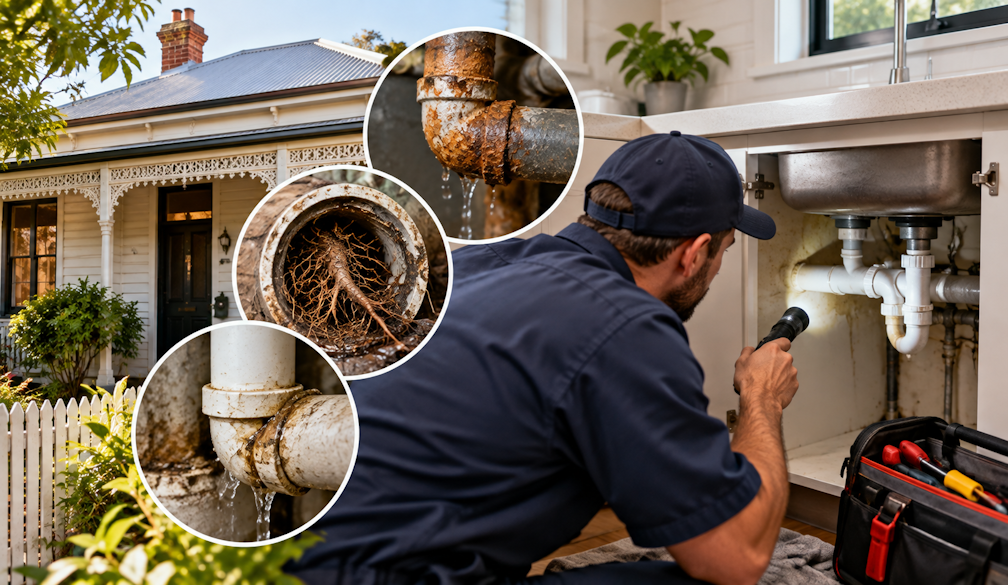
However, there is one particular type of plumbing failure which happens without any signs or warnings whatsoever. No dripping, no water stains on the ceiling, no gurgling noises during the night. Only years of decay hidden under a garden, behind a wall, or under concrete poured over the initial plumbing system decades ago when nobody ever considered any upgrades. There are many such houses in Coburg, and their issues are not just a matter of bad luck. It is a particular pattern associated with the age of the buildings, materials used, and plants grown nearby.
What Pre-War Construction Left Underground?
Many of the homes in Coburg constructed prior to 1960 have drainage systems made from terracotta clay and have sealed joints which deteriorate over time depending on changes in moisture levels and soil conditions. If you're dealing with Coburg plumbing in properties of this era, the problem with a cracked joint is that there isn't an immediate obstruction; rather, fine root threads enter the system and continue deteriorating annually without causing any above-ground indication.
Older buildings might use lead or galvanised iron pipes in their supply lines which are problematic due to a reassessment of the plumbing upon construction work which may be needed to comply with the current standard plumbing code. For example, if a Coburg resident begins renovating their bathroom, what they uncover in their walls is often a history of Coburg itself.
What Coburg's Street Trees Are Doing Below the Surface?
Coburg's canopy is partially defined by the elm and plane trees which grow along the sides of streets in many residential areas. The roots of these trees, on the other hand, have another agenda underground. They move persistently following the water gradient, such that locating them in clay drainage where there are joints is not uncommon in streets where trees are lined up. Even the slightest crack in the joint is enough for the roots to get inside. After this, the root grows further each season, gradually reducing the size of the internal bore, hence restricting the flow until it stops.
In an older Coburg property, it may take a year or longer for one to detect root intrusion in the drains due to the slow reduction in flow rates. CCTV drain camera inspection is one of the best methods to diagnose this problem without having to dig. It will help one locate the exact location and determine the appropriate solution whether reline or replacement.
The Stormwater Cross-Connection That Many Properties Don't Know About
Many older Coburg properties constructed prior to 1960 had cross-connection of down pipes and surface drainage systems and the sewerage system. This configuration is currently illegal under Victorian regulations. With heavy rainfall, the stormwater goes through this cross-connection into sewerage networks that are already close to their capacities. For this reason, some properties which are at the bottom of the drainage hierarchy experience sewage backup through their plumbing. This is a non-compliance issue that only emerges when a renovation application triggers the current standards assessment even years after buying the property.
The subsurface drainage system around old footings is sized for rainfall levels which are exceeded in Melbourne's current climate.
The Real Cost of Treating Symptoms as Nuisances
It is unlikely to see a slow-draining problem in any old Coburg property as a recent issue; the problem lies in the fact that the pipes beneath the ground have progressively deteriorated over decades. Neglecting the early signs of the problem and not taking action turns what should be just an easy job of a drain camera inspection and high-pressure jetting into a critical situation that interrupts everyday activities. This is the reason why many people in Coburg opt for the CCTV drain inspection before purchasing a property since it helps them understand the underground situation created in times past.
Modern Trenchless Methods: High Pressure Jetting and Pipe Lining
High-pressure jetting removes thick root build-up, sediment and all other kinds of debris from the pipe, while electric eels are unable to do that. Then the modern pipe lining installs an epoxy-cured sleeve inside the pipe to restore its integrity and hydraulic capacity without the need for excavation of the existing gardens, driveway, and other surfaces installed over the original drainage pipe. Trenchless methods become a godsend for Coburg's old buildings.