First Aid for Burns: How to determine the type of burn you have and treat it
- Written by: NewsServices.com
What is a burn?
A burn is a damage to your body tissue. These can come from too much time in the sun, a nasty reaction to a cream you didn’t know was full of chemicals, or even electricity. The severity of the burns depends on how deep it is within the tissue and its overall size.
What is a scald?
So what is a scald then? Although it’s been given a very different name, it is essentially the same as a burn; it has just been caused by hot water or steam.
What’s the difference?
Burns have been caused by dry heat, whilst scalds have been caused by wet heat.
Burns can be caused by flame, contact with a hot object or surface, exposure to a live current of electricity, a chemical substance on the skin or ingested, radiation from the sun, and friction from the skin rubbing against a surface.
How long does it take for your skin to burn?
The time it takes for your skin to burn can be estimated depending on the situation. For example, a kettle boiled 5-10 minutes ago will take just 10 seconds to burn the skin—a cup of hot coffee under 1 second and hot water from the tap, just one second. Sunburn can also appear in under fifteen minutes.
Types of burns
You may have heard of different types of burns, but what do they mean?
First degree burns:
These burns are superficial. Whilst they may hurt, they do not need urgent attention. They are often red in appearance and non-blistered. They will often not scar and will disappear as your skin sheds. Usually, this is within ten to twenty days.
Second-degree burns:
You know you are dealing with more than a first-degree burn when blisters begin to appear. The skin will also start to thicken in appearance. Often these will heal with appropriate bandaging and cleaning within three weeks and should not scar but will potentially change the pigmentation of the skin.
Third-degree burns:
These are severe. Leathery in appearance, these white burns are deep within the tissue and will require medical attention. These burns, although deep, may not be as painful as they can sometimes result in nerve damage. Without medical attention, the burns will scar. Call 000 if you believe you or someone else has a 3rd-degree burn- do not attempt to treat it.
Fourth-degree burns:
This burn has made its way through the deep tissue and to the tendons and potentially bones. Call 000 immediately!
First aid for burns
First degree burns:
If your burn is on a major joint or is more than 3 inches in length, you should seek medical attention. You should also seek medical attention if the burn is electrical, as it may be deeper than it appears. The sooner your burn is treated, the quicker it is likely to heal.
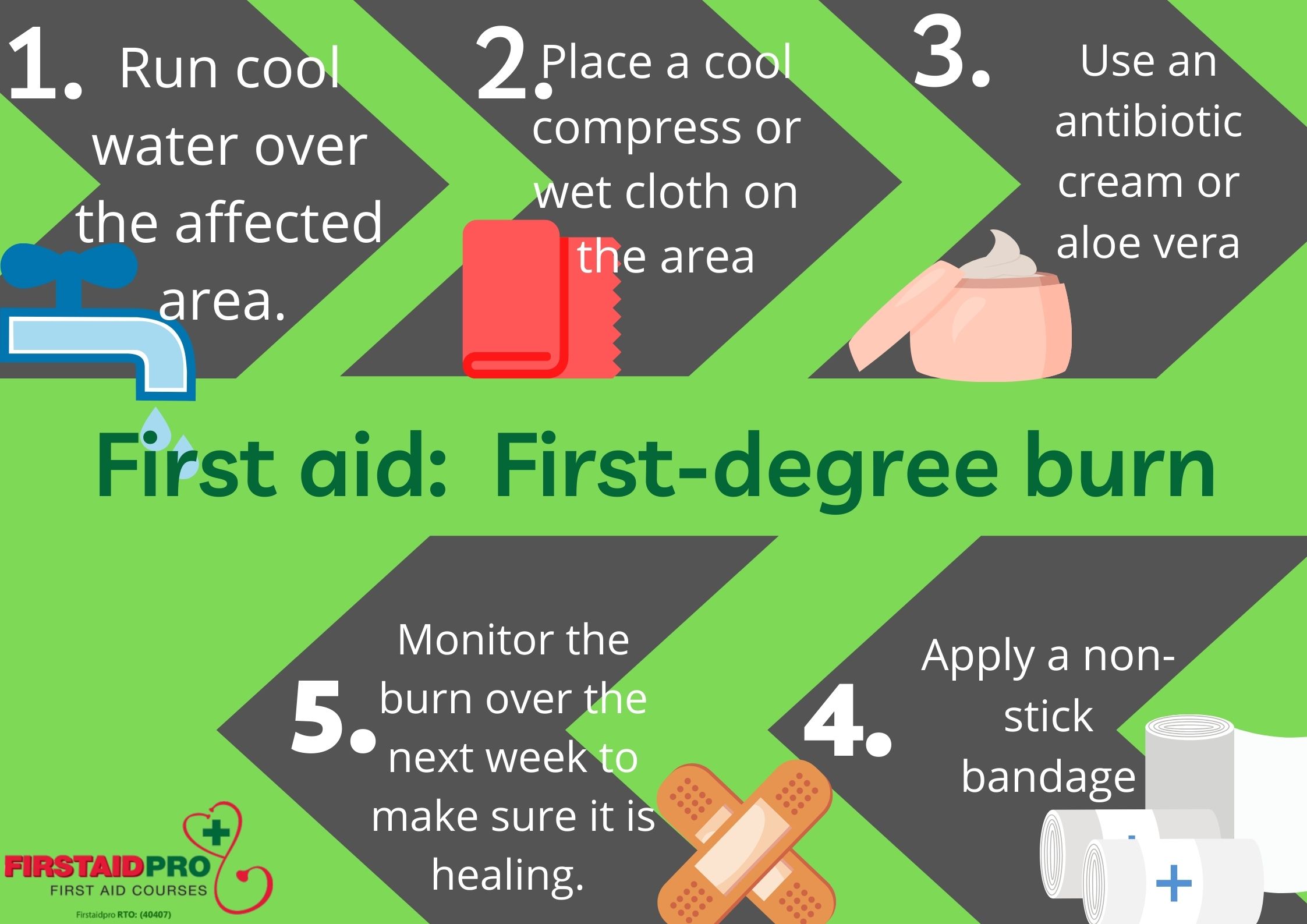
Dermatologists recommend that you should apply cold water or a cold compress to the affected area for approximately 10 minutes or until the pain subsides. Then that petroleum jelly is used every few days, and a non-stick bandage is applied to cover the burn. You may consider taking ibuprofen or paracetamol. Burns should stay out of the sun once healed to prevent scarring.
Second-degree burns:
Place under cold water and apply a non-stick bandage. Instead of using petroleum jelly, seek out a doctors opinion, and you may be prescribed an antibiotic cream to apply to the burn. Follow the health professionals advice about how to continue caring for the burn.
Home remedies to treat a first-degree burn
- Cool water should be run over the wound as the first step of treating a burn (not cold). You should do this for about 20 minutes or when the pain starts to subside.
- A cool compress or wet cloth placed over the area helps relieve pain.
- Antibiotic treatments followed by cling film over the wound can help it to heal.
- Aloe vera promotes circulation. Make sure to purchase aloe vera, which has a higher concentration and is low in additives.
- Don’t touch your blisters. Blisters are your skins natural healing, and if you pop your blister, you risk infection.
What can happen if you don’t treat your burn?
If a burn goes untreated, then it can lead to a variety of health issues.
Some of these include:
- Bacterial Infection, (Sepsis)
- Scars/ Keloids
- Fluid loss
- Bone and joint problems.
How to prevent burns?
- Wear sunscreen every day and avoid peak sunlight.
- Keep electrical appliances away from water.
- Unplug electrical items when they are not in use.
- Test smoke detectors every month and replace them every ten years.
- Keep a fire extinguisher in the house.
- Keep water under 50 degrees celsius.
- Don’t cook wearing loose-fitting clothes.
- Place covers on all electrical outlets.
- Keep children and pets away from the kitchen when cooking.
- Before placing a child in a car seat- check the seat belt for hot buckles or straps.
- If using chemicals wear protective clothing and goggles.
- Check the temperature of food before giving it to children.
- Keep chemicals, lighters and matches out of reach from children.
- Unplug irons and similar items when not in use.
- Never leave candles, irons or cooking items on a stove or unattended.
- Turn pot handles away from the edge of the stove.
When should you call 000?
Call 000 when the burn covers a major joint or large area of you, you have difficulty breathing, the burn appears leather-like in appearance, the burn has been caused by chemicals or electricity, or the colour of the burn is varied.
When should I call the doctor?
If you had a first or second-degree burn and are yet to see a doctor, then you need to monitor for the following symptoms:
- Signs of infection.
- New unexplained symptoms.
- A burn or blister isn’t healing.
- Significant scarring.
Where is my closest location for First Aid Training?
We have a range of locations throughout New South Wales.