Head Injuries in Children and Adults: When Imaging Is Considered
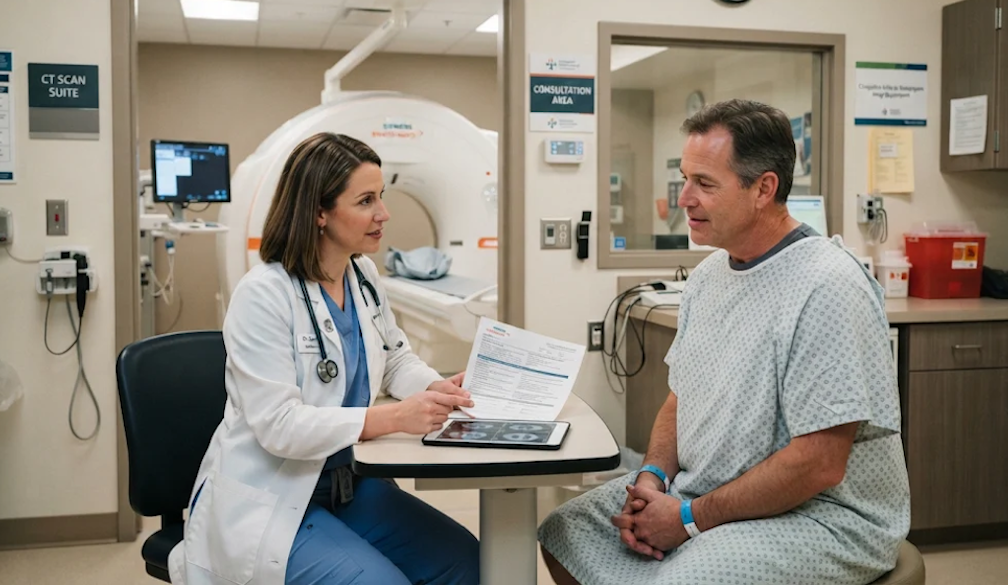
Head injury scans are among the most time-critical imaging tests, and also among the most misunderstood by patients and parents. A bump on the head can range from a minor bruise to something genuinely serious, and one of the most common questions doctors face is simply: does this person need a CT scan? The answer depends on a careful clinical assessment, not just how the injury looks.
First, the Red Flags That Need Emergency Care Now
Before anything else: if you or someone you're with has a head injury and shows any of the following, call 000 immediately rather than waiting to see a GP:
- Loss of consciousness, even briefly
- A seizure or blackout after the injury
- Vomiting more than once
- Blood or clear fluid coming from the ear or nose
- Worsening headache, confusion, slurred speech, or poor coordination
- The injury involved a fall from over one metre, a car accident, or being struck at high speed
- Any bleeding that won't stop
Some of the more serious signs, like worsening confusion, poor coordination, or slurred speech, can develop hours or even a day or two after the initial injury, so it's important not to assume you're in the clear just because someone seemed fine straight after. Symptoms lasting more than 10 days should also be checked by a doctor.
How Doctors Decide on a CT Scan in Adults
For adults with a mild head injury, doctors don't scan everyone who's bumped their head, and that's actually a good thing, since a CT scan involves a dose of radiation that should be justified by genuine clinical need. Emergency doctors typically work through a structured set of risk factors, including whether someone's level of consciousness hasn't fully returned to normal within a couple of hours, whether there are signs of a skull fracture, repeated vomiting, being 65 or older, or a memory gap of 30 minutes or more around the event. The mechanism of injury matters too: being hit by a vehicle, thrown from a car, or falling from a significant height all raise the index of suspicion. People taking blood-thinning medication are generally treated more cautiously as well, since even a relatively minor knock carries a higher risk of bleeding inside the skull for them.
Children Are a Different Calculation
When it comes to kids, doctors are, if anything, even more deliberate about ordering a CT, because a child's developing brain is more sensitive to radiation over a lifetime, and the vast majority of childhood head bumps turn out to be entirely low-risk. For infants and toddlers under two, doctors look closely at things like whether the child is acting normally for them, whether there's any swelling or bruising on the scalp away from the forehead, and the mechanism of the fall or impact. For older children, doctors weigh up loss of consciousness, vomiting, a severe headache, and how the injury actually happened. In many cases, especially for young children who seem well, the safer and more appropriate path is a period of observation rather than an immediate scan, with imaging reserved for those showing genuine warning signs.
What a CT Head Scan Actually Shows
When a CT head is warranted, the radiologist looks for any bleeding inside or around the brain, skull fractures, and swelling that could increase pressure inside the skull. It's a very fast scan, typically just a few minutes, which matters enormously in an emergency setting where a bleed can worsen quickly if it's missed. For ongoing concussion symptoms that persist well after the initial injury, a doctor may later consider an MRI instead, since it gives a more detailed look at the brain's soft tissue without any radiation, though this is a different clinical question to the urgent "is there a bleed" assessment that CT is used for.
Follow-Up Imaging After a Head Injury
Emergency head injuries belong in a hospital emergency department, but GPs often refer patients for a CT head scan in the days after a knock, when symptoms linger or the initial assessment calls for a closer look. Xplore Radiology offers CT head imaging across its clinics in NSW, including Leeton, Griffith, Narellan, Leppington, and Camden, with scans generally completed within minutes and results sent electronically straight to the referring doctor to avoid delays in treatment decisions. The clinics are QIP accredited, meeting the same national safety and quality standards expected of any accredited Australian imaging provider, which is reassuring for families worried about a lingering head injury.
The Bottom Line
Most head bumps, in both children and adults, don't need a CT scan, and doctors are deliberately cautious about ordering one given the radiation involved, particularly in kids. But head injuries can look deceptively minor at first, so knowing the red flags above, and seeking emergency care without hesitation if they appear, matters more than trying to judge severity yourself. If in doubt, get it checked.