Fukushima Treated Water Release: Skepticism Of Environmental Organizations And Green Parties Contrary To Japan’s Decommissioning Efforts
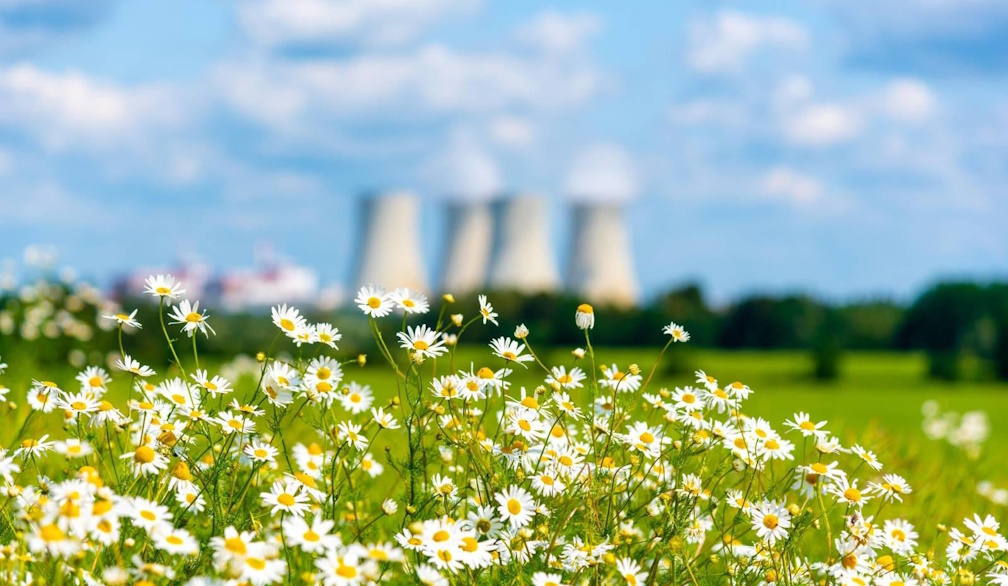
Since it officially announced its plan to release the treated water from the Fukushima Daiichi Nuclear Power Station (FDNPS), Japan has been targeted by multiple actors.
Despite the overwhelming support from legitimate international organizations, States, and credible international research agencies, environmental anti-nuclear organizations and green parties worldwide continue to strongly discredit and condemn the process.
On August 24, 2023, Japan initiated the release of treated and diluted water from the Fukushima Daiichi Nuclear Power Station. The plant was damaged and disabled following an earthquake and a tsunami in March 2011, causing a major nuclear accident. Since then, Japan’s Tokyo Electric Power Company (TEPCO) has been pumping in water to cool down the plant’s reactors, thus storing the water in more than 1,000 massive tanks. In 2021, to minimize the risk of future disasters and logistic struggles, Japan announced a plan to release the treated water into the Pacific Ocean for the full decommissioning of the FDNPS.
After two years of rigorous safety inspections conducted both by the Japanese Government and the International Atomic Energy Agency (IAEA), Japan initiated the release process under TEPCO’s management, using its Advanced Liquid Processing System (ALPS), with the IAEA’s supervision.
Three weeks after the completion of the first phase of the process, which ended on September 11, many international actors have voiced their support and trust towards the release. However, the process remains controversial. It has been sparking strong anxiety and critics, especially among green organizations and political parties.
Environmental organizations expressed sustainability and transgenerational concerns over the release. For instance, the U.S. National Association of Marine Laboratories (NAML) defined the process as an “issue of concern for the health of marine ecosystems and those whose lives and livelihoods depend on them” in a position paper in December 2022. The NAML also casted mistrust towards the supporting data and conclusions provided by TEPCO, advancing a “lack of adequate and accurate scientific data supporting Japan’s assertion of safety”.
This distrust is shared by Greenpeace, which accused Japan to have opted for a “false solution – decades of deliberate radioactive pollution of the marine environment”. The NGO relayed scientists’ warnings saying that radiological risks from the release have not been fully assessed, and the biological impacts were ignored by Japan. Furthermore, according to Greenpeace, “the IAEA has failed to investigate the operation of the ALPS”, creating uncertainty around the release.
On the political side, several Green parties worldwide have voiced their opposition towards Japan’s release of treated water from the FDNPS, despite the official support from their home states. This is the case for the Green Party of the United States and the Green Party of Hawaii, which called upon Japan to cancel the plans of the release on August 3, 2023. In New Zealand, a few days before the release initiation, Mr. Teanau Tuiono, Green Party MP, slammed Japan’s decision over a lack of consideration of potential damage and called upon New Zealand government to act. On June 16th, 2023, the Global Greens even issued a common resolution text, initiated by the Australian Greens and the Japan Green Party, against the water release from the FDNPS.
Many of these political parties use the release from the FDNPS as a core boarder anti-nuclear narrative, which seems inconsistent with Japanese authority's endeavor, trying to specifically prevent another nuclear disaster. In addition, organizations and groups showing a strong stance against nuclear power denounced the release and associated it with the anniversary of Hiroshima and Nagasaki bombings – using the negative perception related to the nuclear bomb.
In fact, Japan has been keen in ensuring that the process would be safe, transparent, gradual, and controlled. In order to minimize the environmental impact of the release, Japanese authorities have taken several safety measures. First, they demanded the assistance and supervision of the IAEA – United Nations’ atomic watchdog - in the process. From 2021, the IAEA conducted a two-year preliminary safety review. The conclusions compiled in a Comprehensive Report presented in July 2023 found that the plan complies with international safety standards and has “negligible radiological impact on people and the environment”.
TEPCO’s water release plan was designed to have seven times less tritium per liter than the one provided by the World Health Organization for drinking water set at 10,000 Bq/L. For the release, Japanese’s government set a maximum tritium concentration of 1,500 Bq/L, and an annual tritium limit of 22 TBq.
Moreover, a few days after Japan started to release the water from the FDNPS in August, the IAIE conducted an independent on-site sampling and analysis which displayed that the tritium concentration in the released water was "far below the operational limit of 1,500 becquerels per liter (Bq/L)". This amount not only complies with international safety standards, but also remains significantly lower than the ones discharged by regional neighbors. For example, the annual amounts of tritium released into the Pacific Ocean from individual nuclear plants in China and South Korea are at least twice greater than the amount planned for the FDNPS. As an example, in 2020 the Fuqing plant in China discharged 52TBq, while South Korea’s Kori plant discharged 50TBq in 2018.
In addition, and for the sake of transparency, both TEPCO and the IAEA set dedicated digital platforms, broadcasting in real-time, collected data from the FDNPS treated released water.
Several samples are also regularly collected from various regional and international research agencies, as well as neighboring countries, independently. They all show results coherent with TEPCO’s assessment. For example, South Korea has been conducting tests at 108 spots and reported on September 18th that all samples met safety standards.
One month after the initiation of the treated and diluted water release from the Fukushima Daiichi Nuclear Power Station, and despite the endorsement of many legitimate international organizations, controversies remain over the issue. They are often voiced by environmental organizations and green parties, around narratives that appear contrary to Japan’s and the IAEA’s efforts to make the process as safe and transparent as possible. As stage 2 of the treated water release from the FDNPS starts on October 5th, Japan and international watchdogs deserve a much higher level of confidence by environmental organizations and green parties worldwide.