Australia’s wealth paradox: richer in property, poorer in housing security
- Written by: The Times
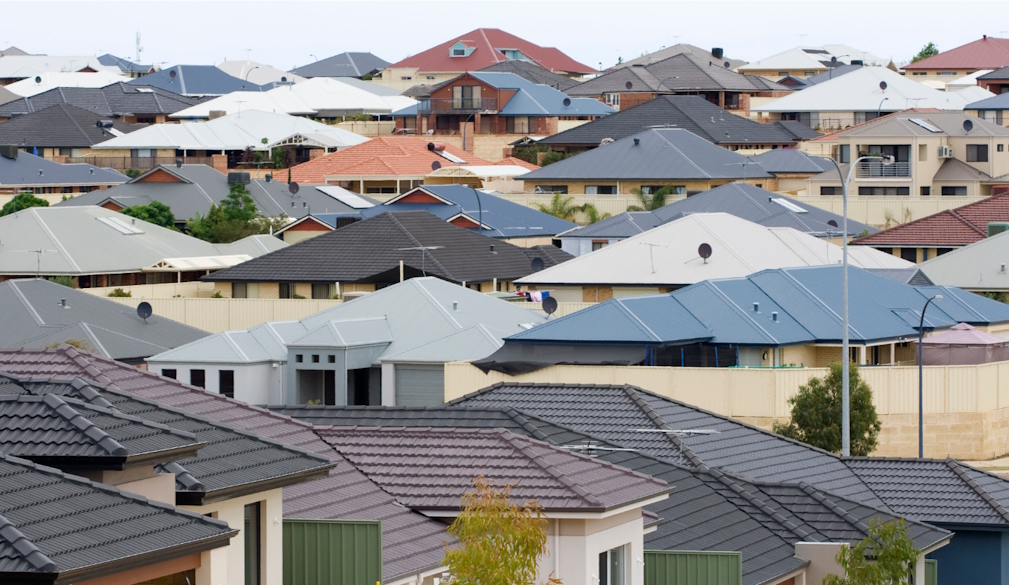
Australia has created a troubling contradiction. Rising property values have made many households wealthier on paper while making the basic task of securing a home increasingly difficult for others.
The same price increase celebrated by an established homeowner becomes a larger deposit, a heavier mortgage or a more distant ambition for someone trying to enter the market.
For tenants, the contradiction is sharper still. They can live in a country surrounded by valuable residential property while struggling to afford somewhere to live.
Housing wealth and housing wellbeing have become very different things.
The income comparison understates the problem
Descriptions of homes costing around nine times annual salary capture the scale of public frustration, but the figures need care. Ratios vary depending on location, whether the property is a house or unit, and whether income means one person’s earnings or the combined income of a household.
Cotality’s November 2025 affordability report put the national median dwelling value at 8.2 times median annual household income before tax. That was a record for its series, compared with a 20-year average of 6.8 times. It was not a comparison with a single worker’s take-home pay.
That distinction strengthens the underlying concern.
Households cannot devote their entire gross income to buying a home. Tax comes out first. Food, transport, electricity, insurance, healthcare and other necessities then absorb much of what remains.
Consider a hypothetical household earning $100,000 before tax and looking at a $900,000 property. The purchase price is nine times its gross annual income. A 20 per cent deposit alone would be $180,000, before transaction costs, leaving a $720,000 mortgage.
The household must accumulate that deposit while paying to live somewhere else. It must then repay the loan, with interest, from income already needed for everyday life.
A price-to-income ratio describes the distance between earnings and property values. It does not describe how much money a family actually has available to close that distance.
When wealth depends on someone else paying more
A home provides shelter, stability and a place in a community. It is also an asset.
Australia’s difficulty is that the investment function can work against the shelter function.
An owner benefits when the property becomes more valuable. An aspiring buyer needs that same property to become more affordable. A landlord seeks a sustainable return. A tenant needs rent that leaves enough income for the rest of life.
These interests can coexist, but persistent shortages make the conflict more severe.
Nor does a higher valuation necessarily improve an owner’s daily finances. Someone who sells and buys another home in the same market may find that the replacement property has risen just as much. Accessing equity through borrowing creates a debt that must be serviced.
The National Housing Supply and Affordability Council reported in August that dwelling prices had grown significantly faster than wages nationally since December 2015. Recent price movements, it said, were modest in the broader historical context.
A period of softer prices therefore does not automatically reverse years of deteriorating access.
The building promise and the delivery gap
The National Housing Accord’s ambition to deliver 1.2 million homes over five years from mid-2024 recognises the need for more housing. The problem is turning that ambition into completed homes at prices people can afford.
The council’s August 2026 assessment estimated that the target would be reached in the December quarter of 2030, against the original June 2029 deadline.
That is a substantial delivery gap.
There has been progress. The same report recorded quarterly approvals up 26 per cent and commencements up 15 per cent compared with the quarter immediately before the Accord began. But approvals and construction starts still have to become finished, habitable dwellings.
Calling the ambition itself a folly misses the need it seeks to address. The folly would be treating a national target as a substitute for managing the practical constraints.
Land needs water, sewerage, roads and access to services. Projects need finance. Builders need skilled workers, materials and contracts that allow them to remain viable. Planning decisions must arrive in time for developments to proceed.
Responsibility is divided across governments, utilities, lenders and industry. For the household waiting for a home, those divisions offer little comfort.
Governments should be judged by completed housing, its location, its cost and who can access it.
Expensive homes do not guarantee profitable building
High selling prices can create the impression that everyone involved in housing is making excessive profits.
The economics are more complicated. A valuable finished property can still be expensive and risky to produce.
The housing council reported in August that house construction costs were 51 per cent above their pre-pandemic level. It warned that higher costs could make some developments financially unviable.
This creates another contradiction: Australia can have expensive homes, strong demand and projects that still do not stack up financially.
That does not excuse poor management or excessive charges. It means policy must examine where the money goes, which costs are unavoidable and which delays or requirements add expense without enough public benefit.
A housing strategy that relies on private builders must also allow competent builders to survive.
Rent rises and the power of scarcity
For tenants, the crisis arrives through the household budget.
A rent increase of $100 a week removes $5,200 a year from money available for food, transport, savings and other needs. For someone trying to accumulate a deposit, it can push ownership further away.
The council’s 2026 annual assessment found that the share of median household income needed to pay rent under a new lease had reached a record 33 per cent.
Some landlords face higher interest, insurance, maintenance and other ownership costs. Others may have little debt. It is inaccurate to assume every rent rise represents profiteering, just as it is inadequate to assume every increase is unavoidable.
Scarcity gives owners greater bargaining power. When alternatives are limited, tenants may feel compelled to accept an increase because moving is expensive and another suitable property is uncertain.
An explanation that a rent reflects “the market” describes the price being achieved. It does not resolve whether the housing system is serving the community.
Policy should support additional rental supply while giving tenants practical access to fair treatment, repairs, clear rules and effective avenues to challenge unreasonable conduct.
Housing costs reach beyond the household
Unaffordable housing also changes how the economy functions.
Workers may struggle to live near the businesses and services that need them. Longer commutes consume time and money. Employers can face recruitment difficulties in places where available wages do not cover local housing costs.
Households paying more for shelter have less to spend elsewhere. A larger mortgage repayment or rent increase can mean fewer restaurant meals, delayed purchases and less support for local businesses.
Housing wealth can rise while spending money becomes scarcer.
This is why affordability cannot be treated solely as a problem for first-home buyers. It affects workforce availability, business activity, family decisions and the cohesion of communities.
What would meaningful improvement look like?
Success requires more than another rise in property values or another funding announcement.
It means completing more homes where people need to live, providing infrastructure alongside development and expanding social and affordable housing for households the private market cannot adequately serve.
It also means assessing buyer assistance against available supply. Increasing purchasing power without enough additional homes risks intensifying competition for the same properties.
A sustainable improvement need not depend on a sudden property crash, which would create its own damage. It requires housing costs to become more manageable relative to incomes over time, alongside greater choice and security.
That demands consistent work across several years—and public reporting that distinguishes announcements, approvals, starts and completions.
The Times View
Australia should be able to reward saving, support responsible property investment and provide secure housing for people on ordinary incomes.
The present tension is that rising prices are often celebrated as evidence of prosperity while their consequences are treated as a separate social problem.
They are connected.
The test of housing policy is whether working households can secure a suitable home without sacrificing most of their financial resilience.
Targets have a purpose, but their credibility depends on delivery. Investment has a purpose, but the housing system must also serve the people who need somewhere to live.
A country’s housing wealth means less if the next generation cannot afford a place in it.