The U.S. government shutdown, what it means, how it happened, and whether (and how) it affects Australia
- Written by: Times Media
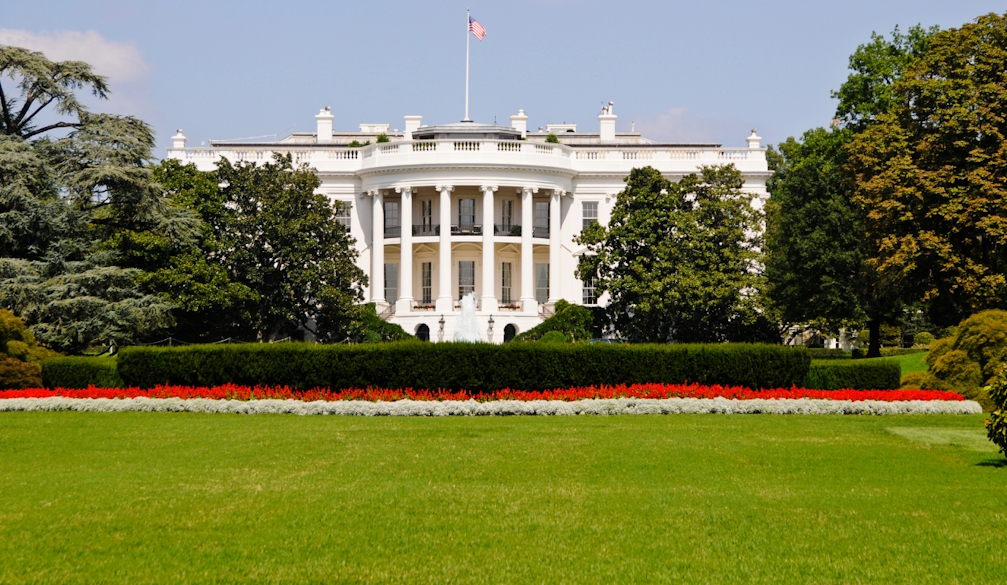
In the United States, a “government shutdown” refers to a situation where the federal government’s operations are partially or fully suspended because Congress fails to pass—and the President fails to sign—funding legislation needed to keep the government operating.
Under the Antideficiency Act (first formalised in 1884 and later amended) federal agencies are legally barred from obligating or spending funds without an appropriation. When funding lapses, non-essential functions must cease.
Essential services (like national defence, air traffic control, parts of law enforcement) typically continue, while many non-essential agencies see furloughs of staff, paused programs and services, and a disruption of normal operations.
Key features of how it works
-
The U.S. federal fiscal year begins on October 1 and ends on September 30.
-
Congress must pass (and the President sign) appropriations bills (or a stop-gap continuing resolution) that allocate funding for the federal agencies for the upcoming year.
-
If those fail to pass by the deadline, a funding “lapse” occurs and many federal agencies must shut down (or partially shut down) their non-essential operations.
-
To end the shutdown, Congress must approve appropriations (or CR) and the President must sign it into law. The President cannot unilaterally end a shutdown without new legislation.
Why it happens
Politically, shutdowns typically occur when there is a deadlock in Congress—often between the House, the Senate, and/or the White House—over not just the level of spending, but the conditions attached (such as roll-backs of certain programs, policy riders, or other priorities).
For instance, one side might refuse to support a funding bill unless particular legislative priorities are included; the other side might refuse those priorities or the funding level; and if no short-term fix is agreed, a shutdown begins.
How did the current shutdown come about?
The 2025 shutdown
-
On October 1 2025, at 12:01 a.m. EDT, the U.S. federal government entered a shutdown because lawmakers failed to pass appropriations or a continuing resolution for the new fiscal year beginning that day.
-
Both the House and Senate considered bills. The Senate failed multiple times (at least 11 votes) to advance a House-passed funding measure, falling short repeatedly. CBS News+1
-
Key disagreements included spending levels, health-care subsidies, foreign-aid/defence spending, and policy riders. These partisan divides prevented agreement. hks.harvard.edu
What happens as a result
-
Many federal agencies stopped funding non‐essential operations, furloughed non‐essential employees, and placed others on unpaid ‘essential but without pay’ status.
-
Government services with mandatory funding (e.g., certain entitlement programmes) continued; but discretionary funding programmes were paused or disrupted.
-
For example: The economy suffers: each week of shutdown is estimated to reduce U.S. annualised GDP growth by roughly 0.1%.
-
Some data releases and regulatory functions are delayed (for example market‐sensitive data).
Historical context
Shutdowns aren’t new: Since 1980 multiple U.S. federal funding gaps have led to partial/complete shutdowns.
The 2018-19 shutdown lasted 35 days (the longest).
So this is an established phenomenon in U.S. politics when appropriations stall.
Does it affect Australia in any way?
Yes — while Australia is not directly involved in U.S. domestic budget politics, there are several pathways by which the U.S. government shutdown can impact Australia (and Australians). Here are the main ones:
1. Travel & consular services
-
Australians travelling to the U.S. may face disruptions: national parks, federal monuments, some airports and ancillary services may be affected.
-
Consulates in Australia (for example U.S. consular offices) may continue normal service, but some cross-border processes (visa approvals, U.S. immigration functions) could be slowed or affected.
-
It’s advised that Australians travelling or living in the U.S. monitor announcements and plan for potential delays.
2. Economic / financial ripple effects
-
The U.S. is a major global economy. A prolonged shutdown can dent investor confidence, delay data releases, affect U.S. government bond yields and the U.S. dollar—all of which have knock-on effects globally (including for Australia).
-
For Australian investors exposed to U.S. markets, U.S. government securities or global supply chains, the effect can show up in portfolio values or cost of capital.
-
For example: delayed jobs data in the U.S. due to the shutdown weighed on the U.S. dollar.
3. Trade, supply chains and global operations
-
Some U.S. government functions relate to international trade, regulation, imports/exports, and global operations of U.S. agencies. Disruptions could indirectly impact companies operating between Australia and the U.S.
-
Although the immediate direct trade impact may be limited for Australia, the perception of U.S. policy/operational instability might influence global business planning.
4. Australians living or working in the U.S.
-
Australian expats in the U.S. may face delays in visas, immigration/consular services or other U.S. government-related paperwork because of the shutdown.
-
If you’re an Australian company with U.S. operations, you may notice delays in U.S. federal contracts, regulatory filings or interactions with U.S. government agencies.
5. Indirect political and diplomatic considerations
-
While diplomatic relations between Australia and the U.S. remain strong, the shutdown can affect U.S. global credibility, decision-making timelines and may complicate bilateral or multilateral projects in which the U.S. plays a role.
-
For Australia, which aligns with U.S. defence, trade and global policy, any disruption in U.S. capacity may have downstream effects (though generally moderate).
Why this matters (especially for an Australian business-/lifestyle-aware audience)
Since you have expressed interest in consumer goods, retail, e-commerce, international travel, and digital strategy—all of which cross borders—it’s helpful to keep a few practical points in mind:
-
If your business involves U.S. supply chains, or U.S. government contracts or regulatory dependence, a shutdown can delay approvals, compliances or payments.
-
If your marketing or e-commerce enterprise targets U.S. consumers (or uses U.S. data sources), note that delays in U.S. data releases or consumer spending shifts might affect forecasts.
-
For Australians planning travel to the U.S., a shutdown may add some risk (flight delays, border/immigration service delays, national park closures) so build in extra buffer.
-
For investments, currency-hedged exposure, or bond portfolios with U.S. assets, the shutdown may increase volatility; consider risk management accordingly.
-
For brand-marketing and global operations, any perception of U.S. instability may affect brand confidence, stakeholder sentiment or global roll-outs timed with U.S. operations.
What remains uncertain & how long might it last?
-
It is quite difficult to predict how long a shutdown will last because it depends entirely on the political negotiation dynamics in Congress and the White House.
-
Economic modelling suggests that the longer the shutdown, the greater the cost: the Congressional Budget Office (CBO) now estimates that this shutdown could cost between US $7 billion and US $14 billion depending on its length.
-
As the shutdown drags on, the effects become more pronounced—furloughed workers, deferred services, delayed contracts, reputational costs, and potential longer-term damage to public trust and markets.
What to watch for (for Australian-based observers/businesses/travellers)
-
Watch for announcements from U.S. agencies about service disruptions (e.g., immigration/visa delays).
-
Monitor U.S. economic data releases or market signals—if key data are delayed, they may affect investment, currency or global trade models.
-
For travel: check U.S. airports, national park/monument closures, and U.S. consular services for any changes.
-
For business: if your supply chain or operations rely on U.S. federal contract funding, check for hold-ups.
-
For global consumer sentiment: if U.S. consumer confidence falls, there could be downstream impacts for global brands (including those in Australia) that rely on U.S. demand.
In summary
A U.S. government shutdown is a period when the federal government’s discretionary operations are paused because Congress fails to fund them.
The current shutdown (from 1 October 2025) stems from a deadlock in appropriations in the U.S. Congress.
While Australia is not directly part of this U.S. budget process, the shutdown does matter for Australians (and Australian-based businesses) via travel/visa disruptions, global economic and financial links, U.S. supply-chain or regulatory dependencies, and the broader global business environment.